Representative Paul Burney Johnson
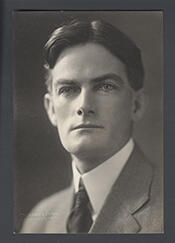
Here you will find contact information for Representative Paul Burney Johnson, including email address, phone number, and mailing address.
| Name | Paul Burney Johnson |
| Position | Representative |
| State | Mississippi |
| District | 6 |
| Party | Democratic |
| Status | Former Representative |
| Term Start | May 19, 1919 |
| Term End | March 3, 1923 |
| Terms Served | 2 |
| Born | March 23, 1880 |
| Gender | Male |
| Bioguide ID | J000166 |
About Representative Paul Burney Johnson
Paul Burney Johnson Sr. (March 23, 1880 – December 26, 1943) was an American attorney, judge, and Democratic politician who served as a United States Representative from Mississippi from 1919 to 1923 and as Governor of Mississippi from 1940 until his death in 1943. Over the course of his public career, he held a series of judicial and executive offices and participated in significant state and national developments in the early and mid-twentieth century.
Johnson pursued a legal career in Mississippi in the early years of the twentieth century, establishing himself as an attorney before entering judicial service. By 1907 he had gained sufficient standing in the legal community to be appointed or elected to the bench. From 1907 to 1908, he served as judge of the city court of Hattiesburg, Mississippi, presiding over municipal cases at a time when the city was growing as a regional center. Two years later, in 1910, he advanced to the position of circuit judge of the 12th judicial district of Mississippi. In that capacity, which he held until 1919, he oversaw a broad range of civil and criminal matters, gaining experience and public visibility that would later support his transition into national politics.
In 1918 Johnson was elected to the United States House of Representatives as a Democrat, representing Mississippi in the Sixty-sixth and Sixty-seventh Congresses. He served from 1919 to 1923, completing two terms in office. As a member of the House of Representatives, Paul Burney Johnson contributed to the legislative process during a significant period in American history, which included the immediate post–World War I era and the early years of the 1920s. In Congress he participated in the democratic process and represented the interests of his Mississippi constituents, aligning with the Democratic Party’s positions of the time. During this period in Washington, he developed a friendship with Franklin D. Roosevelt, then Assistant Secretary of the Navy and later President of the United States. The relationship extended to their families, and their children were known to play together, reflecting a personal as well as political connection.
After leaving Congress in 1923, Johnson returned to Mississippi and continued his involvement in law and public affairs. Over the following years he remained an influential figure in state Democratic politics, and his earlier judicial and congressional experience positioned him as a prominent advocate for policies that would later be associated with the New Deal. By the late 1930s, amid the economic and social challenges of the Great Depression, he emerged as a leading supporter of President Roosevelt’s reform agenda within Mississippi.
In 1939 Johnson won the race for Governor of Mississippi, taking office in 1940. As governor, he was a supporter of New Deal measures and presided over numerous progressive reforms during his tenure. His administration worked to align state policy with federal programs designed to address economic recovery, infrastructure development, and social welfare, reflecting his long-standing ties to Roosevelt and his commitment to modernizing aspects of Mississippi’s government and economy. Johnson remained in office throughout the early years of World War II, guiding the state through the transition to a wartime footing.
Johnson died in office on December 26, 1943, while still serving as governor. At the time of his death, his son, Paul B. Johnson Jr., was serving in the United States Marine Corps in the Pacific theater during World War II. The Johnson family continued its prominence in Mississippi politics for decades after his passing. More than twenty years later, in 1964, Paul B. Johnson Jr. was elected governor of Mississippi, following in his father’s footsteps in the state’s highest office. Johnson’s grandson, Pete Johnson, was elected state auditor of Mississippi in 1988, extending the family’s public service into a third generation. In recognition of Paul Burney Johnson Sr.’s contributions to the state, Paul B. Johnson State Park in Mississippi was named in his honor.