Representative Paul E. Kanjorski
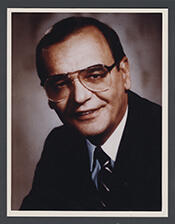
Here you will find contact information for Representative Paul E. Kanjorski, including email address, phone number, and mailing address.
| Name | Paul E. Kanjorski |
| Position | Representative |
| State | Pennsylvania |
| District | 11 |
| Party | Democratic |
| Status | Former Representative |
| Term Start | January 3, 1985 |
| Term End | January 3, 2011 |
| Terms Served | 13 |
| Born | April 2, 1937 |
| Gender | Male |
| Bioguide ID | K000008 |
About Representative Paul E. Kanjorski
Paul Edmund Kanjorski (born April 2, 1937) is an American politician and attorney who served as the U.S. Representative for Pennsylvania’s 11th congressional district from January 3, 1985, to January 3, 2011. A member of the Democratic Party, he represented a district that included the cities of Scranton, Wilkes-Barre, and Hazleton, as well as most of the Poconos. Over 13 consecutive terms in the House of Representatives, Kanjorski participated actively in the legislative process and was known for his focus on financial services, infrastructure, and economic development in northeastern Pennsylvania.
Kanjorski was born in Nanticoke, near Wilkes-Barre, Pennsylvania, and is of Polish-American heritage. He attended local public schools before enrolling at Wyoming Seminary, a private college preparatory school in Kingston, Pennsylvania. He completed his secondary education at the Capitol Page School in Washington, D.C., after being appointed a congressional page at age fifteen. Initially appointed by Republicans, he ultimately worked on the Democratic side of the House. During his time as a page, he was present in the U.S. Capitol during the 1954 shooting incident in the House chamber and assisted in bringing stretchers into the chamber for the wounded, an early exposure to the gravity of national politics and public service.
After high school, Kanjorski attended Temple University in Philadelphia from 1957 to 1961. He briefly served in the United States Army Reserves from 1960 to 1961. He then studied law at Dickinson School of Law in Carlisle, Pennsylvania, and passed the Pennsylvania bar examination in 1966. Kanjorski later spoke publicly about having dyslexia and credited the condition with forcing him to develop a strong memory, remarking that he regarded it as a “blessing” that shaped his approach to study and professional life.
Before his election to Congress, Kanjorski built a legal and public-service career in northeastern Pennsylvania. He practiced law in Wilkes-Barre, often representing coal miners and their widows in efforts to obtain black lung benefits, and he volunteered as an advocate for victims of Hurricane Agnes, which devastated the Wyoming Valley in 1972. He served as a workers’ compensation administrative law judge for the Commonwealth of Pennsylvania, as Assistant Solicitor for the City of Nanticoke, and as assistant solicitor to several other communities. In addition to his legal work, he served in the United States Army Reserves and gained experience as a trial attorney and city solicitor, roles that helped establish his reputation in local and regional affairs.
Kanjorski first sought a seat in Congress in 1980, when longtime Representative Dan Flood resigned from the 11th District seat he had held for most of the period since 1945. In the crowded special election that followed, Kanjorski ran as an independent and finished behind State Representative Ray Musto. He then entered the Democratic primary later that year, but placed third; Musto went on to lose the general election to Republican James L. Nelligan. After sitting out the 1982 campaign, Kanjorski challenged incumbent Democrat Frank G. Harrison in the 1984 primary and defeated him. He then won the general election by a 17‑point margin, even as President Ronald Reagan carried the district in his landslide reelection, beginning his long tenure in the U.S. House.
During his congressional career from 1985 to 2011, Kanjorski became particularly associated with financial and economic policy. He served on the House Committee on Financial Services from the time he entered Congress and rose to become the second-ranking Democrat on the committee by the time of his departure. Within that committee, he chaired the Subcommittee on Capital Markets, Insurance, and Government-Sponsored Enterprises, and also served on the Subcommittee on Financial Institutions and Consumer Credit and the Subcommittee on Housing and Community Opportunity. He was also a member of the Committee on Oversight and Government Reform, serving on its Subcommittee on Government Management, Organization, and Procurement and the Subcommittee on Information Policy, Census, and National Archives. Known for a generally behind-the-scenes style, he played key roles in shaping and either advancing or blocking legislation, and he was noted for steering federal appropriations toward infrastructure and economic needs in his district. A strong supporter of organized labor, he was considered strongly pro-labor, moderately conservative on abortion, and, like many Pennsylvania Democrats from outside Philadelphia and Pittsburgh, opposed to most gun-control measures. He became popularly known in his district and in Washington as “Kanjo.”
Kanjorski’s voting record reflected both his moderate regional base and his evolving views on national issues. He spoke out against the Iraq War and, on May 10, 2007, voted with fellow Democrats to begin redeployment of U.S. forces from Iraq, though the measure was defeated. By the sixth anniversary of the September 11, 2001, attacks, he indicated he favored redeployment but was reluctant to tie it to continued war funding in the face of an expected presidential veto. After the August 1, 2007, collapse of the I‑35W Mississippi River bridge in Minneapolis, Minnesota, he criticized the $250 million emergency relief bill to rebuild the bridge as exceeding the usual $100 million limit for such projects, remarking that Minnesotans “discovered they were going to get all the money from the federal government and they were taking all they could get” and that they took the opportunity “to screw us,” comments that drew attention and controversy. In March 2010, he supported and voted for the federal health care reform legislation that became the Affordable Care Act. Later that year, he was instrumental in crafting the Dodd–Frank Wall Street Reform and Consumer Protection Act, helping to draft a substantial portion of the legislation; he appeared alongside President Barack Obama and other lawmakers at the bill’s signing in July 2010. One of his final votes in Congress, in December 2010, was against the Tax Relief, Unemployment Insurance Reauthorization, and Job Creation Act of 2010, reflecting his opposition to the extension of President George W. Bush’s tax cuts for high-income earners.
Kanjorski also became a prominent congressional voice during the 2008 financial crisis. In a January 27, 2009, C‑SPAN interview, he defended the emergency actions taken by the federal government in September 2008, including raising federal deposit guarantees to $250,000. He described these measures as necessary to halt what he characterized as an “electronic run” on money market funds that he said had removed $550 billion from the system in a matter of hours on the morning of September 18, 2008. He asserted that, if not stopped, the run could have caused an immediate collapse of the American economy and, within 24 hours, the global economy. Financial commentators later examined his account; some elements were partially corroborated, though journalists such as Daniel Gross and Felix Salmon questioned the precision of his figures and why such details had not been disclosed earlier.
Over the course of his tenure, Kanjorski faced a series of competitive elections. After his initial 1984 victory, he won reelection comfortably in 1986 against a younger, well-financed Republican challenger, Marc Holtzman, in a race initially viewed as one of the nation’s most competitive; Kanjorski prevailed by 41 points, his largest margin in a contested race. He ran unopposed in 1988 and 1990 and did not face another serious challenge until 2002, when Hazleton Mayor Lou Barletta emerged as the Republican nominee. Kanjorski defeated Barletta by 13 points, a margin likely bolstered by redistricting that shifted heavily Democratic Scranton and most of Lackawanna County from the 10th District into the 11th, a move widely seen as designed by the Republican-controlled legislature to protect 10th District Republican Don Sherwood by concentrating Democrats in Kanjorski’s district. After encountering no major-party opposition in 2004 and only a nominal Republican challenger in 2006, Kanjorski again faced Barletta in 2008. By then, Barletta had gained national attention for his hard-line stance on illegal immigration, and the race was widely regarded as one of the most competitive in the country. Amid scrutiny that included a Fox News report alleging that Kanjorski had obtained $10 million in earmarks for a company run by his family, polls showed him trailing by as much as five points. Nonetheless, he narrowly defeated Barletta, 52 percent to 48 percent, even as Barack Obama carried the district by a substantial margin. Kanjorski lost three of the district’s five counties, including his home base of Luzerne County, but won Lackawanna County—centered on Scranton—by about 12,500 votes, offsetting his losses elsewhere.
Kanjorski’s long tenure was not without controversy. He encountered significant criticism over earmarks he secured for water-jet cutter research for Cornerstone Technologies, a company founded by his nephew and employing his daughter and four other nephews. In 2004, former company president Bruce Conrad sued Cornerstone, alleging that Kanjorski and his relatives had schemed to take over his stake in the firm. In 2007, Politico reported that the U.S. Navy sought the return of a high-pressure pump purchased by Cornerstone with taxpayer funds, but the company could not locate the equipment; the Navy later concluded that Cornerstone had not produced anything of value for national defense. In his 2010 reelection campaign, Kanjorski was further dogged by criticism of some of his own remarks, including a statement about Republican Florida gubernatorial candidate Rick Scott that “instead of running for governor of Florida, they ought to have him and shoot him. Put him against the wall and shoot him,” which drew widespread condemnation.
In 2010, Kanjorski faced both intraparty and general-election challenges. He won the May 2010 Democratic primary against Corey O’Brien and Brian Kelly with 49.3 percent of the vote. In the general election, he faced Lou Barletta for a third time. In a year marked by strong Republican gains nationally, Barletta defeated Kanjorski with 55 percent of the vote, winning Luzerne County by nearly 10,000 votes and ending Kanjorski’s 26-year tenure in Congress. His service in the House concluded on January 3, 2011, closing a congressional career that had spanned a significant period in recent American political and economic history.
After leaving office, Kanjorski entered the private sector while remaining engaged in public policy. He and his longtime chief of staff, Karen Feather, formed Kanjorski & Associates, LLC, a public policy consulting firm. Through this venture, he continued to draw on his extensive experience in financial services, regulatory policy, and federal appropriations, advising clients on legislative and regulatory developments in Washington while maintaining his ties to northeastern Pennsylvania.