Representative Paul Fornshell Schenck
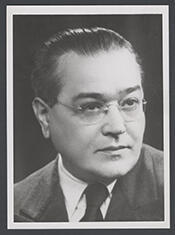
Here you will find contact information for Representative Paul Fornshell Schenck, including email address, phone number, and mailing address.
| Name | Paul Fornshell Schenck |
| Position | Representative |
| State | Ohio |
| District | 3 |
| Party | Republican |
| Status | Former Representative |
| Term Start | January 3, 1951 |
| Term End | January 3, 1965 |
| Terms Served | 7 |
| Born | April 19, 1899 |
| Gender | Male |
| Bioguide ID | S000117 |
About Representative Paul Fornshell Schenck
Paul Fornshell Schenck (April 19, 1899 – November 30, 1968) was an American educator, businessman, and Republican politician who served seven terms as a U.S. Representative from Ohio from 1951 to 1965. Over the course of his congressional career, he represented Ohio’s third congressional district and contributed to the legislative process during a significant period in mid‑twentieth‑century American history, participating in the democratic process and representing the interests of his constituents.
Schenck was born in Miamisburg, Ohio, on April 19, 1899. In 1908 his family moved to nearby Dayton, Ohio, where he was educated in the public schools and graduated from Steele High School in 1917. He received two years of college training following his graduation and remained closely connected to education, serving as a student teacher at Steele High School from 1917 to 1919. These early experiences in Dayton’s schools laid the foundation for his later work as both an educator and a civic leader in the city.
After his initial teaching experience, Schenck entered the automotive service business, working in that field from 1919 to 1923. Building on this practical experience, he returned to education as an automotive training teacher at Roosevelt High School in Dayton beginning in 1923. At Roosevelt he also served as faculty manager of athletics, a position he held until 1929. Through this combination of technical instruction and extracurricular leadership, he developed a reputation as an educator with strong ties to both vocational training and youth development.
Schenck’s career broadened into municipal administration when he was appointed director of recreation for the city of Dayton, a post he held from 1929 to 1935. Serving through the early years of the Great Depression, he oversaw public recreation programs at a time when such services were important to community morale and social welfare. In September 1935, he entered private business by establishing his own real estate, mortgage loan, and insurance firm in Dayton. His success in this enterprise led to further involvement in civic and professional organizations, including service as president of the Dayton Real Estate Board from 1947 to 1949.
Schenck began his formal public service career in elective office when he was elected to the Dayton Board of Education, on which he served from 1941 to 1950. During this period he was president of the board for seven years, helping to guide the city’s school system through the challenges of World War II and the immediate postwar era. He also served as vice chairman of the Dayton Safety Council in 1946 and 1947, reflecting his broader interest in community welfare and public safety. These roles in education governance and civic leadership provided him with a local political base and experience in public administration that would support his later congressional career.
In 1950, Schenck was nominated by the Republican Party to run for Congress from Ohio’s third congressional district. He was defeated in that election by the Democratic incumbent, Edward G. Breen. When Breen resigned in 1951 due to health concerns, a special election was called to fill the vacancy. Schenck was elected as a Republican to the Eighty‑second Congress in that special election and took his seat on November 6, 1951. He was subsequently reelected to the Eighty‑third and to the five succeeding Congresses, serving continuously from November 6, 1951, to January 3, 1965. A member of the Republican Party, he thus completed seven consecutive terms in the U.S. House of Representatives. He sought reelection in 1964 to the Eighty‑ninth Congress but was defeated, ending his congressional service at the close of the Eighty‑eighth Congress.
During his tenure in the House of Representatives, Schenck served on the Committee on Interstate and Foreign Commerce, where he took an active interest in emerging issues related to transportation and public health. In 1957 he introduced a bill that would have prohibited the sale of vehicles discharging hydrocarbons in levels found dangerous by the Surgeon General. Although the bill did not pass in its original form, it was an early and prescient legislative effort addressing the growing national concern over automobile pollution and its impact on public health. In 1959, President Dwight D. Eisenhower signed a modified version of Schenck’s proposal, commonly referred to as the Schenck Act, which directed the Surgeon General to study the relationship between auto emissions and public health. Schenck also participated in major civil rights legislation of the era, voting in favor of the Civil Rights Acts of 1957, 1960, and 1964, thereby supporting federal efforts to address racial discrimination and protect voting and civil rights.
Outside of his public offices, Schenck was active in fraternal and civic organizations. He was a Freemason Knight Templar and a member of the Shriners, affiliated with the Antioch Temple in Dayton. These associations reflected his long‑standing engagement with community and charitable activities in his home city. After leaving Congress in 1965, he returned to private life in Dayton, where he remained until his death.
Paul Fornshell Schenck died in Dayton, Ohio, on November 30, 1968. He was interred in Woodland Cemetery in Dayton, a historic burial ground that is the resting place of many of the city’s prominent citizens.