Representative Paul John Sorg
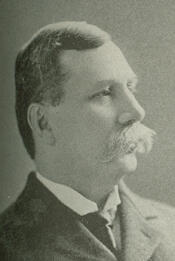
Here you will find contact information for Representative Paul John Sorg, including email address, phone number, and mailing address.
| Name | Paul John Sorg |
| Position | Representative |
| State | Ohio |
| District | 3 |
| Party | Democratic |
| Status | Former Representative |
| Term Start | August 7, 1893 |
| Term End | March 3, 1897 |
| Terms Served | 2 |
| Born | September 23, 1840 |
| Gender | Male |
| Bioguide ID | S000679 |
About Representative Paul John Sorg
Paul John Sorg (September 23, 1840 – May 28, 1902) was an American businessman, Civil War veteran, and Democratic member of the United States House of Representatives from Ohio, serving two terms in Congress from 1893 to 1897. A prominent industrialist and financier, he became one of the leading tobacco manufacturers in the country and the first multi-millionaire of Middletown, Ohio, while also playing a significant role in the civic and political life of his adopted community and state.
Sorg was born in Wheeling, Virginia (now Wheeling, West Virginia), on September 23, 1840, the youngest son of Henry and Elizabeth Sorg, immigrants from the German state of Hesse-Darmstadt (also reported as Hesse-Kassel or Hesse-Cassel). He attended public schools in Wheeling during his early years. In 1852 he moved with his parents and siblings to Cincinnati, Ohio, where he was apprenticed as an iron molder. Determined to improve his prospects, he attended night school in Cincinnati while learning his trade, acquiring the bookkeeping and business skills that would later underpin his commercial success.
During the American Civil War, Sorg served in the Union Army, an experience that placed him among the many Ohioans who took part in the conflict and contributed to the preservation of the Union. After the war, he returned to civilian life in Cincinnati and turned his attention to business. In 1864 he met John Auer, a German-born tobacco roller. Auer possessed technical skill in tobacco manufacture but lacked facility with accounts, while Sorg was an able bookkeeper who knew little about tobacco. Recognizing the complementarity of their talents, the two men organized a firm for the manufacture of tobacco products and established a plant in Cincinnati.
In 1869 Sorg and Auer entered into partnership with another Cincinnati tobacco concern, forming Wilson, Sorg and Company. One of the new partners resided in Middletown, Ohio, and successfully urged the firm to relocate there, where a new plant was constructed. After a period of growth, Sorg and Auer sold their interest in Wilson, Sorg and Company and immediately founded a new enterprise, the P. J. Sorg Tobacco Company, to manufacture cut filler and plug tobacco. Among its brands was “Biggest and Best.” Under Sorg’s leadership, this company expanded into one of the largest tobacco manufacturers of its type in the world, and his success in the industry made him Middletown’s first multi-millionaire.
On July 20, 1876, Sorg married Susan Jennie Gruver (1854–1930) in Middletown. The couple had two children, Paul Arthur Sorg (1878–1913) and Ada Gruver Sorg (1882–1956). As his fortune grew, Sorg invested heavily in the physical and cultural development of Middletown. In 1888 he completed a 35-room stone Romanesque mansion in the city at a cost of approximately $1 million, a residence that became one of the community’s most notable landmarks. The mansion, later converted into apartments, entered a period of restoration in the early twenty-first century under private ownership, with the goal of returning it to use as a single-family residence. A public-spirited man, Sorg made numerous civic and charitable contributions to Middletown, including the construction in 1891 of the Sorg Opera House, designed by Cincinnati architect Samuel Hannaford. The opera house became, and remains, a central performance venue in the city.
Sorg’s prominence in business and local affairs led naturally to a career in national politics. A member of the Democratic Party, he was elected at a special election in May 1894 to the Fifty-third Congress from Ohio’s Third Congressional District, filling the vacancy caused by the death of Representative George W. Houk. His service in Congress, recorded as running from 1893 to 1897, coincided with a significant period in American political and economic history marked by the Panic of 1893 and the ensuing national debate over currency, labor, and industrial policy. Initially, Sorg declined to accept renomination in 1894, displeased that a friend had not been appointed United States consul to Berlin by President Grover Cleveland, to whose campaign he had contributed generously. He ultimately relented and stood again, winning a narrow re-election to the Fifty-fourth Congress in the 1894 elections, at a time when Republicans swept all but two of Ohio’s congressional seats and secured a two-thirds majority in Congress. During his tenure in the House of Representatives, Sorg served as the ranking member of the Committee on Labor and participated actively in the legislative process, representing the interests of his constituents in southwestern Ohio. He declined to seek a third term in 1896 and left Congress at the close of his second term in 1897. Among those who worked closely with him in Washington was James M. Cox, a Butler County native and assistant telegraph and railroad editor of the Cincinnati Enquirer, whom Sorg brought to the capital as his executive secretary; Cox later succeeded to the same congressional seat and went on to serve as Governor of Ohio and Democratic presidential nominee in 1920.
After leaving Congress, Sorg remained a significant figure in Ohio Democratic politics. At the state Democratic convention in July 1897, he allowed his name to be placed in nomination for Governor of Ohio, but he withdrew during the second ballot. He again permitted efforts to secure his nomination for the 1899 gubernatorial election, but these came to nothing when he fell ill. In the meantime, he resumed his business activities in Middletown. He helped form a tobacco trust with Lorillard and Liggett, consolidating major interests in the industry, and in 1898 he sold his tobacco business to the Continental Tobacco Company for $4.5 million. With part of the proceeds, in 1899 he purchased a paper company that had been the first paper mill in Middletown but had passed through several owners; he reorganized it as the Paul A. Sorg Paper Company in honor of his son, who became president of the firm. Sorg also continued his career in finance as president of a local bank in which he had invested in 1891, and he expanded his holdings into real estate and railroad enterprises.
An energetic promoter of industrial development, Sorg recognized the potential of the bicycle industry in its earliest stages and developed the Miami Cycle Company, which introduced its products into markets across the United States. The company later manufactured shells and shrapnel that were in demand by the federal government, reflecting Sorg’s anticipation of the growing importance of armaments in the years leading up to the First World War. Understanding the critical role of transportation infrastructure in the growth of western communities, he was instrumental in securing for Middletown a branch of the Pennsylvania Railroad’s Panhandle system, known locally as the Middletown and Cincinnati (M. and C.) Railroad. His financial interventions at key moments earned him a reputation as a stabilizing force in the city’s economy: when the Merchants’ National Bank of Middletown neared failure, he purchased a controlling interest, restored its operations, and protected many local depositors from serious loss. He similarly took charge of the Middletown Gas Company during a period of mismanagement and returned it to profitability. In recognition of his experience with large industrial combinations, Governor Asa S. Bushnell, noted for his interest in regulating trusts, appointed Sorg in 1899 as a delegate to a national Conference on Trusts, where the agenda focused on “Trusts and Combinations, their uses and abuses—Railway, labor, industrial and commercial,” a subject on which Sorg was regarded as an expert.
Paul John Sorg died in Middletown, Ohio, on May 28, 1902. He was interred in Woodside Cemetery in Middletown, leaving behind a legacy as a leading industrialist, banker, and public benefactor, as well as a former Representative who had served Ohio in the United States Congress during a transformative era in the nation’s economic and political development.