Representative Pearl Peden Oldfield
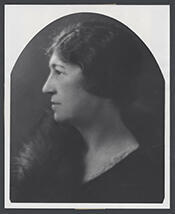
Here you will find contact information for Representative Pearl Peden Oldfield, including email address, phone number, and mailing address.
| Name | Pearl Peden Oldfield |
| Position | Representative |
| State | Arkansas |
| District | 2 |
| Party | Democratic |
| Status | Former Representative |
| Term Start | December 5, 1927 |
| Term End | March 3, 1931 |
| Terms Served | 2 |
| Born | December 2, 1876 |
| Gender | Female |
| Bioguide ID | O000061 |
About Representative Pearl Peden Oldfield
Fannie Pearl Oldfield (née Peden; December 2, 1876 – April 12, 1962), commonly known as Pearl Peden Oldfield, was an American Democratic politician who served as a Representative from Arkansas in the United States Congress from 1927 to 1931. A member of the Democratic Party, she represented Arkansas’s 2nd congressional district and was the first woman elected to Congress from Arkansas. Her service in the House of Representatives occurred during a significant period in American history, as she participated in the legislative process and represented the interests of her constituents during the late 1920s and the onset of the Great Depression.
Oldfield was born Fannie Pearl Peden on December 2, 1876. Details of her early life and education are less extensively documented than her public career, but she came of age in the post-Reconstruction South, a context that shaped both the political environment she later entered and the Democratic Party in Arkansas. She married William Allan Oldfield, who would become a long-serving Democratic member of the U.S. House of Representatives from Arkansas. Through her marriage, she became closely acquainted with political life and the workings of Congress, experience that later informed her own legislative service.
Pearl Peden Oldfield’s path to Congress was closely tied to the career and death of her husband. William A. Oldfield served in the U.S. House of Representatives until his death in office in 1928. In the wake of his death, Arkansas Democrats turned to his widow to succeed him, following a pattern common in the early twentieth century in which widows were selected to complete or continue the terms of deceased congressmen. In 1929, she replaced her husband in Congress, initially completing the remaining three months of his unexpired term. She then successfully sought election in her own right and served one additional term, thereby holding office in the 70th and 71st Congresses and contributing to the legislative process during two terms in Washington.
During her tenure from 1927 to 1931, Oldfield served at a time when the nation was grappling with the final years of the Roaring Twenties and the economic collapse that began with the stock market crash of 1929. As a member of the House of Representatives, she participated in debates and votes on issues central to her district and to the country, including agricultural concerns that were especially important to Arkansas, as well as broader questions of economic policy and federal responsibility. While not among the most publicly prominent national figures of her era, she nonetheless played a role in the democratic process and helped ensure continuity of representation for her constituents during a period of transition and uncertainty.
Oldfield’s election as the first woman to represent Arkansas in Congress marked a significant milestone in the political history of both the state and the nation. Coming less than a decade after the ratification of the Nineteenth Amendment, her service reflected the gradual opening of federal office to women and the evolving role of women in public life. Despite this pioneering status, she chose not to build a long congressional career. After completing the term following her husband’s death and serving one full term of her own, she declined to run for re-election, stepping away from national office in 1931.
In her later years, Pearl Peden Oldfield lived outside the national spotlight, but her congressional service remained an important part of Arkansas’s political legacy. She died on April 12, 1962, closing a life that had spanned from the post-Civil War era through two world wars and the early years of the modern civil rights movement. Remembered as both a continuation of her husband’s public service and a trailblazer in her own right, she occupies a notable place in the history of women in Congress and in the representation of Arkansas in the United States House of Representatives.