Representative Peleg Wadsworth
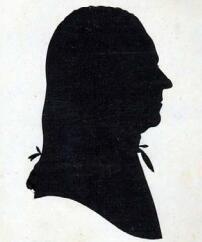
Here you will find contact information for Representative Peleg Wadsworth, including email address, phone number, and mailing address.
| Name | Peleg Wadsworth |
| Position | Representative |
| State | Massachusetts |
| District | 15 |
| Party | Federalist |
| Status | Former Representative |
| Term Start | December 2, 1793 |
| Term End | March 3, 1807 |
| Terms Served | 7 |
| Born | May 6, 1748 |
| Gender | Male |
| Bioguide ID | W000014 |
About Representative Peleg Wadsworth
Peleg Wadsworth (May 6, 1748 – November 12, 1829) was an American Patriot officer during the American Revolutionary War and a Congressman from Massachusetts representing the District of Maine. Born in Duxbury, in the Province of Massachusetts Bay, he was the son of Peleg Wadsworth Sr. and Susanna (Sampson) Wadsworth, and was descended from early Plymouth Colony settlers. Raised in a New England coastal community shaped by maritime trade and the lingering influence of Puritan traditions, he grew up in an environment that emphasized education, civic responsibility, and military preparedness, influences that would later mark his public career. He was also the grandfather of noted American poet Henry Wadsworth Longfellow, a family connection that helped preserve his memory in American cultural history.
Wadsworth pursued formal education at Harvard College, then the principal institution of higher learning in New England. He graduated in 1769, receiving a classical education that included Latin, Greek, rhetoric, and moral philosophy, training that prepared him for both teaching and public service. After graduation he worked as a schoolteacher and also engaged in surveying, a profession that required technical skill and familiarity with the expanding frontiers of New England. In 1772 he married Elizabeth Bartlett of Plymouth, Massachusetts; together they would have a large family whose descendants included prominent figures in American letters and public life. On the eve of the American Revolution, Wadsworth had thus established himself as an educated young professional with growing ties to the communities of coastal Massachusetts.
With the outbreak of the American Revolutionary War, Wadsworth became an active Patriot officer, aligning himself with the colonial cause against British rule. He was commissioned in the Massachusetts militia and soon rose in responsibility, serving as an aide to General Artemas Ward and later to General George Washington. In these roles he participated in the organization and training of troops and in the broader strategic efforts of the Continental Army. He took part in the defense of New York and in other campaigns in the northern theater, gaining experience in both field command and staff work. His service during this period reflected the commitment of New England officers who combined local militia traditions with the emerging professional standards of the Continental Army.
Wadsworth’s most notable military service came in connection with the ill-fated Penobscot Expedition of 1779, a major combined land and naval operation mounted by Massachusetts against a British fortification at Castine, in what is now Maine. Appointed second in command of the land forces, he was responsible for directing troops in difficult terrain and under challenging logistical conditions. The expedition ended in disaster for the American forces, with the destruction of much of the Massachusetts fleet and the dispersal of the land troops. In the aftermath, Wadsworth played a key role in organizing the retreat and safeguarding surviving soldiers, actions that helped preserve his reputation despite the overall failure of the campaign. His experience in Maine during the war laid the foundation for his later relocation and political leadership in that region.
After the war, Wadsworth settled permanently in what was then the District of Maine, part of the Commonwealth of Massachusetts, and became a leading figure in its civic and economic development. He established himself in Portland (then known as Falmouth), where he engaged in mercantile pursuits, land speculation, and local affairs. His military reputation and Harvard education made him a natural choice for public responsibilities, and he served in various local and state capacities, contributing to the organization and governance of the growing communities along the Maine coast. His household became a center of social and intellectual life, and through his children and grandchildren he helped shape the emerging cultural identity of the region.
As a member of the Federalist Party representing Massachusetts, Wadsworth contributed to the legislative process during seven terms in office, serving in the United States House of Representatives during a formative period in the nation’s history. Elected to the Fourth Congress and subsequently re-elected, he served from March 4, 1793, to March 3, 1807, representing the interests of the District of Maine at a time when it remained politically united with Massachusetts. In Congress he participated in debates over the powers of the federal government, commercial policy, and relations with European powers, aligning with Federalist principles that favored a strong national government, support for commerce and navigation, and cautious diplomacy. His long tenure reflected the confidence of his constituents in his judgment and his ability to articulate the concerns of a distant, maritime, and frontier district within the broader national legislature.
During his congressional service, Wadsworth witnessed and took part in the democratic process at a time of intense partisan development and institutional consolidation. He served under the administrations of George Washington, John Adams, Thomas Jefferson, and James Madison, and was present for legislative struggles over issues such as the Jay Treaty, naval defense, and early measures affecting trade and shipping—matters of particular importance to his Maine constituents. His Federalist affiliation placed him in the camp that emphasized order, fiscal responsibility, and support for New England’s commercial interests, and his votes and committee work reflected the priorities of a region dependent on shipbuilding, fishing, and Atlantic trade. Through seven consecutive terms, he provided continuity of representation for a district geographically remote from the national capital but increasingly integrated into the federal system.
After leaving Congress in 1807, Wadsworth gradually withdrew from national politics and devoted himself to his family and local affairs. He eventually moved to Hiram, in western Maine, where he had acquired extensive landholdings. There he oversaw the development of his property, encouraged settlement, and remained a respected elder statesman in the community. His later years were marked by close relationships with his children and grandchildren, including the family line that produced Henry Wadsworth Longfellow, whose poetry would later evoke the landscapes and seafaring traditions of Maine that Wadsworth himself had known. Peleg Wadsworth died on November 12, 1829, in Hiram, Maine. His life spanned the transition from colonial British America to the early decades of the United States, and his combined record of military service and seven-term congressional career left a durable imprint on the history of Massachusetts and the District of Maine.