Representative Pete Olson
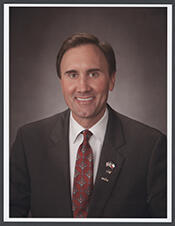
Here you will find contact information for Representative Pete Olson, including email address, phone number, and mailing address.
| Name | Pete Olson |
| Position | Representative |
| State | Texas |
| District | 22 |
| Party | Republican |
| Status | Former Representative |
| Term Start | January 6, 2009 |
| Term End | January 3, 2021 |
| Terms Served | 6 |
| Born | December 9, 1962 |
| Gender | Male |
| Bioguide ID | O000168 |
About Representative Pete Olson
Peter Graham Olson (born December 9, 1962) is an American politician and attorney who served as the U.S. representative for Texas’s 22nd congressional district from January 3, 2009, to January 3, 2021. A member of the Republican Party, he represented a district that included much of southern Houston, as well as most of the city’s southwestern suburbs such as Katy, Pearland, and Sugar Land. Olson served six terms in the United States House of Representatives, contributing to the legislative process during a significant period in American history and representing the interests of his constituents. On July 25, 2019, he announced that he would retire at the end of his term and did not seek reelection in 2020; he was succeeded by fellow Republican Troy Nehls.
Olson was born in 1962 at Fort Lewis, Washington, where his father was stationed with the U.S. military. In 1972, he moved with his family to Seabrook, Texas, a suburb of Houston along the Gulf Coast. He attended local public schools and graduated from Clear Lake High School in 1981. Olson then enrolled at Rice University in Houston, where he played college basketball during his freshman year before focusing on his studies. He earned a Bachelor of Arts degree in computer science from Rice in 1985. Pursuing a legal career, he attended the University of Texas School of Law in Austin, receiving his Juris Doctor in 1988 and gaining admission to the State Bar of Texas that same year.
After completing law school, Olson joined the United States Navy, beginning what would become nearly a decade of military service. He earned his Naval Aviator wings in March 1991. As a P-3C Orion pilot in the post–Gulf War era, he flew missions over the Persian Gulf, the Indian Ocean, and the Pacific, contributing to maritime patrol, surveillance, and related operations. In 1994, he was assigned to Washington, D.C., as a Navy liaison to the United States Senate. In that capacity he worked closely with lawmakers and their staffs, including assisting Republican U.S. Senator Phil Gramm of Texas on several overseas trips. Olson served in the U.S. Navy for nine years before leaving active duty and transitioning fully into legislative and political work.
Following his departure from active military service, Olson joined Senator Phil Gramm’s staff in 1998, marking the beginning of his full-time career in congressional offices. He worked for Gramm through the senator’s final years in the Senate, gaining experience in federal policy, constituent service, and the legislative process. After Gramm’s retirement from the Senate in 2002, Olson became chief of staff to Gramm’s successor, U.S. Senator John Cornyn, the former Texas attorney general. Olson served as Cornyn’s chief of staff from December 2002 until May 2007, overseeing the operations of the Senate office and further solidifying his reputation as a Republican political operative with deep ties to Texas and Washington, D.C.
In 2007, Olson announced that he would run for the Republican nomination in Texas’s 22nd congressional district, then represented by Democrat Nick Lampson. The district, historically Republican, had drawn national attention after the 2006 election, when 11-term Republican incumbent and former House Majority Leader Tom DeLay was indicted and resigned from Congress. DeLay’s resignation came too late for another Republican to replace him on the ballot, and Lampson won the seat in 2006 with 52 percent of the vote against a Republican write-in candidate. Because of these unusual circumstances and the district’s strong Republican lean—reflected in a Cook Partisan Voting Index of R+15 and President George W. Bush’s 64 percent share of the vote there in 2004—analysts widely viewed the seat as one of the best Republican takeover opportunities in the country.
Olson entered a crowded 2008 Republican primary field of ten candidates, which included former Congresswoman Shelley Sekula-Gibbs, former Pasadena mayor John Manlove, former Sugar Land mayor Dean Hrbacek, State Representative Robert Talton, Senior District Judge Jim Squier, Texas State Board of Education member Cynthia Dunbar, and three other candidates. Sekula-Gibbs led the initial primary with about 30 percent of the vote, while Olson finished second with 21 percent, forcing an April runoff because no candidate secured a majority. Sekula-Gibbs criticized Olson as “a Washington insider” who had “moved here just six months ago to run,” but Olson received endorsements from 12 of Texas’s 19 Republican members of Congress. In the April 8, 2008, runoff, he defeated Sekula-Gibbs decisively, winning 69 percent of the vote to her 31 percent. The Hill, a Washington, D.C., political newspaper, observed that Olson’s victory set up “one of the top House races in the country in a conservative Houston district.”
The general election campaign between Olson and incumbent Democrat Nick Lampson drew national attention. Many election experts and political publications identified the contest as one of the Republicans’ best chances to reclaim a Democratic-held seat. In 2007, analyst Stuart Rothenberg had called the 22nd District “arguably the best Republican takeover opportunity in the country,” and the website Electoral-vote.com later described Olson’s bid as “probably the GOP’s best pickup opportunity for 2008.” Hastings Wyman’s Southern Political Report placed the race on its watch list, emphasizing the district’s Republican roots and Lampson’s narrow 2006 win against a write-in opponent. On June 20, 2008, the Washington Post’s “The Fix” column wrote that it was “hard to see Rep. Nick Lampson (D) winning reelection” and that Lampson’s “slim hopes got even slimmer” with Olson’s nomination. An October 22, 2008, poll by John Zogby and the Houston Chronicle showed Olson with a 17-point lead over Lampson, and on October 30, 2008, Larry Sabato’s Crystal Ball predicted the race would be a “Republican Pick Up.” Olson and Lampson debated on October 20, 2008, in Rosenberg, Texas, alongside Libertarian candidate John Wieder.
Fundraising became an important component of the 2008 race. At the end of March 2008, Olson’s campaign was technically in debt, reporting almost $128,000 on hand and a personal loan of $175,000 from the candidate. To bolster his finances, outgoing Vice President Dick Cheney traveled to Houston on June 5, 2008, to headline a fundraiser for Olson at the home of Houston billionaire Dan Duncan. From July 1 to September 30, 2008, Olson raised $312,700, more than double Lampson’s $149,000 over the same period. In the November 4, 2008, general election, Olson defeated Lampson with 53 percent of the vote to Lampson’s 45 percent, winning four of the district’s five counties and securing a Republican pickup in a district that had long leaned heavily toward the GOP.
Olson took office in the 111th Congress on January 3, 2009, beginning a congressional career that would span six terms through January 3, 2021. During his time in the House of Representatives, he participated in the democratic process on a wide range of national issues and consistently aligned with Republican positions, reflecting the conservative orientation of his district. He was reelected in 2010 with 67 percent of the vote against Democratic challenger Kesha Rogers. In 2012, he won election to a third term with 64 percent of the vote to Rogers’s 32 percent. Olson continued to hold the seat comfortably in subsequent cycles: in 2014, he defeated Democratic nominee Frank Briscoe in the November 4 general election, and in 2016 he won a fifth term by polling 181,864 votes (59.2 percent) to Democratic opponent Mark Gibson’s 123,670 votes (40.5 percent) in the November 8 general election.
In 2018, Olson faced a more competitive race as demographic and political shifts made the 22nd District more contested. He campaigned against Democrat Sri Preston Kulkarni, a former diplomat raised in Houston whose mother’s family traces its ancestry to Sam Houston, one of the founders of Texas. During the campaign, Olson drew criticism for comments about his opponent, including referring to Kulkarni as an “Indo-American who’s a carpetbagger” and making an untrue claim that Pakistanis had attacked the United States on September 11, 2001, remarks that observers interpreted as an effort to exploit anti-Pakistani sentiment in the district. Despite the closer contest and the controversy surrounding his statements, Olson won reelection with 51.4 percent of the vote to Kulkarni’s 46.5 percent, securing his sixth and final term in Congress.
On July 25, 2019, Olson announced that he would retire from the House of Representatives at the end of his term and not seek reelection in 2020. His decision opened a competitive Republican primary for the 22nd District and ultimately led to the election of Fort Bend County Sheriff Troy Nehls, also a Republican, as his successor. Olson left office on January 3, 2021, concluding twelve years of service in the U.S. House. After his departure from Congress, he remained associated with the Republican Party and with public affairs in Texas, drawing on his combined experience as a naval aviator, Senate staff member, congressional chief of staff, and six-term U.S. representative.