Representative Peter Angelo Cavicchia
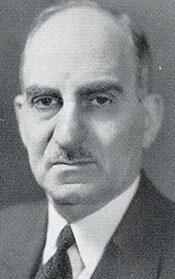
Here you will find contact information for Representative Peter Angelo Cavicchia, including email address, phone number, and mailing address.
| Name | Peter Angelo Cavicchia |
| Position | Representative |
| State | New Jersey |
| District | 11 |
| Party | Republican |
| Status | Former Representative |
| Term Start | December 7, 1931 |
| Term End | January 3, 1937 |
| Terms Served | 3 |
| Born | May 22, 1879 |
| Gender | Male |
| Bioguide ID | C000262 |
About Representative Peter Angelo Cavicchia
Peter Angelo Cavicchia (May 22, 1879 – September 11, 1967) was an American Republican Party politician from New Jersey who served as a Representative in the United States Congress from 1931 to 1937. During his three terms in the House of Representatives, he represented Essex County, including The Oranges and parts of Newark, and participated actively in the legislative process during a significant period in American history marked by the Great Depression and the early New Deal era.
Born on May 22, 1879, Cavicchia came of age in a period of rapid industrialization and urban growth that would shape the political and social landscape of New Jersey. His early years in and around Essex County exposed him to the concerns of a diverse and expanding urban population, experiences that later informed his public service and his attention to the needs of his constituents in The Oranges and Newark. Although detailed records of his childhood are limited, his subsequent professional and political trajectory reflects a strong engagement with civic life and local affairs.
Cavicchia pursued his education with the aim of entering the professions and public service, preparing himself for a career that would combine legal, administrative, and political responsibilities. His studies equipped him with the skills necessary to navigate the complex legal and governmental structures of the early twentieth century, and he emerged as a figure capable of addressing the practical concerns of a growing metropolitan region. This educational foundation underpinned his later work as both a public official and a legislator.
Before his election to Congress, Cavicchia built a career that connected him closely to the civic and political institutions of Essex County. He became involved in local public affairs at a time when New Jersey’s cities were grappling with issues of infrastructure, governance, and social services. Through his professional work and political activity, he established himself as a representative voice for his community, gaining the experience and public recognition that would support his eventual election to national office. His Republican affiliation placed him within a party that, in New Jersey, was deeply engaged with questions of economic development and municipal reform.
Cavicchia was elected as a Republican to the United States House of Representatives and served from 1931 to 1937, encompassing the Seventy-second, Seventy-third, and Seventy-fourth Congresses. His tenure coincided with the onset and deepening of the Great Depression, as well as the initial implementation of President Franklin D. Roosevelt’s New Deal programs. As a member of the House, he contributed to the legislative process at a time when Congress was enacting far-reaching measures related to banking, employment, social welfare, and economic recovery. Representing Essex County, he sought to balance national policy debates with the specific needs of his urban and suburban constituents in The Oranges and Newark, participating in the democratic process and giving voice to their concerns in federal deliberations.
During these three terms, Cavicchia’s work in Congress reflected the broader tensions and collaborations between Republicans and Democrats over the scope and direction of federal intervention in the economy. While detailed records of his individual votes and committee assignments are limited in the surviving summaries, his service placed him at the center of some of the most consequential legislative discussions of the twentieth century. His role as a Republican from an industrialized New Jersey district required attention both to business interests and to the welfare of working-class residents affected by unemployment and economic dislocation.
After leaving Congress in 1937, Cavicchia remained identified with public service and with the civic life of New Jersey. His post-congressional years were spent largely out of the national spotlight, but his earlier work in representing Essex County and participating in the major legislative debates of the Depression era left a record of engagement with the central issues of his time. He lived to see the transformations of mid-twentieth-century America, including World War II and the postwar expansion, events that further reshaped the communities he had once represented.
Peter Angelo Cavicchia died on September 11, 1967, closing a life that had spanned from the late nineteenth century through the modern era. Remembered as a Republican representative from New Jersey who served three terms in the United States House of Representatives, he played a part in guiding his district through one of the most challenging periods in American economic and political history, representing Essex County, The Oranges, and parts of Newark in the nation’s capital.