Representative Peter A. DeFazio
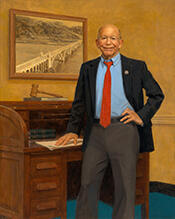
Here you will find contact information for Representative Peter A. DeFazio, including email address, phone number, and mailing address.
| Name | Peter A. DeFazio |
| Position | Representative |
| State | Oregon |
| District | 4 |
| Party | Democratic |
| Status | Former Representative |
| Term Start | January 6, 1987 |
| Term End | January 3, 2023 |
| Terms Served | 18 |
| Born | May 27, 1947 |
| Gender | Male |
| Bioguide ID | D000191 |
About Representative Peter A. DeFazio
Peter Anthony DeFazio (born May 27, 1947) is an American politician who served as the U.S. representative for Oregon’s 4th congressional district from January 3, 1987, to January 3, 2023. A member of the Democratic Party, he was elected to 18 consecutive terms in the House of Representatives and became one of the chamber’s longest-serving members. He is a founder of the Congressional Progressive Caucus and is known for his progressive voting record, his long tenure on the House Committee on Transportation and Infrastructure, and his representation of a marginally Democratic district in southwestern Oregon. On December 1, 2021, DeFazio announced that he would not seek reelection in 2022, concluding more than three and a half decades in Congress.
DeFazio was born in Needham, Massachusetts, a suburb of Boston, on May 27, 1947, and graduated from Needham High School in 1965. He has credited a politically outspoken great-uncle with shaping his early political outlook, recalling that the relative almost never said “Republican” without adding “bastard” (pronounced “bastud” in a Boston accent). He served in the United States Air Force Reserve from 1967 to 1971 during the Vietnam era. DeFazio received a Bachelor of Arts degree from Tufts University in 1969. After moving to Oregon, he pursued graduate study at the University of Oregon, where he earned a Master of Arts degree in gerontology in 1977, laying the groundwork for his later interest in social and health policy affecting older Americans.
Following completion of his graduate studies, DeFazio entered public service as a congressional staff member. From 1977 to 1982, he worked as an aide to U.S. Representative Jim Weaver of Oregon, gaining experience in legislative procedure, constituent services, and the policy issues affecting Oregon’s 4th congressional district. Building on that experience, he successfully ran for local office and was elected a Lane County Commissioner in 1983. He served on the Lane County Board of Commissioners through 1986 and was chairman of the board from 1985 to 1986. His tenure as commissioner gave him executive and administrative experience at the county level and established his political base in Lane County, which would later prove central to his congressional career.
In 1986, upon the retirement of Representative Jim Weaver, DeFazio ran for the open seat in Oregon’s 4th congressional district. He won a highly competitive three-way Democratic primary against State Senators Bill Bradbury and Margie Hendriksen, prevailing by a narrow margin of 34% to 33% to 31%. In the general election, he was elected to Congress with 54% of the vote. Although the district was only marginally Democratic on paper, DeFazio forged a durable hold on the seat. He did not face another contest nearly as close as his initial primary until 2010, winning every election before then with at least 61% of the vote. His political strength rested largely on his support in Lane County, which contained almost half the district’s population and anchored his base even as the district’s presidential vote often remained closely divided. Over the years the district narrowly voted for George W. Bush in 2000 (in part due to Ralph Nader’s presence on the ballot), for John Kerry in 2004, and for Hillary Clinton by just 0.1 percentage point in 2016, underscoring the swing nature of the constituency he represented.
During his 18 terms in the House of Representatives, DeFazio participated extensively in the legislative process and became identified with the progressive wing of the Democratic Party. In 1992 he co-founded the Congressional Progressive Caucus along with Bernie Sanders, Ron Dellums, Lane Evans, Thomas Andrews, and Maxine Waters, and he served as its chair from 2003 to 2005. He maintained a progressive voting record on economic, environmental, labor, and social issues, including support for legal abortion. In 1999, during the World Trade Organization meetings in Seattle, he marched with protesters opposed to the WTO’s economic globalization policies, reflecting his skepticism of certain trade agreements and their impact on workers and environmental standards. At various points he was mentioned as a potential candidate for higher office; he reportedly considered and reconsidered running against Republican Senator Gordon H. Smith in the 2008 U.S. Senate election, but on April 20, 2007, he announced that he would not enter that race. After Barack Obama’s election as president in 2008, DeFazio was also reported to be under consideration for the post of Secretary of Transportation, though the position ultimately went to Representative Ray LaHood.
DeFazio’s electoral fortunes periodically drew national attention. In 2010 he faced a serious challenge from Republican Art Robinson and Pacific Green Party candidate Michael Beilstein. That race became notable for the role of outside money following the Supreme Court’s Citizens United v. Federal Election Commission decision. A Super PAC called The Concerned Taxpayers of America spent approximately $300,000 on advertisements attacking DeFazio. Federal Election Commission filings later revealed that the group was funded solely by Daniel G. Schuster Inc., a Maryland concrete firm, and New York hedge fund executive Robert Mercer, co-head of Renaissance Technologies. According to reporting in The Washington Post, the group claimed it had been formed to engage citizens “from every walk of life and political affiliation” in opposing “runaway spending,” but its only expenditures were ads targeting DeFazio and Democratic Representative Frank Kratovil of Maryland. DeFazio was reelected with 54.5% of the vote, his lowest winning percentage since his first election in 1986, and The Oregonian noted that the contest was more remarkable for the volume of outside spending than for the candidates themselves. In 2011 the National Journal cited him as an example of a “swing-district” Democrat calculating his political distance from President Obama in advance of the 2012 elections, noting that his district had nearly voted for George W. Bush in 2004. Subsequent redistricting made the 4th District slightly more favorable to him by adding almost all of Benton County, including Corvallis, home to Oregon State University. In 2020 he again faced a high-profile challenge from Republican Alek Skarlatos, a former Oregon National Guard soldier known for helping to subdue a terrorist in the 2015 Thalys train attack. DeFazio defeated Skarlatos by over 25,000 votes, a margin of about 5.3–5.4%, his narrowest victory since taking office, while Pacific Green Party candidate Daniel Hoffay finished third with 2.2% of the vote.
Transportation and infrastructure policy formed the core of DeFazio’s legislative work. He spent his entire congressional career on the House Committee on Transportation and Infrastructure, one of the chamber’s largest and most influential committees. Over the years he served as chair or ranking member of four of the committee’s six subcommittees: Aviation; Coast Guard and Maritime Transportation; Highways and Transit; and Water Resources and Environment. When Democrats won control of the House in the 2018 elections, DeFazio became chair of the full committee. In that role he was a principal architect of major infrastructure legislation. In 2020 he sponsored H.R. 2, the Moving Forward Act, a $1.5 trillion package that proposed significant investments in highways, rail, transit, airports, ports and harbors, wastewater and drinking water systems, brownfield remediation, broadband expansion, and related infrastructure. During negotiations over what became the Infrastructure Investment and Jobs Act, DeFazio expressed frustration that Senate negotiators reached a bipartisan deal largely without substantial input from the House, and he sharply criticized the process in closed-door meetings, earning the nickname “Tiger of the House.” Nevertheless, he ultimately supported the final legislation, helped secure its passage, and joined President Joe Biden on multiple occasions to promote the new law.
As chair of the Transportation and Infrastructure Committee, DeFazio also led a high-profile investigation into aviation safety following two fatal crashes of Boeing 737 MAX aircraft that together claimed 346 lives. Over 18 months, his committee conducted an extensive inquiry into the design, development, and certification of the 737 MAX. The investigation identified serious flaws and missteps by both Boeing and the Federal Aviation Administration, including issues related to the aircraft’s flight control systems and oversight processes. The committee’s majority staff produced a 238-page report detailing repeated and significant failures in safety culture and regulatory oversight. In response, DeFazio played a key role in crafting and passing comprehensive aircraft certification reform and aviation safety legislation, which was incorporated into the Consolidated Appropriations Act, 2021, signed into law by President Donald Trump on December 27, 2020. The investigation and its findings later featured prominently in the 2022 Netflix documentary “Downfall: The Case Against Boeing,” directed by Rory Kennedy, which highlighted DeFazio’s role in uncovering the systemic problems that contributed to the crashes.
Throughout his congressional service, DeFazio took positions on a range of domestic policy issues beyond transportation. In October 2011 he urged the U.S. Department of Labor to strengthen restrictions on the hiring of foreign guest workers for forestry jobs that he argued should be available to unemployed U.S. citizens. He was an outspoken critic of the Trump administration’s immigration policies. In January 2017 he issued a statement condemning President Donald Trump’s executive order that suspended all refugee admissions to the United States for 120 days and barred entry for 90 days to immigrants from Iraq, Iran, Libya, Somalia, Sudan, Syria, and Yemen. In January 2018 his guest for the State of the Union Address was Jesus Narvaez, a “Dreamer,” DACA activist, and member of Movimiento Estudiantil Chicanx de Aztlán (MEChA), underscoring his support for young undocumented immigrants brought to the United States as children. In June 2018 DeFazio joined other members of Oregon’s congressional delegation in demanding that Immigration and Customs Enforcement allow individuals held at a federal prison in Sheridan, Oregon, under the Trump administration’s “zero-tolerance” policy to make free telephone calls so they could arrange legal representation. Over the course of his long tenure, he consistently aligned with pro-choice positions on reproductive rights and supported legal abortion.
DeFazio’s decision not to seek reelection in 2022 marked the end of a 36-year career in the House of Representatives, during which he represented Oregon’s 4th congressional district through shifting political currents and demographic changes. A native of Massachusetts who became a central figure in Oregon politics, a veteran of the United States Air Force Reserve, a former Lane County Commissioner, and a founder of the Congressional Progressive Caucus, he left office as a senior Democratic voice on transportation, infrastructure, and progressive economic policy.