Representative Peter Deutsch
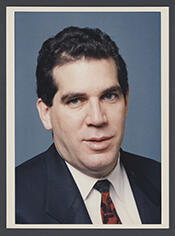
Here you will find contact information for Representative Peter Deutsch, including email address, phone number, and mailing address.
| Name | Peter Deutsch |
| Position | Representative |
| State | Florida |
| District | 20 |
| Party | Democratic |
| Status | Former Representative |
| Term Start | January 5, 1993 |
| Term End | January 3, 2005 |
| Terms Served | 6 |
| Born | April 1, 1957 |
| Gender | Male |
| Bioguide ID | D000275 |
About Representative Peter Deutsch
Peter Russell Deutsch (born April 1, 1957) is an American politician from the U.S. state of Florida who served as a Democratic member of the United States House of Representatives from 1993 to 2005. A member of the Democratic Party, he represented Florida’s 20th congressional district for six consecutive terms, contributing to the legislative process during a significant period in American political history and participating actively in the democratic process on behalf of his constituents.
Deutsch’s early life and formative years laid the groundwork for his later political career, although detailed public accounts of his childhood and family background are limited. He came of age during a period of substantial political and social change in the United States, developments that would later inform his interest in public service and Democratic Party politics in Florida. His eventual move into elective office reflected both a commitment to civic engagement and a focus on issues affecting South Florida’s rapidly growing and diverse population.
Before entering Congress, Deutsch established himself in Florida politics and public affairs, gaining experience that would prove central to his later legislative work. As he built his career, he became identified with the Democratic Party’s efforts to expand its influence in Florida, particularly in the Miami–Fort Lauderdale metropolitan area. By the early 1990s, he had developed sufficient political standing and name recognition to seek federal office, positioning himself as a representative voice for his district’s interests in Washington.
Deutsch was first elected to the U.S. House of Representatives in 1992 and took office in January 1993 as the Representative from Florida’s 20th congressional district. He would hold this seat until January 2005, serving six terms in the House. During these twelve years, he participated in the full range of legislative responsibilities, including debating and voting on federal laws, working on committee assignments, and advocating for policies affecting his South Florida constituency. His tenure coincided with major national developments, including shifts in congressional control between the parties, debates over health care and economic policy, and evolving U.S. approaches to foreign affairs and national security. Throughout this period, Deutsch represented the interests of his district’s residents, engaging with local concerns while contributing to broader national policy discussions.
In 2004, Deutsch sought to extend his public service to the United States Senate by declaring his candidacy for the Democratic nomination for the Senate seat that would be vacated in 2005 by retiring Democratic Senator Bob Graham. In the early stages of the race, Deutsch consistently led opinion polls in the Miami–Fort Lauderdale metropolitan area and, for much of the campaign, maintained the largest amount of cash on hand among the Democratic contenders. However, he lagged in statewide opinion polls behind rival Betty Castor, whose fundraising accelerated dramatically during the summer of 2004 with the assistance of EMILY’s List, which contributed close to $4.5 million in television and advertising expenditures on her behalf. The Castor campaign was accused of inappropriate coordination with EMILY’s List, and a lawsuit was filed with the Federal Election Commission over these activities.
As the 2004 Senate campaign intensified, Deutsch expanded his campaign organization and media strategy. In May 2004, he hired Roy Teicher, a former television writer, newspaper reporter, and editor, as his communications director. The following month, in June 2004, he brought on Sanford Dickert, then Chief Technology Officer for the John Kerry for President campaign, as his Director of Internet Strategy, reflecting an early emphasis on digital outreach in statewide campaigning. That same month, Deutsch came under heavy criticism from the Castor campaign after a 527 organization, the American Democracy Project, run by Bernie Friedman, began attacking Castor’s handling of the case of Sami al-Arian, a University of South Florida professor whose alleged ties to terrorism had become a contentious political issue. On March 2, 2006, al-Arian entered a guilty plea to a charge of conspiracy to help the Palestinian Islamic Jihad, a “specially designated terrorist” organization; he was later sentenced to 57 months in prison and ordered deported following his prison term. Deutsch denied any involvement in the American Democracy Project’s efforts and publicly denounced their tactics.
Later in the 2004 campaign, Florida’s retiring Senator Bob Graham and the state’s other Senator, Bill Nelson, proposed a pledge among the leading Democratic candidates—Deutsch, Betty Castor, and Alex Penelas—to refrain from negative campaigning. Deutsch agreed to the pledge but added a clause allowing him to raise what he termed “legitimate” electability issues. In that context, he released an advertisement questioning the accuracy of Castor’s statements regarding the investigation and suspension of Sami al-Arian, keeping the controversy in the public eye. Despite his strong base in South Florida, Deutsch was defeated by Castor in the Democratic primary on August 31, 2004, winning only three counties: Miami-Dade, Broward, and Monroe. Castor went on to lose the general election to Republican nominee Mel Martínez. Because Deutsch had given up his House seat to pursue the Senate race, he was unable to run for reelection to the House in 2004 and was succeeded in Florida’s 20th congressional district by Democrat Debbie Wasserman Schultz.
Following his departure from Congress in January 2005, Deutsch’s career shifted away from elective office. His twelve years in the House and his high-profile 2004 Senate campaign left a record of engagement with both district-level and statewide issues in Florida, as well as involvement in key national debates of his era. Although he did not return to Congress after his Senate bid, his service from 1993 to 2005 remains a notable part of Florida’s modern political history and of the Democratic Party’s representation of South Florida in the United States House of Representatives.