Senator Peter Goelet Gerry
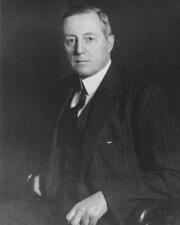
Here you will find contact information for Senator Peter Goelet Gerry, including email address, phone number, and mailing address.
| Name | Peter Goelet Gerry |
| Position | Senator |
| State | Rhode Island |
| Party | Democratic |
| Status | Former Representative |
| Term Start | April 7, 1913 |
| Term End | January 3, 1947 |
| Terms Served | 5 |
| Born | September 18, 1879 |
| Gender | Male |
| Bioguide ID | G000141 |
About Senator Peter Goelet Gerry
Peter Goelet Gerry (September 18, 1879 – October 31, 1957) was an American lawyer and Democratic politician who served in the United States House of Representatives and, subsequently, for multiple terms as a United States Senator from Rhode Island. He is the only U.S. Senator in American history to lose re-election and later reclaim his Senate seat from the person who had defeated him. Over the course of his congressional career, which extended in the Senate from 1913 to 1947 according to contemporary congressional records, he contributed to the legislative process during five terms in office and represented the interests of his Rhode Island constituents during a period of profound national and international change.
Gerry was born on September 18, 1879, in Manhattan, New York City, to Elbridge Thomas Gerry and Louisa Matilda Livingston Gerry. He came from a prominent political and financial lineage: he was a great-grandson of Elbridge Gerry, the fifth Vice President of the United States, whose name gave rise to the term “gerrymandering.” Through his paternal grandmother, Hannah Green Goelet, he was a great-great-grandson of real estate investor Peter Goelet. His father, Elbridge T. Gerry, a leading New York lawyer and philanthropist, was first cousins with Robert Goelet and Ogden Goelet and was estimated in 1912 to be worth approximately $25,000,000 (equivalent to more than $800 million in early twenty-first-century dollars), underscoring the family’s substantial wealth and social standing.
Gerry received an elite education that reflected his family’s position. In the summer of 1899, he and his brother Robert were tutored by William Lyon Mackenzie King, who later became prime minister of Canada. Gerry attended Harvard University, from which he graduated in 1901. He then pursued legal studies and was admitted to the Rhode Island bar in 1906, establishing himself professionally as a lawyer. His decision to base his legal and political career in Rhode Island, rather than in New York where he had been born, helped lay the groundwork for his later electoral success in that state.
Gerry’s early career combined the management of inherited wealth with the practice of law and growing political involvement. He inherited large real estate holdings from his mother, who died in 1920. In 1918, a trust agreement was created under which Gerry, his elder brother Robert Livingston Gerry, and their sisters, Angelica Livingston Gerry and Mabel Gerry, could exchange ownership interests in Gerry family real estate for stock in Gerry Estates, Inc. In 1922, Gerry and his brother agreed to sell substantial portions of these real estate holdings, further consolidating and rationalizing the family’s property interests. These financial resources provided him with a secure base from which to pursue public office and national political influence.
Gerry entered national politics as a Democrat from Rhode Island. He was elected to the United States House of Representatives from Rhode Island’s 2nd Congressional District and served from 1913 to 1915. An unsuccessful candidate for re-election in 1914, he nonetheless quickly advanced to higher office. In 1916 he was elected to the United States Senate and served his first Senate tenure from March 4, 1917, to March 3, 1929. He was the first United States Senator from Rhode Island to be elected by popular vote rather than by the state legislature, following the ratification of the Seventeenth Amendment, and he was also the first Democratic U.S. Senator from Rhode Island since 1859. His service in Congress thus occurred during a significant period in American history, encompassing World War I, the postwar settlement, and the early years of the Great Depression, during which he participated in the democratic process and contributed to the legislative work of the Senate.
Within the Senate, Gerry rose to a position of party leadership and developed a reputation as a committed internationalist. From 1919 to 1929 he served as the Democratic Whip, making him the second-ranking Democrat in the chamber. He has been described by historians as a “Wilsonian Moralist,” reflecting his support for President Woodrow Wilson’s foreign policy and the crusade for the League of Nations. Despite the often sharp partisan divide between Democrats and Republicans during his first stint in the Senate, Gerry maintained cordial working relationships across the aisle, including with the Republican Majority Whip, Senator Charles Curtis of Kansas, who later became Senate Majority Leader and Vice President of the United States. In 1928 Gerry was defeated for re-election by Republican Felix Hebert, temporarily ending his Senate career.
Gerry’s defeat in 1928 did not mark the end of his political life. In 1934 he ran again for the Senate in a rematch against Felix Hebert and was victorious, thereby becoming the only U.S. Senator in American history to lose a Senate seat and later regain it from the same opponent. He returned to the Senate in January 1935 and was re-elected in 1940, serving through the New Deal era and World War II. He did not seek re-election in 1946, concluding his long Senate service, which, taken together with his earlier House term, made him a central Rhode Island Democratic figure in national politics from the Wilson administration through the early Cold War period.
Gerry’s personal life intersected with some of the most prominent families in American society. In 1910 he married Mathilde Scott Townsend (1885–1949), daughter of Richard H. Townsend, president of the Erie and Pittsburgh Railroad, and granddaughter of William Lawrence Scott, a Pennsylvania railroad and coal magnate and former member of the U.S. House of Representatives from Pennsylvania. The couple had no children and divorced in 1925. Later that same year, Mathilde married diplomat Sumner Welles, who had divorced his wife, Esther Slater, in 1923; at the time, rumors circulated in Washington that an affair between Welles and Mathilde had contributed to the dissolution of both marriages. On October 22, 1925, Gerry married Edith Stuyvesant Dresser (1873–1958), the widow of George Washington Vanderbilt II. Edith, a daughter of Maj. George Warren Dresser, was the mother of Cornelia Stuyvesant Vanderbilt, who married John Francis Amherst Cecil, son of Lord William Cecil and Mary Rothes Margaret Tyssen-Amherst, 2nd Baroness Amherst of Hackney. Through this marriage, Gerry became connected to the Vanderbilt family and their extensive social and philanthropic networks.
Peter Goelet Gerry died on October 31, 1957, in Providence, Rhode Island. His elder brother, Robert Livingston Gerry, died several hours later in Delhi, New York, marking the near-simultaneous passing of two members of a prominent American family. Gerry was buried at St. James Cemetery in Hyde Park, New York. His widow, Edith Stuyvesant Dresser Gerry, survived him by a little more than a year and died on December 21, 1958.