Representative Peter Francis Hammond
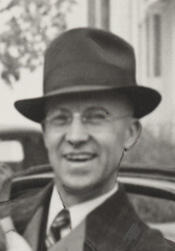
Here you will find contact information for Representative Peter Francis Hammond, including email address, phone number, and mailing address.
| Name | Peter Francis Hammond |
| Position | Representative |
| State | Ohio |
| District | 11 |
| Party | Democratic |
| Status | Former Representative |
| Term Start | January 3, 1935 |
| Term End | January 3, 1937 |
| Terms Served | 1 |
| Born | June 30, 1887 |
| Gender | Male |
| Bioguide ID | H000131 |
About Representative Peter Francis Hammond
Peter Francis Hammond (June 30, 1887 – April 2, 1971) was an American politician and businessman who served as a Democratic Representative from Ohio in the United States House of Representatives during the mid-1930s. Although his tenure in Congress was brief, spanning from November 1936 to January 1937, his service took place during a significant period in American history, amid the New Deal era and the continuing recovery from the Great Depression.
Hammond was born on June 30, 1887, in Lancaster, Fairfield County, Ohio. He was raised in the Roman Catholic tradition and attended a private Catholic high school. Pursuing further education, he enrolled at Josephinum College in Columbus, Ohio, a Catholic institution that provided him with a foundation in liberal and religious studies. His early life in Lancaster and education in nearby Columbus rooted him firmly in central Ohio, a region he would later represent in Congress and serve in various public capacities.
By trade, Hammond was a tailor, and he entered the clothing business as a young man. In 1913 he opened his own clothing store in Lancaster, establishing himself as a local businessman and community figure. Through his work as a merchant, he developed close ties with residents and gained firsthand experience with the economic concerns of working- and middle-class Ohioans. This background in small business and local commerce informed his later public service and political outlook as a Democrat during a time of economic upheaval.
Hammond’s entry into national politics came in the context of a vacancy in Ohio’s representation in the U.S. House of Representatives. On November 3, 1936, he was elected as a Democrat in a special election to fill the unexpired term of Representative Mell G. Underwood. His service in Congress extended from November 1936 until January 1937, a period of roughly two months that fell within the Seventy-fourth Congress. During this time, he participated in the legislative process and represented the interests of his Ohio constituents in Washington, contributing to the work of the House during a critical phase of the New Deal. Although he served only one term in office, his tenure coincided with major national debates over economic recovery and federal relief programs. He did not, however, stand as a candidate in the regular election held the same day for the subsequent full term, and thus his service concluded at the end of the short, unexpired term.
After leaving Congress in January 1937, Hammond returned briefly to private life and resumed management of his clothing store in Lancaster. His experience in national office and his longstanding local reputation soon led to another form of public service. In 1938 he was appointed postmaster of Lancaster, Ohio, a federal position that placed him in charge of the city’s postal operations. Hammond held this post for sixteen years, overseeing the local implementation of postal services during a period that spanned the end of the Great Depression, World War II, and the early postwar era. He retired from the position of postmaster in 1954, concluding his formal public career.
In his later years, Hammond remained in Lancaster, the community where he had been born, built his business, and carried out much of his public service. He died there on April 2, 1971, at the age of 83. His life reflected a trajectory from local businessman to brief national legislator and long-serving federal official at the community level, embodying the close connection between local civic engagement and national public service in mid-twentieth-century American politics.