Representative Peter Francis Mack
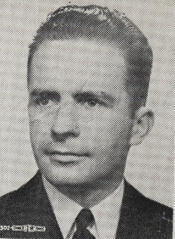
Here you will find contact information for Representative Peter Francis Mack, including email address, phone number, and mailing address.
| Name | Peter Francis Mack |
| Position | Representative |
| State | Illinois |
| District | 21 |
| Party | Democratic |
| Status | Former Representative |
| Term Start | January 3, 1949 |
| Term End | January 3, 1963 |
| Terms Served | 7 |
| Born | November 1, 1916 |
| Gender | Male |
| Bioguide ID | M000020 |
About Representative Peter Francis Mack
Peter Francis Mack Jr. was born on November 1, 1916, in Carlinville, Macoupin County, Illinois. Raised in central Illinois, he came of age during the interwar period, a time marked by the Great Depression and significant social and economic change in the United States. These formative years in a largely rural community helped shape his understanding of the concerns of working- and middle-class Americans, perspectives that would later inform his public service. Details of his early family life are relatively modest in the historical record, but his subsequent career indicates an early interest in civic affairs and public leadership.
Mack was educated in the local schools of Carlinville, Illinois. After completing his primary and secondary education, he pursued further studies that prepared him for both business and public life, although specific institutional affiliations are not extensively documented in standard congressional reference sources. His education, combined with his experience in his home community, provided him with the grounding in practical matters—such as commerce, local governance, and community needs—that would prove valuable in his later legislative work.
Before entering national politics, Mack was engaged in business and local civic activities in Illinois. Like many mid‑20th‑century public figures, he built his reputation at the community level, where he developed relationships with local leaders, business owners, and constituents whose support would later underpin his political career. His early professional life coincided with World War II and the immediate postwar period, an era in which questions of economic recovery, veterans’ readjustment, and infrastructure development were central to public debate. These issues would become recurring themes in his subsequent congressional work.
Mack was elected as a Democrat to the United States House of Representatives from Illinois and began his congressional service on January 3, 1949. He served seven consecutive terms in the House, remaining in office until January 3, 1963. During this fourteen‑year period, he represented his Illinois constituents through a succession of Congresses that confronted some of the most consequential issues of the mid‑20th century, including the early Cold War, the Korean War, the beginnings of the civil rights movement, and the domestic economic adjustments of the postwar era. As a member of the Democratic Party, he participated in shaping legislation that reflected both national priorities and the specific needs of his district.
Throughout his tenure in Congress, Mack contributed to the legislative process in a period marked by intense geopolitical tension and evolving domestic policy. He took part in debates and votes on measures related to national defense, foreign aid, and economic policy, as well as legislation affecting agriculture, transportation, and public works—areas of particular importance to many Illinois communities. In fulfilling his responsibilities as a Representative, he worked within the committee system, engaged in oversight of executive agencies, and responded to constituent concerns through casework and advocacy. His role in the House exemplified the mid‑century model of a district-focused legislator operating within a broader national and international context.
Mack’s congressional service also coincided with the early stages of federal involvement in civil rights and social welfare expansion. While detailed voting records and specific bill sponsorships are not fully recounted in the surviving summary materials, his presence in the House from 1949 to 1963 placed him at the center of deliberations over the direction of federal policy in these emerging areas. He thus participated in the democratic process at a time when the balance between federal and state authority, and between national security and civil liberties, was being actively renegotiated.
After leaving Congress on January 3, 1963, Mack returned to private life, concluding a fourteen‑year career in national office. In his later years, he remained identified with his long service as a Representative from Illinois and with the generation of legislators who guided the United States through the early Cold War and into the transformative 1960s. He died on July 4, 1975, in Carlinville, Illinois, the same community in which he had been born. His career is remembered in congressional records as that of a mid‑20th‑century Democratic lawmaker who represented his constituents over seven terms during a pivotal era in American political and social history.