Senator Peter Norbeck
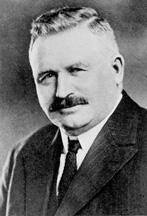
Here you will find contact information for Senator Peter Norbeck, including email address, phone number, and mailing address.
| Name | Peter Norbeck |
| Position | Senator |
| State | South Dakota |
| Party | Republican |
| Status | Former Representative |
| Term Start | April 11, 1921 |
| Term End | January 3, 1937 |
| Terms Served | 3 |
| Born | August 27, 1870 |
| Gender | Male |
| Bioguide ID | N000132 |
About Senator Peter Norbeck
Peter Norbeck (August 27, 1870 – December 20, 1936) was an American politician from South Dakota who served as the ninth governor of South Dakota and later as a United States senator. A member of the Republican Party, he became the first native-born governor of South Dakota and the first native-born U.S. senator from the state, having been born in the portion of Dakota Territory that would later become South Dakota. Over the course of his public career, he emerged as a prominent advocate for conservation, infrastructure development, and national memorial projects, and he is best remembered as “Mount Rushmore’s great political patron” for his central role in promoting and securing federal support for the monument’s construction.
Norbeck was born on August 27, 1870, near Vermillion in what was then Dakota Territory, to Norwegian immigrant parents. Raised in a rural environment on the northern plains, he grew up in the context of frontier settlement and agricultural development that shaped the early history of the territory. His upbringing in a farming community exposed him to the challenges of rural life, including issues of transportation, land use, and economic opportunity, which would later influence his political priorities. The experience of statehood in 1889, when the Dakota Territory was divided and South Dakota was admitted to the Union, formed an important backdrop to his early life and eventual public service.
Norbeck’s formal education was limited compared to many later national officeholders, but he pursued practical and technical training that prepared him for a career in business and public affairs. As a young man he became involved in well-drilling and related enterprises, gaining a reputation as a resourceful and industrious businessman. His work in this field brought him into close contact with farmers and rural communities across South Dakota, deepening his understanding of the state’s economic and environmental conditions. This combination of practical experience and self-education helped establish his standing as a leader attuned to the needs of ordinary citizens.
Norbeck’s political career began in state and local affairs, where he aligned with the Republican Party and became active in progressive reform efforts. He rose through the ranks of South Dakota politics, eventually winning election as the state’s ninth governor. Serving two consecutive terms, he used the governorship to promote road building, agricultural development, and conservation measures, reflecting both the progressive currents of the early twentieth century and the specific needs of a largely rural state. As governor, he championed the development of state parks and scenic roadways, laying groundwork for later tourism and conservation initiatives in the Black Hills and other regions of South Dakota.
After completing his service as governor, Norbeck was elected to the United States Senate from South Dakota, where he served three consecutive terms from 1921 to 1937. His tenure in the Senate coincided with a period of profound national change, including the prosperity of the 1920s, the onset of the Great Depression, and the early years of the New Deal. As a senator, he participated in the legislative process on issues affecting both his state and the nation, representing the interests of his South Dakota constituents while engaging in broader debates over economic policy, agriculture, and federal infrastructure programs. Throughout his Senate service, he remained a Republican, though he often reflected the era’s progressive Republican tradition in his support for conservation and public works.
Norbeck’s most enduring national legacy is his role in the creation and development of Mount Rushmore National Memorial. Recognizing the potential of the Black Hills as a site of national significance and a driver of regional tourism, he became the project’s leading political sponsor. He worked closely with sculptor Gutzon Borglum and other advocates to promote the idea of a monumental carving in the granite cliffs, and he used his influence in Congress to secure federal funding and official support. His efforts ensured that the project moved from concept to reality, and his advocacy helped sustain the work through periods of financial uncertainty. For this reason, he is widely remembered as “Mount Rushmore’s great political patron.”
During his years in Congress, Norbeck also supported broader conservation and development initiatives, including the expansion of road networks and the protection of natural landscapes in South Dakota and the surrounding region. He recognized the importance of integrating economic development with environmental stewardship, and he promoted policies that would make the state’s scenic areas more accessible while preserving their character. His work contributed to the long-term growth of tourism and outdoor recreation in the Black Hills and other parts of South Dakota, reinforcing his reputation as a visionary in state and regional planning.
Peter Norbeck’s congressional service came to an end with his death in office on December 20, 1936, in the final months of his third Senate term. His Senate service formally extended from 1921 to 1937, encompassing three terms in which he played a significant role in representing South Dakota at the national level. By the time of his death, he had become one of the state’s most influential political figures, remembered both for his pioneering status as the first native-born governor and senator from South Dakota and for his lasting contributions to conservation, infrastructure, and national commemoration through projects such as Mount Rushmore.