Representative Peter J. Roskam
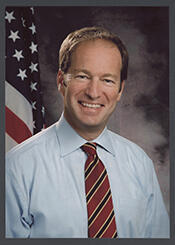
Here you will find contact information for Representative Peter J. Roskam, including email address, phone number, and mailing address.
| Name | Peter J. Roskam |
| Position | Representative |
| State | Illinois |
| District | 6 |
| Party | Republican |
| Status | Former Representative |
| Term Start | January 4, 2007 |
| Term End | January 3, 2019 |
| Terms Served | 6 |
| Born | September 13, 1961 |
| Gender | Male |
| Bioguide ID | R000580 |
About Representative Peter J. Roskam
Peter James Roskam (born September 13, 1961) is an American politician and lobbyist who served as a U.S. Representative from Illinois from 2007 to 2019. A member of the Republican Party, he represented Illinois’s 6th congressional district for six consecutive terms and was a prominent member of House Republican leadership, serving as chief deputy majority whip from 2011 to 2014, a position that ranked him fourth among House Republican leaders. During the 115th Congress, he chaired the House Ways and Means Subcommittee on Tax Policy. After leaving Congress, he entered private practice as a lobbyist and, in 2023, was named federal policy head of the lobbying practice at the Washington, D.C.–based law firm BakerHostetler. In January 2025, he was elected chairman of the National Endowment for Democracy’s board of directors.
Roskam was born in Hinsdale, Illinois, the son of Martha (Jacobsen) and Verlyn Ronald Roskam. The fourth of five children, he was raised in nearby Glen Ellyn, Illinois, where he graduated from Glenbard West High School. He went on to attend the University of Illinois at Urbana–Champaign, earning a Bachelor of Arts degree in political science. Roskam then studied law at Chicago-Kent College of Law, Illinois Institute of Technology, where he distinguished himself in trial advocacy; as a member of his law school team, he was named “Best Oral Advocate” by the American College of Trial Lawyers at its 1988 National Trial Competition. His early exposure to politics and public service was shaped both by his family and by formative professional experiences in Washington, D.C.
Before entering elective office, Roskam worked in education, legislative staff roles, and nonprofit administration. In 1984, he taught history and government at All Saints High School in St. Thomas, U.S. Virgin Islands. From 1985 to 1986, he served as a legislative assistant to Representative Tom DeLay of Texas, and from 1986 to 1987 he held the same position with Representative Henry Hyde of Illinois, who would later become his congressional predecessor and political mentor. In the late 1980s, Roskam served as executive director of Educational Assistance Ltd., a scholarship program for disadvantaged children founded by his father in 1982. He also developed a successful legal career as a personal injury trial lawyer and became a partner in the firm Salvi, Roskam & Maher, later known as Salvi & Maher. The firm was politically notable because former Republican Senate candidate Al Salvi and former Republican House candidate Kathy Salvi were also partners. The Chicago Tribune reported that Roskam earned over $615,000 in 2005 as a personal injury trial lawyer. In addition to his professional work, he and his family undertook efforts to return U.S. veterans’ dog tags from Vietnam to their original owners or to the families of deceased service members after his parents encountered such dog tags for sale during a trip to Vietnam.
Roskam’s legislative career began in the Illinois General Assembly. In 1992, he was elected to the Illinois House of Representatives, where he served from 1993 to 1999. In 1998, he made his first bid for Congress in Illinois’s 13th congressional district, running to succeed retiring Representative Harris W. Fawell. He lost the Republican primary to state Representative Judy Biggert, receiving 40 percent of the vote to Biggert’s 45 percent; Biggert went on to win the general election. In 1999, at Biggert’s request, the Federal Election Commission investigated a mailing sent by the Campaign for Working Families, a political action committee led by conservative activist Gary Bauer, in support of Roskam. The FEC found that the PAC had violated election law but did not find the Roskam campaign at fault. In 2000, DuPage County Republican leaders appointed Roskam to the Illinois State Senate to replace retiring Senator Beverly Fawell, and he subsequently won election in his own right, serving in the Senate from 2000 until his election to Congress in 2006.
During his tenure in the Illinois Senate, Roskam rose in party leadership and developed a legislative record focused on criminal justice, family law, and fiscal issues. He served as the Republican minority whip from January 8, 2003, to January 3, 2007, succeeding Debbie Halvorson and preceding Kirk Dillard in that role. He was the Republican spokesman on the Executive Committee and served on the Rules Committee, Environment and Energy Committee, Insurance and Pensions Committee, and Judiciary Committee. Roskam sponsored legislation granting the Supreme Court of Illinois authority to reverse a death penalty sentence, sponsored measures increasing penalties for repeat driving-under-the-influence offenders, and was the lead sponsor of a law preserving courts’ power to hold delinquent parents in contempt to enforce child-support obligations. He authored or co-authored fourteen bills to cut taxes and sponsored a bill that would have allowed retired military and police personnel to carry concealed weapons. In fiscal and social policy debates, he opposed proposals such as State Comptroller Dan Hynes’s 2004 plan to raise $1 billion by taxing cosmetic surgery to fund stem cell research, voting against the measure, which was narrowly defeated in the Senate. On May 20, 2005, he and six other Illinois senators missed a vote on a non-binding resolution urging Congress to protect Social Security and reject private accounts; the resolution passed 32–19–1 but died in the Illinois House. Roskam later stated that he opposed privatizing Social Security, tax increases on Social Security benefits, and benefit reductions. In November 2006, he expressed opposition to raising the federal minimum wage from $5.15 per hour, citing concerns about potential effects on small businesses.
Roskam’s opportunity to return to Washington came when Representative Henry Hyde retired after 32 years in Congress. In 2006, Hyde endorsed Roskam as his successor in Illinois’s 6th congressional district. Roskam was unopposed in the Republican primary and faced Democrat Tammy Duckworth, an Iraq War veteran, in what was widely regarded as one of the nation’s most competitive House races. The contest was described by Eric Krol of the Daily Herald as “the nation’s most-watched congressional contest.” Roskam received endorsements from the Teamsters labor union, the International Union of Operating Engineers Local 150, and the Veterans of Foreign Wars. On November 7, 2006, he defeated Duckworth by a margin of 51 percent to 49 percent and took office on January 3, 2007. He was subsequently renominated and reelected multiple times. In 2008, after winning the Republican primary, he faced Democrat Jill Morgenthaler. Late in the campaign, he drew attention for launching a website, ObamaVotersForRoskam.com, which quoted then–Senator Barack Obama in a way critics said was misleading; the omitted portion of the Obama quotation read, “Having said that, have I said that he’s wrong? I love him, but he’s wrong.” The Daily Herald characterized the website as a move to “grab a hold of Obama’s coattails,” and the Morgenthaler campaign noted that Obama endorsed Morgenthaler, not Roskam. Roskam nonetheless won reelection by a 16-point margin, 58 percent to 42 percent.
During his six terms in the U.S. House of Representatives, from January 3, 2007, to January 3, 2019, Roskam participated actively in the legislative process and represented the interests of his suburban Chicago constituents during a period of significant national political and economic change. He was reelected in 2010, defeating Democratic nominee Ben Lowe by a 27-point margin, and in 2012, after redistricting, he defeated Democratic nominee Leslie Coolidge, a former partner at KPMG, by an 18.4-point margin. As a member of the House Republican Conference, he served as chief deputy majority whip from 2011 to 2014, helping to marshal votes on key legislation and playing a central role in party strategy. In the 115th Congress, he chaired the House Ways and Means Subcommittee on Tax Policy, placing him at the center of debates over federal tax legislation. Over the course of his congressional service, he contributed to the development and passage of Republican fiscal and tax policy and participated in oversight and legislative activities on issues affecting both his district and the nation. In the 2018 midterm elections, amid shifting political dynamics in suburban districts, Roskam was defeated by Democrat Sean Casten, ending his tenure in the House after six terms.
Following his departure from Congress, Roskam transitioned fully into the private sector while remaining engaged in public policy. In 2023, he joined BakerHostetler in Washington, D.C., as the federal policy head of the firm’s lobbying practice, advising clients on legislative and regulatory matters and drawing on his experience in tax and fiscal policy. In January 2025, he was elected chairman of the board of directors of the National Endowment for Democracy, a congressionally funded, nonprofit foundation that supports democratic institutions and civil society abroad, reflecting his continued involvement in issues of governance and international democracy promotion. Roskam resides in Wheaton, Illinois, with his wife, Elizabeth; the couple has four children.