Representative Phil Gingrey
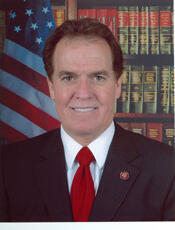
Here you will find contact information for Representative Phil Gingrey, including email address, phone number, and mailing address.
| Name | Phil Gingrey |
| Position | Representative |
| State | Georgia |
| District | 11 |
| Party | Republican |
| Status | Former Representative |
| Term Start | January 7, 2003 |
| Term End | January 3, 2015 |
| Terms Served | 6 |
| Born | July 10, 1942 |
| Gender | Male |
| Bioguide ID | G000550 |
About Representative Phil Gingrey
John Phillip Gingrey (born July 10, 1942) is an American physician and former politician who served as a U.S. Representative from Georgia in the United States Congress from 2003 to 2015. A member of the Republican Party, he represented Georgia’s 11th congressional district, which comprised the northwestern suburbs of Atlanta, and contributed to the legislative process during six terms in office. Gingrey was one of four obstetrician-gynecologists (OB/GYNs) in the House of Representatives during his tenure and was a founding member and co-chairman of the GOP Doctors Caucus, a group of health care providers in the House that used their medical expertise to develop and advocate for patient-centered health care reforms focused on quality, access, affordability, portability, and choice.
Gingrey was born and raised in Augusta, Georgia, where he attended Aquinas High School. He went on to the Georgia Institute of Technology, receiving a Bachelor of Science degree in chemistry in 1965. While at Georgia Tech, he was a driver of the school’s Ramblin’ Wreck mascot car and became a member of the Gamma Alpha chapter of the Sigma Nu fraternity, serving as president of the fraternity in his senior year. After completing his undergraduate studies, he earned his M.D. from the Medical College of Georgia, preparing for a career in medicine that would later shape his political focus on health care policy.
Beginning in 1975, Gingrey practiced as an obstetrician/gynecologist, ultimately spending 26 years in private medical practice. Over the course of this career, he delivered numerous babies and developed a reputation as a community physician, experience he later cited in policy discussions related to women’s health, reproductive issues, and broader health care reform. His long tenure in medicine distinguished him among his congressional colleagues; at one point he was one of only four OB/GYNs serving in the U.S. House of Representatives, alongside fellow Republicans Michael Burgess of Texas, former Congressman Ron Paul of Texas, and Phil Roe of Tennessee.
Gingrey entered elective politics at the local level when he ran for and won a seat on the Marietta School Board in Marietta, Georgia. During his time on the board, he was three times named chairman, gaining experience in education policy, local governance, and public budgeting. Building on this local service, he was elected to the Georgia State Senate, where he served two terms from 1999 to 2003. His work in the state legislature helped establish his credentials as a conservative Republican and laid the groundwork for his subsequent campaign for Congress.
In 2002, Gingrey was elected to the U.S. House of Representatives from Georgia’s 11th congressional district, taking office on January 3, 2003. He served continuously until January 3, 2015, completing six terms. As a member of the House of Representatives, he participated in the democratic process and represented the interests of his constituents in the northwestern Atlanta suburbs during a significant period in American history, including the wars in Iraq and Afghanistan and major debates over health care and federal spending. He was reelected multiple times, running unopposed in 2010 and, in his final successful campaign for his House seat in 2012, defeating Democratic challenger Patrick Thompson with 68.6 percent of the vote.
During his congressional service, Gingrey served on several key committees. He was a member of the Committee on Energy and Commerce, where he sat on the Subcommittee on Environment and Economy, the Subcommittee on Health, and the Subcommittee on Oversight and Investigations. He also served on the House Armed Services Committee, the House Science Committee, the House Rules Committee, and the Committee on House Administration. In addition to co-chairing the GOP Doctors Caucus, he was active in several issue-oriented caucuses, serving as co-chair of the Congressional Vision Caucus, a member of the Congressional Constitution Caucus, and a member and executive committee participant in the Congressional Immigration Reform Caucus. His prominence as a physician-legislator led to national media exposure, including an appearance on Stephen Colbert’s “Better Know a District” segment, during which Colbert asked him, in a satirical exchange, whether the war in Iraq was a “great war – or the greatest war,” to which Gingrey replied that it might be the greatest war, and jokingly affirmed that he was a “Georgia peach.”
Gingrey’s legislative and political positions reflected a consistently conservative orientation. In 2008, he signed a pledge sponsored by Americans for Prosperity promising to vote against any global warming legislation that would raise taxes. He was also known for his strong views on immigration and public health. In July 2014, amid heightened media coverage of the Ebola virus epidemic in West Africa, he wrote a letter to the U.S. Centers for Disease Control and Prevention expressing concern that “reports of illegal migrants carrying deadly diseases such as swine flu, dengue fever, Ebola virus and tuberculosis are particularly concerning.” His comments on social and health issues occasionally drew controversy. His office later said that remarks he made about former Representative Todd Akin’s assertion that women rarely conceive after a “legitimate rape” had been misconstrued; Gingrey had been reported as saying Akin was “partially right” and stated at a local Chamber of Commerce meeting, “I’ve delivered lots of babies, and I know about these things,” a statement that drew significant criticism given the scientific consensus rejecting Akin’s claim.
Gingrey’s conduct in office also came under ethics scrutiny. In November 2011, reports emerged that he had allegedly received stock benefits, potentially in violation of congressional ethics rules, from his role as an investor and board member of two Georgia banks, including the Bank of Ellijay. The Bank of Ellijay failed in September 2010 and was taken over by regulators at a cost of approximately $60 million to taxpayers. Gingrey’s office denied any conflicts of interest. In December 2014, the House Ethics Committee publicly released findings that Gingrey had given special privilege to the Bank of Ellijay in discussions related to the Troubled Asset Relief Program (TARP) and concluded that he should not have aided the bank since it was not in his congressional district. The committee noted, however, that “it is true that you received no compensation or financial benefits as a result of these meetings.” Gingrey’s attorney stated that the congressman had assisted what he believed to be a constituent organization by arranging informational meetings so bank officers could inquire about how TARP funds would be allocated, emphasizing that Gingrey had not sought preferential treatment for anyone in obtaining TARP funding and had taken no further action beyond arranging the meetings.
In September 2013, Gingrey drew additional criticism, including from Republican congressional aides, when he remarked that many congressional staffers, who begin their careers with relatively low pay, later become lobbyists on Washington’s K Street and can earn hundreds of thousands of dollars, implying that his own congressional salary—cited by him as $172,000, though it was actually $174,000, not including other benefits—was inadequate. These comments were contrasted with the median household income of his Georgia constituents, then about $49,000, and were widely viewed as politically tone-deaf. On March 27, 2013, Gingrey announced that he would be a candidate in the 2014 race for the U.S. Senate in Georgia. He ran in the Republican primary but was unsuccessful, placing fourth in the May 20, 2014 primary. He did not seek reelection to his House seat that year, and his congressional service concluded on January 3, 2015.
Since leaving Congress, Gingrey has remained in Washington, D.C., working as a senior adviser at the District Policy Group, the lobbying arm of the Drinker Biddle law firm. In this role, he has drawn on his experience as both a physician and a legislator, advising clients on health policy and other federal issues. His post-congressional career continues the intersection of medicine, policy, and politics that has characterized much of his professional life.