Representative Philip Pitt Campbell
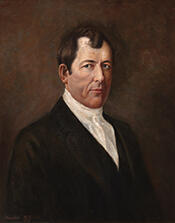
Here you will find contact information for Representative Philip Pitt Campbell, including email address, phone number, and mailing address.
| Name | Philip Pitt Campbell |
| Position | Representative |
| State | Kansas |
| District | 3 |
| Party | Republican |
| Status | Former Representative |
| Term Start | November 9, 1903 |
| Term End | March 3, 1923 |
| Terms Served | 10 |
| Born | April 25, 1862 |
| Gender | Male |
| Bioguide ID | C000097 |
About Representative Philip Pitt Campbell
Philip Pitt Campbell (April 25, 1862 – May 26, 1941) was an American lawyer and Republican politician who served ten consecutive terms as a U.S. Representative from Kansas from 1903 to 1923. Over two decades in the House of Representatives, he contributed to the legislative process during a significant period in American history, representing the interests of his Kansas constituents and playing an influential role in House procedure and committee leadership.
Campbell was born on April 25, 1862, in Cape Breton, Nova Scotia, then part of British North America. In 1867, when he was a child, he moved with his parents to Neosho County, Kansas, where he was raised. Growing up in post–Civil War Kansas, he attended the common schools of the area, receiving the basic education that prepared him for higher studies and a professional career.
Pursuing further education, Campbell enrolled at Baker University in Baldwin City, Kansas, one of the state’s early institutions of higher learning. He was graduated from Baker University in 1888. Following his university studies, he turned to the law, undertaking legal study and preparing for admission to the bar. In 1889 he was admitted to the bar and commenced the practice of law in Pittsburg, Kansas, establishing himself as an attorney and entering public life through his legal work.
Campbell’s political career advanced within the Republican Party, and he was elected as a Republican to the Fifty-eighth Congress and to the nine succeeding Congresses, serving from March 4, 1903, to March 3, 1923. During these ten terms in the United States House of Representatives, he participated actively in the democratic process and in the formulation of national legislation at a time that encompassed the Progressive Era, World War I, and the immediate postwar years. He represented Kansas throughout this period, reflecting the concerns of his district in matters of national policy.
Within Congress, Campbell held important committee assignments that enhanced his influence over legislative affairs. He served as chairman of the Committee on Levees and Improvements of the Mississippi River during the Sixty-first Congress, a position that involved oversight of federal efforts to manage and improve one of the nation’s most important waterways. Later, he served as chairman of the powerful Committee on Rules in the Sixty-sixth and Sixty-seventh Congresses, a key leadership role that shaped the procedures and flow of legislation in the House. Despite his long tenure and leadership responsibilities, he was an unsuccessful candidate for reelection in 1922 to the Sixty-eighth Congress, bringing his congressional service to a close in March 1923.
After leaving Congress, Campbell remained active in national Republican politics and in the legal profession. He served as Parliamentarian of the Republican National Convention in 1924, a role that drew on his extensive experience with House rules and parliamentary procedure. He then resumed the practice of law in Washington, D.C., while maintaining his residence in nearby Arlington, Virginia, continuing his professional work in the nation’s capital during his later years.
Philip Pitt Campbell died in Washington, D.C., on May 26, 1941. He was initially interred in the Abbey Mausoleum in Arlington County, Virginia. His remains were later reinterred at National Memorial Park in Falls Church, Virginia. His long service in Congress, particularly his leadership on the Committee on Rules and his participation in Republican Party affairs, marked him as a significant legislative figure from Kansas in the early twentieth century.