Representative Philip Cook
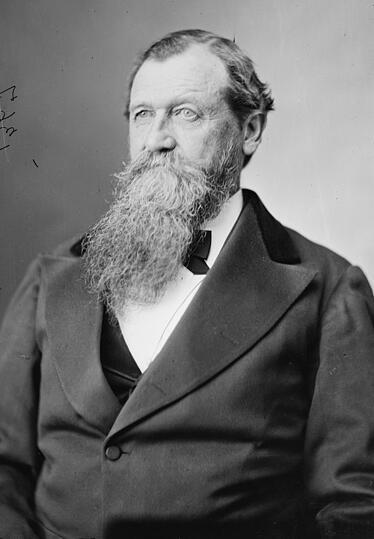
Here you will find contact information for Representative Philip Cook, including email address, phone number, and mailing address.
| Name | Philip Cook |
| Position | Representative |
| State | Georgia |
| District | 3 |
| Party | Democratic |
| Status | Former Representative |
| Term Start | December 1, 1873 |
| Term End | March 3, 1883 |
| Terms Served | 5 |
| Born | July 30, 1817 |
| Gender | Male |
| Bioguide ID | C000724 |
About Representative Philip Cook
Philip Cook, commonly referred to as Philip Cook (general), was a Confederate general and later a Democratic Representative from Georgia in the United States Congress, serving from 1873 to 1883. Born Philip Cook on July 31, 1817, in Twiggs County, Georgia, he came of age in the antebellum South and was part of a generation whose public careers spanned both the era of the American Civil War and the subsequent period of Reconstruction and its aftermath. His early life in Georgia, then a largely agrarian state, helped shape his later commitment to representing the interests of his constituents at both the state and national levels.
Cook received his education in Georgia and read law, entering the legal profession before the Civil War. By training and occupation he was a lawyer, and he became active in public affairs in his home state. His legal background and growing prominence in Georgia society led him into politics, where he aligned with the Democratic Party. Before the outbreak of the Civil War, he served in the Georgia legislature, gaining experience in legislative procedure and public administration that would later inform his work in Congress.
With the secession of Georgia and the onset of the Civil War, Philip Cook entered the military service of the Confederate States of America. He rose to the rank of general in the Confederate army, distinguishing himself as a field commander. His wartime service, during which he was wounded on multiple occasions, established his reputation as a capable and determined officer. Like many Southern political leaders of his generation, his military record during the conflict became an important part of his public identity in the postwar years, particularly among Georgia voters who had shared in the hardships of the war and Reconstruction.
After the Civil War, Cook resumed his legal and political career in Georgia during the turbulent Reconstruction period. As federal authority and Reconstruction policies reshaped political life in the South, he emerged as one of the Democratic leaders working to restore local control and reassert the influence of white Southern Democrats in state and regional politics. His standing as a former Confederate general and his prewar legislative experience made him a natural choice for higher office once Georgia was readmitted to full participation in the Union and began sending representatives again to the United States Congress.
Philip Cook was elected as a Democrat to the United States House of Representatives and served five consecutive terms, from March 4, 1873, to March 3, 1883. Representing Georgia in the House during a significant period in American history, he participated in the legislative process at a time when the nation was grappling with the end of Reconstruction, the integration of the former Confederate states into the federal system, and the economic and social transformations of the late nineteenth century. As a member of the House of Representatives, Philip Cook contributed to the democratic process and represented the interests of his Georgia constituents, working within the Democratic Party to shape policies affecting the postwar South, including issues of federal-state relations, economic recovery, and the reorganization of Southern political life.
Following his decade of service in Congress, Cook remained an influential figure in Georgia public affairs. He continued his association with the Democratic Party and with the legal and political circles in which he had long moved, drawing on his combined experience as a lawyer, legislator, and former military officer. His career thus spanned multiple arenas of public service—state politics, Confederate military command, and national legislative work—reflecting the broader trajectory of Southern leadership in the nineteenth century.
Philip Cook died on May 21, 1894, closing a life that had encompassed the antebellum era, the Civil War, Reconstruction, and the early years of the New South. Remembered as a general in the army of the Confederate States of America and as a U.S. Representative from Georgia, he exemplified the generation of Southern Democrats who transitioned from Confederate service to participation in the restored Union government. His decade in Congress from 1873 to 1883, combined with his earlier and later roles in Georgia public life, secured his place in the political history of both his state and the nation.