Representative Philip M. Crane
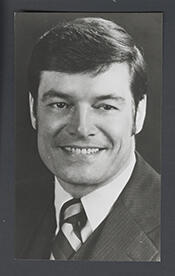
Here you will find contact information for Representative Philip M. Crane, including email address, phone number, and mailing address.
| Name | Philip M. Crane |
| Position | Representative |
| State | Illinois |
| District | 8 |
| Party | Republican |
| Status | Former Representative |
| Term Start | January 3, 1969 |
| Term End | January 3, 2005 |
| Terms Served | 18 |
| Born | November 3, 1930 |
| Gender | Male |
| Bioguide ID | C000873 |
About Representative Philip M. Crane
Philip Miller Crane (November 3, 1930 – November 8, 2014) was an American politician and historian who served as a Republican member of the United States House of Representatives from Illinois from 1969 to 2005. Over the course of 18 consecutive terms in Congress, he represented districts in the northwestern suburbs of Chicago, most prominently Illinois’s 8th Congressional District, and at the time of his defeat in the 2004 election he was the longest-serving Republican member of the House. A prominent figure in the modern conservative movement, he was known for his staunchly conservative views, his advocacy of free trade, and his early leadership in organizing conservative members of the House.
Crane was born in Chicago, Illinois, on November 3, 1930, the son of Cora Ellen (née Miller) and George Washington Crane III, a physician and college professor. He grew up in a family that would become deeply involved in Republican politics; his brothers Dan and David Crane would also seek congressional office. He attended public schools and pursued higher education at several institutions. Crane studied at DePauw University and later attended Hillsdale College, a small liberal arts college in Michigan known for its conservative intellectual tradition. He also studied abroad at the University of Vienna in Austria. Returning to the United States, he continued his education at the University of Michigan and then at Indiana University Bloomington, where he completed graduate work in history and received a Ph.D. in history in 1961. In addition to his academic pursuits, Crane served in the United States Army, further broadening his early experience before entering public life.
Before his election to Congress, Crane embarked on a career in academia and Republican politics. He served on the faculty of Indiana University Bloomington and later taught at Bradley University in Peoria, Illinois, specializing in history. His scholarly background and interest in political ideas led him into national Republican politics in the early 1960s. He worked as a staff member for the Republican National Committee and became director of research for Senator Barry Goldwater’s 1964 Republican presidential campaign, aligning himself with the emerging conservative wing of the party. During this period, Crane became associated with a circle of conservative intellectuals and activists who were attempting to reshape the Republican Party’s ideological direction. His family’s growing political profile led some observers to dub the Crane brothers “the Kennedys of the Right,” although only Philip and his brother Dan, who represented another Illinois district for three terms, ultimately served in Congress; their brother David Crane ran unsuccessfully for Congress from Indiana several times.
Crane entered Congress through a special election in 1969. He was first elected that year to represent what was then Illinois’s 13th Congressional District, succeeding Donald Rumsfeld, who had resigned his House seat to accept a position in the Nixon administration. Initially regarded as a dark horse in a crowded field of seven candidates for the Republican nomination, Crane was by far the most conservative contender and faced opposition from the Chicago North Shore Republican establishment. He nonetheless secured the nomination by roughly 2,100 votes and went on to win the special election with 58 percent of the vote. He was handily elected to a full term in 1970 and subsequently reelected 16 times. As Illinois lost congressional seats and district lines were redrawn, Crane’s constituency was renumbered from the 13th District (1969–1973) to the 12th District (1973–1993) and finally to the 8th District (1993–2005). For much of his tenure, his district was regarded as one of the most reliably Republican districts in the Chicago area, and often in all of Illinois, and he typically won reelection with 70 percent or more of the vote until the more competitive elections of the 1990s.
During his long congressional service, Crane quickly established himself as one of the House’s most conservative members and a key figure in the institutionalization of the conservative movement within Congress. Soon after being elected to his first full term in 1970, he was approached by conservative activists, including Paul Weyrich, to organize a bloc of conservative House members who would monitor and, when necessary, challenge what they regarded as an overly moderate Republican leadership. This effort led to the creation of the Republican Study Committee, an internal caucus of conservative Republicans in the House, and Crane served as its first chairman. He remained active in the group for the remainder of his congressional career. In 1970 he also drew attention for a controversial visit to the South Vietnamese prison at Côn Sơn Island, where he inspected the so‑called “tiger cages” and publicly stated that they were “cleaner than the average Vietnamese home.” In 1974 he helped initiate the only public and filmed audit of the United States Bullion Depository at Fort Knox, Kentucky, joining 11 other members of Congress and approximately 100 journalists in an inspection hosted by Mary Brooks, then director of the United States Mint.
Crane’s influence extended beyond Capitol Hill through his leadership in conservative organizations and presidential politics. In 1976 he served as chairman of the Illinois Citizens for Reagan, traveling throughout the Midwest to campaign for California Governor Ronald Reagan’s unsuccessful bid for the Republican presidential nomination. From 1977 to 1979 he was chairman of the American Conservative Union (ACU), a Washington-based conservative citizens’ lobby and political action group. Under his leadership, the ACU mounted high-profile national campaigns against President Jimmy Carter’s proposal to cede control of the Panama Canal and against the proposed SALT II arms limitation treaty with the Soviet Union. These efforts significantly expanded the organization’s budget, staff, and visibility in Washington. In 1978, shortly before the midterm elections, Crane announced his own candidacy for the 1980 Republican presidential nomination. Having previously supported Reagan, he initially suggested he would defer if Reagan ran again, but he remained in the race even after Reagan entered. Crane’s campaign failed to gain traction, and he withdrew early in the primary season, after which his personal influence within the House Republican Conference began to wane as newer conservative figures, notably Newt Gingrich, emerged.
Within the House, Crane nonetheless maintained an important role in shaping tax and trade policy. He joined the House Ways and Means Committee in 1975 and became one of its most senior members. As chairman of the committee’s trade subcommittee, he was a leading advocate of free trade and used his position to promote trade liberalization initiatives. He played a noted role in negotiations surrounding the U.S.–Singapore Free Trade Agreement, where he was credited with helping to end Singapore’s longstanding ban on chewing gum as part of the broader trade accord. After the retirement of Ways and Means Committee Chairman Bill Archer of Texas following the 2000 elections, Crane, then the committee’s most senior Republican, sought the chairmanship. However, he was passed over in favor of Representative Bill Thomas of California. Observers attributed this outcome variously to Thomas’s fundraising prowess and to concerns arising from Crane’s public acknowledgment, prior to the leadership vote, that he was battling alcoholism and would seek treatment. Although he did not secure the chairmanship, he was named vice chairman of the Ways and Means Committee, underscoring his continued prominence in tax and trade matters.
Crane’s later congressional years were marked by increasingly competitive elections and personal challenges. By the 1990s, demographic and political changes in the Chicago suburbs, combined with primary challenges from more moderate Republicans and better-funded Democratic opponents, eroded his once-commanding electoral margins. In 2002, his Democratic challenger, business consultant Melissa Bean, criticized him as being out of touch with his district; some Republican voters complained they had not seen him in years, and he was one of the few members of Congress whose Washington office did not maintain a public email address. Although Bean was dramatically outspent and received little national party support, she held Crane to 57 percent of the vote, only the second time he had fallen below 60 percent. Crane publicly acknowledged his struggle with alcoholism after winning reelection that year and sought treatment. In 2004, Bean again challenged him, running as a moderate Democrat by Chicago-area standards and raising substantial funds, largely from small donors, while Crane relied heavily on contributions from political action committees. Amid perceptions that he lacked enthusiasm and might soon retire, and despite concerted Republican efforts to defend the seat, Bean defeated Crane by roughly four percentage points, even as President George W. Bush carried the district by 12 points. The Almanac of American Politics later described Crane as “an unusually bitter loser,” noting that he refused to speak to Bean or to arrange the customary post-election transfer of constituent casework and office files. Following his defeat, the 8th District, reflecting a broader Democratic trend in the Chicago suburbs, remained in Democratic hands for all but one subsequent term.
In his personal and later life, Crane continued to be associated with the conservative movement he had helped shape, though he no longer held public office. His brother Dan Crane’s political career had ended earlier, in 1984, after Dan was defeated for reelection in the wake of revelations that he had engaged in sexual relations with a 17-year-old girl, an episode that contributed to the decline of the Crane family’s broader political prominence. Philip Crane’s own public admission of alcoholism in 2000 marked a rare moment of personal candor in an otherwise ideologically driven career. He spent his final years largely out of the public spotlight. Crane died of lung cancer at the home of his daughter, Rebekah, in Jefferson, Maryland, on November 8, 2014, five days after his 84th birthday. His long tenure in Congress, his early leadership in organizing conservative House members, and his role in shaping late twentieth-century Republican tax and trade policy left a lasting imprint on the modern conservative movement. In popular culture, Crane was later portrayed by actor James Marsden in the 2020 television miniseries “Mrs. America,” which aired on the Hulu network, reflecting his place in the political history of his era.