Representative Phil English
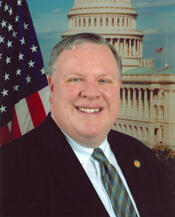
Here you will find contact information for Representative Phil English, including email address, phone number, and mailing address.
| Name | Phil English |
| Position | Representative |
| State | Pennsylvania |
| District | 3 |
| Party | Republican |
| Status | Former Representative |
| Term Start | January 4, 1995 |
| Term End | January 3, 2009 |
| Terms Served | 7 |
| Born | June 20, 1956 |
| Gender | Male |
| Bioguide ID | E000187 |
About Representative Phil English
Philip Sheridan English (born June 20, 1956) is an American politician who served as a Republican member of the United States House of Representatives from 1995 to 2009 from the Commonwealth of Pennsylvania, representing the state’s 3rd Congressional District. A member of the Republican Party, he served seven consecutive terms in Congress and contributed to the legislative process during a significant period in recent American political history, representing the interests of his constituents in northwestern Pennsylvania.
English is a lifelong resident of Erie, Pennsylvania, and is of Irish and German descent. He attended Portsmouth Abbey School in Portsmouth, Rhode Island, a Benedictine college preparatory school, before enrolling at the University of Pennsylvania. At the University of Pennsylvania, he completed his undergraduate studies and became active in Republican politics. While in college, he served as Chairman of the Pennsylvania Federation of College Republicans, an early indication of his long-term commitment to public service and partisan political activity.
Following his education, English returned to Erie and entered local politics. He was elected Erie City Controller, serving from 1985 to 1989, where he was responsible for overseeing the city’s financial operations and auditing municipal accounts. In 1988, he was the Republican nominee for Pennsylvania State Treasurer, running statewide against Democrat Catherine Baker Knoll. He was defeated in that election but remained active in public affairs. Subsequently, he served as Chief of Staff for then–State Senator Melissa Hart, gaining further experience in legislative operations and state-level policymaking.
English’s opportunity to run for Congress emerged in 1994 when seven-term incumbent Republican Tom Ridge vacated the 3rd District seat to make a successful run for governor of Pennsylvania. English entered the race for the open seat and benefited from the national Republican wave of 1994, often referred to as the “Republican Revolution,” as well as from Ridge’s popularity and coattails in the region. On the Democratic side, a crowded primary field led Erie-based candidates to split the vote, enabling Sharon attorney Bill Leavens to win the nomination. As a native of Erie, traditionally a Democratic stronghold, English was able to consolidate substantial hometown support and won the general election, entering the U.S. House of Representatives in January 1995.
During his fourteen years in Congress, English developed a reputation as a Republican who was liberal on economic matters and conservative on social issues. Unusually for a member of his party, he cultivated strong ties to organized labor, a stance that reflected the political and economic realities of his district, which was dominated by the heavily Democratic and thoroughly unionized city of Erie. From his first term, he was appointed to the powerful House Committee on Ways and Means, becoming the first freshman Republican to join that committee since 1975. Over time, he moved up the seniority ladder, and in the 110th Congress he served as the ranking member on the Subcommittee on Select Revenue Measures, giving him a significant role in shaping federal tax and revenue policy.
English’s electoral history in the 3rd District reflected both his personal political strength and the competitive nature of the region. He was re-elected in a close race in 1996 against Erie attorney and Marine Corps veteran Ron DiNicola, even as President Bill Clinton carried the district at the top of the ticket. In 1998, he was handily re-elected, again benefiting from Governor Ridge’s strong standing in Pennsylvania. For several cycles thereafter he did not face a particularly close contest. However, in 2006, amid a challenging national environment for Republicans, he survived a notably competitive race against Steve Porter, an unknown retired college professor who spent virtually no money. Porter raised only $81,100 compared to English’s $1.4 million, yet English won by a relatively modest margin of 54 percent to 42 percent, with 4 percent going to Constitution Party candidate Tim Hagberg. This narrow victory signaled increased vulnerability and drew heightened attention to his seat.
The close 2006 result led Democrats to target English’s district aggressively in the 2008 election cycle. In November 2008, he faced first-time candidate and small businesswoman Kathy Dahlkemper, a Democrat from Erie. The race attracted considerable national attention as part of the broader Democratic effort to expand its House majority. Although English outspent Dahlkemper directly—raising approximately $2.2 million to her $872,000—the Democratic Congressional Campaign Committee and allied groups significantly outmatched Republican efforts in independent expenditures, including media buys and direct mail. On November 4, 2008, after fourteen years in the U.S. House, English was defeated for reelection by Dahlkemper, receiving 48 percent of the vote to her 52 percent. He carried five of the district’s seven counties but was unable to overcome a 14-point deficit in his native Erie County, the largest and most Democratic-leaning county in the district.
Following his departure from Congress in January 2009, English’s long tenure left a record of service during a period marked by major national debates over taxation, trade, social policy, and the federal role in the economy. As a member of the House of Representatives from 1995 to 2009, he participated in the democratic process at the federal level, representing Pennsylvania’s 3rd Congressional District through seven terms in office and maintaining a distinctive profile within his party as a Republican with strong labor ties and a prominent role on the Ways and Means Committee.