Representative Philip Arnold Goodwin
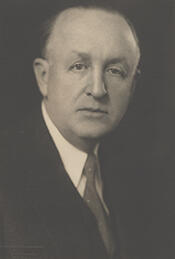
Here you will find contact information for Representative Philip Arnold Goodwin, including email address, phone number, and mailing address.
| Name | Philip Arnold Goodwin |
| Position | Representative |
| State | New York |
| District | 27 |
| Party | Republican |
| Status | Former Representative |
| Term Start | March 9, 1933 |
| Term End | January 3, 1939 |
| Terms Served | 3 |
| Born | January 20, 1882 |
| Gender | Male |
| Bioguide ID | G000302 |
About Representative Philip Arnold Goodwin
Philip Arnold Goodwin (January 20, 1882 – June 6, 1937) was a Republican member of the United States House of Representatives from New York who served from 1933 until his death in 1937. Over the course of three terms in Congress, he represented New York’s 27th congressional district and participated actively in the legislative process during a period of profound economic and political change in the United States. His tenure coincided with the early years of the New Deal, and he was part of the Republican minority responding to the policies of the Franklin D. Roosevelt administration.
Goodwin was born on January 20, 1882, in Athens, Greene County, New York, a small community along the Hudson River. Details of his early education are not extensively documented, but his subsequent business career indicates that he acquired practical training and experience that prepared him for work in construction and later in the lumber industry. He spent his formative years in upstate New York, remaining closely tied to the region that he would later represent in Congress.
By 1902, Goodwin had entered the steel bridge construction business in Albany, New York, a field in which he remained engaged until 1916. During this period, he was involved in an industry that was central to the expansion and modernization of transportation infrastructure in the early twentieth century, as steel bridge construction supported the growth of road and rail networks across the state and region. His work in Albany placed him in the midst of a growing industrial and commercial center, giving him experience in business management, labor, and public works that would later inform his public service.
In 1916, Goodwin shifted his professional focus and established himself in the lumber business in Coxsackie, New York, also in Greene County. From 1916 until his death in 1937, he owned and operated this lumber enterprise, becoming a local businessman of standing in the community. His long tenure in the lumber trade connected him closely with the economic life of Coxsackie and the surrounding area, and it likely enhanced his visibility and influence in local affairs. This business background, rooted in both construction and lumber, provided him with a practical understanding of commerce, industry, and rural economic concerns that would shape his perspective as a legislator.
Goodwin entered national politics at the beginning of the 1930s, a time marked by the Great Depression and widespread economic hardship. He was elected as a Republican to the United States House of Representatives in 1932, winning a seat from New York’s 27th congressional district. He took office on March 4, 1933, the same day Franklin D. Roosevelt was inaugurated as President, and thus began his congressional career at the outset of the New Deal era. As a member of the House of Representatives, Goodwin contributed to the legislative process during three terms in office, representing the interests of his constituents from upstate New York while serving in a Congress that grappled with banking reform, relief measures, public works programs, and other responses to the economic crisis.
Throughout his service, Goodwin participated in the democratic process as part of the Republican Party, which was then largely in opposition to many of the Roosevelt administration’s initiatives. While specific committee assignments and detailed legislative positions are not extensively recorded in the available sources, his role as a Republican representative from a largely rural and small-town district would have placed him at the intersection of debates over federal spending, agricultural policy, and economic recovery. He remained in office continuously from March 4, 1933, until his death, reflecting the confidence of his constituents in his representation during a turbulent national period.
Goodwin’s later years in Congress were marked by serious health challenges. During his campaign for re-election in 1936, he suffered a heart attack but continued in public service. He was 65 years old at the time of his death. On June 6, 1937, while still serving in the House of Representatives and maintaining his residence in Coxsackie, he died at his home there of a second heart attack. His death brought an end to a congressional career that had spanned the first critical years of the New Deal and concluded a life that combined business leadership in upstate New York with service in the national legislature.