Representative Philip Knopf
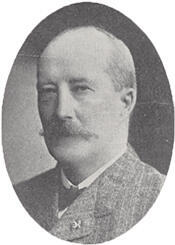
Here you will find contact information for Representative Philip Knopf, including email address, phone number, and mailing address.
| Name | Philip Knopf |
| Position | Representative |
| State | Illinois |
| District | 7 |
| Party | Republican |
| Status | Former Representative |
| Term Start | November 9, 1903 |
| Term End | March 3, 1909 |
| Terms Served | 3 |
| Born | November 18, 1847 |
| Gender | Male |
| Bioguide ID | K000289 |
About Representative Philip Knopf
Philip Knopf (November 18, 1847 – August 14, 1920) was a Republican member of the United States House of Representatives from Illinois who served three consecutive terms in Congress from 1903 to 1909. Born near Long Grove, Lake County, Illinois, he spent his early years in the rural Midwest and attended the local public schools. His formative years coincided with the turmoil of the American Civil War, during which he entered military service at a young age.
During the Civil War, Knopf enlisted in Company I of the 147th Illinois Volunteer Infantry Regiment. He served with this unit until the regiment was mustered out of service in Savannah, Georgia, near the close of the conflict. This early experience in uniform introduced him to public service and national affairs and preceded his later involvement in state and federal government.
After the war, in 1866 Knopf moved to Chicago, Illinois, which was emerging as a major commercial and transportation center. Seeking further education, he attended Bryant & Stratton College in Chicago for one year, gaining business and clerical training that would support his subsequent career. Following his studies, he entered the teaming business, working in freight and transport in Chicago’s expanding urban economy. He remained engaged in this line of work until 1884, when he began to transition into public office.
Knopf’s formal political and administrative career began in Cook County. In 1884 he was appointed chief deputy coroner of Cook County, a position he held for eight years, overseeing aspects of public health and legal investigations in one of the nation’s largest counties. Building on this experience, he was elected to the Illinois State Senate, serving from 1886 to 1894. During his eight-year tenure in the state legislature, he participated in shaping state laws and policies at a time of rapid industrialization and urban growth. After leaving the senate, he continued in county-level administration as clerk of Cook County from 1894 to 1902, managing vital records and county documentation for the Chicago metropolitan area.
Within the Republican Party, Knopf became an active figure in both state and national politics. He served as a delegate to the Republican National Convention in 1896, participating in the nomination process during a pivotal presidential election year marked by debates over currency and economic policy. He also served as a member of the State Republican central committee, helping to guide party organization and strategy in Illinois. These roles elevated his profile within the party and laid the groundwork for his election to Congress.
Knopf was elected as a Republican to the Fifty-eighth, Fifty-ninth, and Sixtieth Congresses, serving in the U.S. House of Representatives from March 4, 1903, to March 3, 1909. Representing his Illinois district during a significant period in American history, he contributed to the legislative process over three terms in office. As a member of the House of Representatives, he participated in the democratic process and represented the interests of his constituents from Illinois, engaging with issues arising in the Progressive Era. During the Fifty-ninth and Sixtieth Congresses, he served as chairman of the Committee on Expenditures in the Department of the Treasury, where he oversaw and reviewed federal spending practices within that department, reflecting his long experience in administrative and fiscal matters.
After leaving Congress in 1909, Knopf returned to private life in Chicago. Although no longer in elective office, his career had spanned military service, local and county administration, state legislation, party leadership, and federal legislative responsibilities. He remained a resident of Chicago until his death.
Philip Knopf died in Chicago, Illinois, on August 14, 1920. He was interred in Rosehill Cemetery in Chicago, a burial place for many of the city’s prominent political and civic leaders, marking the close of a public career that extended from the Civil War era through the early twentieth century.