Representative Philip David Swing
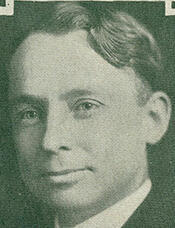
Here you will find contact information for Representative Philip David Swing, including email address, phone number, and mailing address.
| Name | Philip David Swing |
| Position | Representative |
| State | California |
| District | 11 |
| Party | Republican |
| Status | Former Representative |
| Term Start | April 11, 1921 |
| Term End | March 3, 1933 |
| Terms Served | 6 |
| Born | November 30, 1884 |
| Gender | Male |
| Bioguide ID | S001123 |
About Representative Philip David Swing
Philip David Swing (November 30, 1884 – August 8, 1963) was an American Republican politician from Imperial County, California, who served six terms in the United States House of Representatives from 1921 to 1933. A member of the Republican Party and identified with the progressive wing of the party, he represented California during a significant period in American history, contributing to the legislative process over twelve years in Congress and focusing particularly on water and reclamation issues critical to the development of Southern California.
Swing was born on November 30, 1884, in San Bernardino, California, to James and Mary Swing. He attended the public schools in California and went on to Stanford University, from which he graduated in 1905. While pursuing his education and early professional training, he studied law and was admitted to the bar in 1907, beginning a legal career that would underpin his later work in public office. From 1906 to 1908 he also served as a first lieutenant in the California National Guard, gaining early experience in leadership and public service.
After his admission to the bar, Swing established himself in Imperial County, a rapidly developing agricultural region in southeastern California. He served as city attorney of Brawley, California, in 1908 and 1909, and at the same time began his association with county legal affairs as deputy district attorney of Imperial County from 1908 to 1911. He was elected district attorney of Imperial County and held that office from 1911 to 1915, prosecuting cases and representing the county in legal matters during a period of intense growth and frequent disputes over land and water. In 1912 he married Nell Cremeens, establishing his family life in the region where he would build his political career.
Swing’s expertise in water and irrigation law deepened when he became chief counsel of the Imperial Irrigation District, serving from 1916 to 1919. In that capacity he dealt with complex issues involving the Colorado River and the development of irrigation systems that were vital to Imperial Valley agriculture. During World War I, in 1918, he served as a private in an Officers Training Camp, contributing to the national war effort. In 1919 he was appointed Judge of the Imperial County Superior Court, a position he held until 1921. Concurrently, he became active in party politics at the state level, serving as a delegate to the Republican State conventions at Sacramento from 1920 to 1932 and acting as chairman of the convention in 1926.
Swing was first elected to the House of Representatives in 1920 and took his seat in the Sixty-seventh Congress on March 4, 1921. He succeeded William Kettner in representing California’s 11th Congressional District, which then included both Imperial County and San Diego County. Known for a folksy manner and a practical, regionally focused approach to legislation, he served six consecutive terms, from 1921 to 1933. As a progressive Republican, he concentrated on water policy, reclamation, and infrastructure, recognizing that the long-term growth of Southern California depended on securing a reliable water supply from the Colorado River.
During his congressional service, Swing became best known for his leadership in the effort to construct Boulder Dam on the Colorado River. Working closely with Senator Hiram Johnson of California, he co-sponsored the Swing–Johnson Act, which was enacted in 1928 and authorized the construction of Boulder Dam (later renamed Hoover Dam). This legislation was achieved in the face of determined opposition from the State of Arizona, private power companies, and federal bureaucratic resistance. Swing’s single-minded determination in advancing the project played a central role in bringing Colorado River water and hydroelectric power to Southern California, enabling the continued growth and prosperity of San Diego and the surrounding region. Throughout his six terms, he participated actively in the democratic process, representing the interests of his constituents in Imperial and San Diego Counties during a transformative era in western development.
In 1932 Swing chose not to run for re-election to the House of Representatives, concluding his congressional service on March 3, 1933. He then joined a law firm in San Diego, returning to private legal practice while maintaining his interest in public affairs and regional development. As one of his final acts in Congress, he introduced legislation in 1933 to establish Anza–Borrego Desert State Park in the California desert east of San Diego; the bill passed in March 1933, helping to preserve a large expanse of desert landscape that would become one of California’s major state parks.
In later years Swing continued to work on water policy at the state level. In 1945 he was appointed a member of the California State Water Resources Board, where he served until 1958. In this role he contributed to statewide planning and oversight of water resources during a period of expanding population and increasing demand for water throughout California. His long involvement in water issues, from Imperial Valley irrigation to Colorado River development and statewide water policy, earned him enduring recognition in the region. A water fountain at the Community Concourse at Third and C Streets in downtown San Diego is dedicated to Phil Swing and honors him as “The Father of Boulder Dam,” reflecting his central role in the authorization of the project.
Philip David Swing died on August 8, 1963, in San Diego, California. He was interred at Greenwood Memorial Park in San Diego. His papers are preserved at the UCLA Research Library, and his career and work on Boulder Dam have been the subject of scholarly study, including Beverly B. Moeller’s book “Phil Swing and Boulder Dam” (University of California Press, 1971) and related dissertation research. His life and public service are also documented in regional histories of San Diego and Imperial County, where his contributions to water development, conservation, and the growth of Southern California remain a significant part of the historical record.