Representative Philip Andrew Traynor
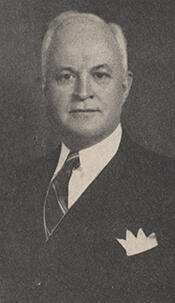
Here you will find contact information for Representative Philip Andrew Traynor, including email address, phone number, and mailing address.
| Name | Philip Andrew Traynor |
| Position | Representative |
| State | Delaware |
| District | At-Large |
| Party | Democratic |
| Status | Former Representative |
| Term Start | January 3, 1941 |
| Term End | January 3, 1947 |
| Terms Served | 2 |
| Born | May 31, 1874 |
| Gender | Male |
| Bioguide ID | T000357 |
About Representative Philip Andrew Traynor
Philip Andrew Traynor (May 31, 1874 – December 5, 1962) was an American dentist and politician from Wilmington, in New Castle County, Delaware. A member of the Democratic Party, he served two terms as the at-large U.S. Representative from Delaware, holding office in the U.S. House of Representatives from 1941 to 1943 and from 1945 to 1947. His congressional service took place during a significant period in American history, spanning much of the World War II era and the immediate postwar years, and he participated in the legislative process as part of the Democratic majority in the 77th and 79th Congresses.
Traynor was born in Wilmington, Delaware, where he attended the city’s public schools. He continued his education at Goldey Business College in Wilmington and at the University of Delaware in Newark, reflecting an early commitment to both practical and academic training. Pursuing a professional career in health care, he enrolled in the dental department of the University of Pennsylvania in Philadelphia, from which he graduated in 1895. Shortly after completing his dental education, he returned to Wilmington and established a dental practice, beginning a long career as a dentist in his home community.
In addition to his private practice, Traynor became a prominent figure in Delaware’s professional regulatory and educational institutions. He was appointed to the Delaware board of dentistry in 1918 and served there for twenty-five years, remaining a member until 1943. After 1922 he served as chairman of the board, helping to oversee standards for dental practice and professional conduct in the state. His public service extended to juvenile rehabilitation and education as well: from 1938 until 1942 he was vice president and a member of the board of trustees of the Ferris Industrial School for Boys, a state institution devoted to the care and training of delinquent and disadvantaged youth.
Traynor’s political career at the national level began with his election to the U.S. House of Representatives in 1940. Running as a Democrat in a traditionally competitive Delaware political environment, he defeated the incumbent Republican Representative George S. Williams in the general election held on the first Tuesday after November 1, 1940. He took office on January 3, 1941, at the opening of the 77th Congress, and served until January 3, 1943. During this first term, he was part of the Democratic majority in the House under President Franklin D. Roosevelt, representing the interests of his Delaware constituents as the nation mobilized for World War II.
In 1942 Traynor sought reelection but was defeated by Republican Earle D. Willey, ending his initial period of congressional service. He returned to electoral politics two years later, however, and in the 1944 general election he faced Willey again in a rematch. This time Traynor prevailed, regaining Delaware’s at-large seat in the House. He served in the 79th Congress from January 3, 1945, to January 3, 1947, during the closing months of World War II and the early postwar period, overlapping the final months of the Roosevelt administration and the beginning of President Harry S. Truman’s tenure. In this second term he again participated in the Democratic majority, contributing to the legislative process at a time of major international and domestic transition.
Traynor’s final bid for congressional office came in the 1946 election, when he ran for a third term. In that contest he was defeated by Republican J. Caleb Boggs, a New Castle County lawyer and World War II veteran who would later become a prominent figure in Delaware politics. With that defeat, Traynor’s service in Congress concluded on January 3, 1947, after two nonconsecutive terms that together spanned six years of significant national change. Throughout his time in office he was recognized as a Democratic representative who sought to advance the interests of Delaware within the broader framework of federal policy during wartime and reconstruction.
After leaving Congress, Traynor returned to private life in Wilmington. His long career combined professional practice in dentistry, regulatory and educational service at the state level, and two terms in the U.S. House of Representatives. He remained a resident of Wilmington until his death there on December 5, 1962. Philip Andrew Traynor was interred in Cathedral Cemetery in Wilmington, Delaware, closing a life marked by sustained engagement in both his profession and public service to his state.