Representative Phillip Colgan Ferguson
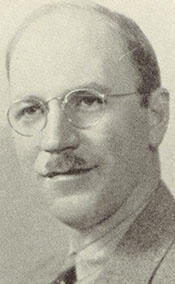
Here you will find contact information for Representative Phillip Colgan Ferguson, including email address, phone number, and mailing address.
| Name | Phillip Colgan Ferguson |
| Position | Representative |
| State | Oklahoma |
| District | 8 |
| Party | Democratic |
| Status | Former Representative |
| Term Start | January 3, 1935 |
| Term End | January 3, 1941 |
| Terms Served | 3 |
| Born | August 15, 1903 |
| Gender | Male |
| Bioguide ID | F000082 |
About Representative Phillip Colgan Ferguson
Phillip Colgan Ferguson (August 15, 1903 – August 8, 1978) was an American politician and rancher who served as a Democratic U.S. Representative from Oklahoma from 1935 to 1941. He was born on August 15, 1903, in Wellington, Sumner County, Kansas, to W. M. Ferguson, a banker, and May Deems Ferguson. Raised in Wellington, he attended the public schools there and was later enrolled at Kemper Military School in Boonville, Missouri, where he received a disciplined preparatory education that preceded his university studies.
Ferguson continued his education at the University of Kansas in Lawrence, where he earned an A.B. degree in 1926. Shortly after graduation, he moved south to Oklahoma and settled on a ranch near Woodward in Woodward County. There he engaged in agricultural pursuits and cattle raising, building a livelihood and public reputation as a working cattleman. His success and leadership in the livestock industry led to his service as president of the Northwest Cattlemen’s Association and as vice president of the Oklahoma Cattlemen’s Association, positions that reflected his influence in regional ranching affairs. At the same time, he was a director of the Bank of Woodward, an institution owned by his father, which connected him to the financial and commercial life of the community.
Ferguson’s prominence in agriculture and local business provided the foundation for his political career. A member of the Democratic Party, he was elected to the Seventy-fourth Congress and reelected to the two succeeding Congresses, serving from January 3, 1935, to January 3, 1941, as a U.S. Representative from Oklahoma. His three terms in the House of Representatives coincided with the New Deal era and the Dust Bowl years, a significant period in American history and particularly in Oklahoma, and he contributed to the legislative process during these challenging times. He represented his constituents’ interests in Washington as the federal government expanded its role in economic recovery, agriculture, and infrastructure.
During his congressional service, Ferguson held assignments on several key committees. As a member of the Committee on Flood Control, he helped initiate federal involvement in soil conservation and water resources development, supporting programs that led to the construction of reservoirs and the planting of native grasses in northwestern Oklahoma to combat erosion and flooding. He also served on the Committees on Census, Elections, Public Buildings and Grounds, Irrigation and Reclamation, Rivers and Harbors, and Agriculture, giving him a broad portfolio over issues ranging from infrastructure and public works to agricultural policy. Despite this active record, he was unsuccessful in his bid for reelection to the Seventy-seventh Congress in 1940 and again in a later attempt to return to the House for the Seventy-ninth Congress in 1944, after which he resumed his earlier business and ranching pursuits.
With the onset of World War II, Ferguson entered military service. He was commissioned a major in the United States Marine Corps and served from March 2, 1942, to August 1, 1944. Assigned to Company A, First Battalion, Ninth Marines, and to the Marine Raiders Regiment, he saw combat in the Pacific Theater. For his actions in wartime, he received the Silver Star Medal, one of the nation’s highest decorations for gallantry in action, underscoring a period of distinguished military service that followed his years in Congress.
After the war, Ferguson remained active in public and economic affairs. He sought statewide office as an unsuccessful Democratic candidate for governor of Oklahoma in 1950. In a notable shift in party affiliation, he later ran again for governor as a Republican candidate in 1958, though he was again unsuccessful. Beyond electoral politics, he held important positions in federal and quasi-federal financial institutions, serving on the Federal Reserve Board in Oklahoma City and as director of the Farm Credit Administration in Wichita, Kansas, roles that drew on his background in banking, agriculture, and public policy.
In his later years, Ferguson continued to reside in Woodward, Oklahoma, maintaining his ties to the ranching community and to the region he had long represented and served. He died in Tijuana, Mexico, on August 8, 1978, one week before his seventy-fifth birthday. Phil Ferguson was cremated, and his ashes were scattered on the Pacific Ocean at San Diego, California, closing a life that encompassed ranching, banking, congressional service, military valor, and continued engagement in public affairs.