Senator Phineas Warren Hitchcock
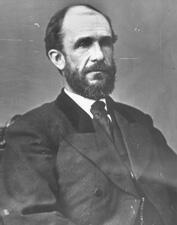
Here you will find contact information for Senator Phineas Warren Hitchcock, including email address, phone number, and mailing address.
| Name | Phineas Warren Hitchcock |
| Position | Senator |
| State | Nebraska |
| Party | Republican |
| Status | Former Representative |
| Term Start | December 4, 1865 |
| Term End | March 3, 1877 |
| Terms Served | 2 |
| Born | November 30, 1831 |
| Gender | Male |
| Bioguide ID | H000648 |
About Senator Phineas Warren Hitchcock
Phineas Warren Hitchcock (November 30, 1831 – July 10, 1881) was an American lawyer, journalist, territorial delegate, and United States Senator from Nebraska. A member of the Republican Party, he served in the United States Congress during a significant period in American history, first as the Nebraska Territory’s Delegate to the Thirty-ninth Congress and later as a Senator from the State of Nebraska. Hitchcock County, Nebraska, is named in his honor, reflecting his prominence in the political development of the state.
Hitchcock was born in New Lebanon, Columbia County, New York, the son of Gad Hitchcock and Nancy Prime. At the age of sixteen he began a two-year preparatory course of study at the Great Barrington Academy in Great Barrington, Massachusetts. He subsequently entered Williams College in Williamstown, Massachusetts, where he was a member of the class of 1855. His classmates at Williams included future President James A. Garfield, future United States Treasurer James Gilfillan, and future Senator John James Ingalls, placing him in a cohort that would produce several notable national figures. After graduating in 1855, Hitchcock spent several years in New York State engaged in combined law study and journalistic work, gaining experience that would shape both his legal and political careers.
In the spring of 1857, Hitchcock moved to the Territory of Nebraska, then a small and developing frontier settlement, and located at Omaha. There he opened a law office and combined the practice of law with an agency for several insurance companies and a general real estate business, participating actively in the commercial and civic growth of Omaha. On December 27, 1858, in Omaha, he married Annie M. Monell, the daughter of Dr. Gilbert C. Monell, an 1839 graduate of the Columbia University College of Physicians and Surgeons and a member of the Old Settlers’ Association, and Lucinda Carpenter Monell. Annie Monell was born in 1837 in Newburgh, New York, and died in 1877 in Omaha; she is buried in Prospect Hill Cemetery. The couple had three children, all born in Omaha: Gilbert Hitchcock, born September 18, 1859, who later founded the Omaha World-Herald and served as both a U.S. Representative and U.S. Senator; Grace Hitchcock, born September 20, 1862; and John Gray Hitchcock, born April 29, 1865.
Hitchcock’s public career began with federal service in the territory. A Republican, he was appointed United States Marshal for the Territory of Nebraska, serving from 1861 to 1864 during the early years of the Civil War. His work as marshal, combined with his legal and business activities, increased his visibility and influence in territorial affairs. Building on this prominence, he was elected as the Nebraska Territory’s Delegate to the Thirty-ninth Congress and served from March 4, 1865, to March 1, 1867. His service as Delegate coincided with the closing phase of the Civil War and the beginning of Reconstruction. He represented the interests of the territory in the House of Representatives until March 1, 1867, when Nebraska was admitted to the Union as a state, at which point his role as territorial delegate concluded.
After statehood, Hitchcock continued in federal service when he was appointed surveyor general of Nebraska and Iowa, a position he held from 1867 to 1869. In this capacity he oversaw important aspects of land surveying and administration in two rapidly developing states, work that intersected with the broader federal policies of western settlement and land distribution. He also remained involved in newspaper publishing and various business enterprises, reflecting his continuing engagement with both the economic and informational life of the region.
In 1870, Hitchcock was elected as a Republican to the United States Senate from Nebraska. He served two terms in Congress overall, including his earlier service as territorial delegate, and held his Senate seat from March 4, 1871, to March 3, 1877. During his tenure in the Senate he participated in the legislative process at a time when the nation was grappling with Reconstruction, western expansion, and economic development. He served as chairman of the Committee on Territories in the Forty-fourth Congress, a position that placed him at the center of debates over the governance and organization of the remaining western territories. Among his most notable legislative efforts was his introduction in 1873 of the Timber Culture Act, a follow-up measure to the Homestead Act. Passed by Congress on March 3, 1873, the act allowed homesteaders to acquire 160 acres of land by planting 40 acres of trees. At the end of eight years from the date of entry, settlers could make final proof if they had met the statutory conditions, with an additional five years allowed to complete proof, for a total of thirteen years. Claimants were required to demonstrate that the trees had been planted and cultivated and that not fewer than 675 living trees per acre had survived, supported by an affidavit or “timber culture proof” from the claimant and two witnesses before final certificates and patents were issued. Hitchcock was an unsuccessful candidate for reelection to the Senate in 1876, and his term concluded in 1877.
In his later years, Hitchcock remained in Omaha, where he continued to be associated with business and publishing interests and to be recognized as one of the early leaders in Nebraska’s political development. He suffered from chronic appendicitis for several years, and on July 10, 1881, at the age of forty-nine, he died at his home in Omaha following the rupture of his appendix. His career, spanning legal practice, territorial administration, and national legislative service, reflected the broader trajectory of Nebraska’s transition from frontier territory to statehood and its integration into the political life of the United States.