Bios     Pierce Butler

Senator Pierce Butler
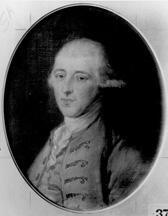
Republican | South Carolina

Senator Pierce Butler - South Carolina Republican

Here you will find contact information for Senator Pierce Butler, including email address, phone number, and mailing address.

NamePierce Butler
PositionSenator
StateSouth Carolina
PartyRepublican
StatusFormer Representative
Term StartMarch 4, 1789
Term EndMarch 3, 1805
Terms Served3
BornJuly 11, 1744
GenderMale
Bioguide IDB001186
Senator Pierce Butler
Pierce Butler served as a senator for South Carolina (1789-1805).

About Senator Pierce Butler


Pierce Butler was a United States Senator from South Carolina who served in the United States Congress from 1789 to 1805 and is recognized as a Founding Father of the United States. Born in 1744 in County Carlow, Ireland, he was a member of the prominent Anglo-Irish Butler family, which produced numerous notable figures in Irish and British public life. Among his extended kin and namesakes were Piers Butler, 8th Earl of Ormond (c. 1467–26 August 1539), an Anglo-Irish nobleman in the Peerage of Ireland; Piers Butler, 3rd Viscount Galmoye (1652–1740), also an Anglo-Irish nobleman; Pierce Butler, 4th Viscount Ikerrin (c. 1677–1711), an Irish peer, politician, and soldier; and Sir Pierce Butler, 4th Baronet (1670–1732), who served as an Irish Member of Parliament in the Irish House of Commons for Carlow County. This broader Butler lineage also included later political figures such as Pierce Butler (Kilkenny MP, born 1774) (1774–1846), an Irish Member of Parliament in the United Kingdom House of Commons for Kilkenny; his son Pierce Somerset Butler (1801–1865), likewise an MP for Kilkenny; and, in the twentieth century, Pierce Butler (Irish politician, born 1922) (1922–1999), a Fine Gael Senator in Ireland.

Educated in Ireland and destined initially for a military career, Butler entered the British Army at a young age. He rose to the rank of major in the 29th Regiment of Foot and was posted to North America during the period leading up to the American Revolution. His service brought him into close contact with the colonies, particularly the southern provinces. In the mid-1770s he resigned his British commission, settled permanently in South Carolina, and aligned himself with the American cause. Through marriage and land acquisition he became a major rice and later cotton planter, establishing himself among the wealthiest slaveholding elites of the state. His family line in America would include his grandson Pierce Mease Butler (died 1867), an American plantation owner, husband of the actress Fanny Kemble, and proprietor of the notorious “Great Slave Auction,” and Pierce Mason Butler (1798–1847), an American soldier and politician who served as Governor of South Carolina.

Butler’s political career in America began in the revolutionary era. He served in the South Carolina legislature and became a leading advocate for a strong but balanced national government. In 1787 he was selected as a delegate from South Carolina to the Constitutional Convention in Philadelphia. There he played an active role in the debates, particularly on questions of representation, federal power, and the protection of southern economic interests, including slavery. He signed the United States Constitution, thereby securing his place among the Founding Fathers. His support for the new federal framework and his prominence in South Carolina politics positioned him for national office once the new government was established.

With the adoption of the Constitution and the organization of the new federal government, Pierce Butler was elected as one of the first United States Senators from South Carolina. He entered the Senate on March 4, 1789, and served, with some interruptions, until 1805, encompassing three terms in office. His service in Congress occurred during a formative and contentious period in American history, as the young republic defined its institutions, financial system, and foreign policy. Although the existing record here identifies him as a member of the Republican Party, his political alignment over time reflected the fluidity of early American party development; he interacted with both Federalist and emerging Republican currents while consistently emphasizing the interests of South Carolina and the southern states.

During his Senate tenure, Butler contributed to the legislative process on issues ranging from the organization of the federal judiciary and the assumption of state debts to commercial policy and relations with European powers. He participated in the democratic process as a member of the upper chamber, representing the interests of his constituents in South Carolina’s plantation-based economy. He was particularly vocal on matters affecting slavery, land policy, and the balance of power between the federal government and the states. His influence was felt in debates over the Bill of Rights, early revenue measures, and the shaping of executive authority, as the Senate evolved into a central forum for national deliberation.

After leaving the Senate in 1805, Butler divided his time between his plantations and periodic involvement in public affairs. He remained a significant figure in South Carolina society, managing extensive landholdings and enslaved labor, and maintaining connections with national leaders. His descendants continued to play visible roles in American public life, notably his grandson Pierce Mease Butler and his kinsman Pierce Mason Butler, Governor of South Carolina, as well as more distant relatives who served in legislative and judicial offices, including Pierce Butler (judge) (1866–1939), a Justice of the United States Supreme Court. Pierce Butler, the senator and Founding Father from South Carolina, died in 1822, leaving a complex legacy intertwined with the creation of the United States, the development of its early political institutions, and the expansion of a slave-based plantation economy that would shape the nation’s subsequent history.