Senator Porter Hinman Dale
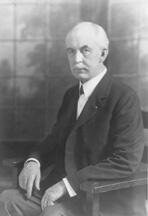
Here you will find contact information for Senator Porter Hinman Dale, including email address, phone number, and mailing address.
| Name | Porter Hinman Dale |
| Position | Senator |
| State | Vermont |
| Party | Republican |
| Status | Former Representative |
| Term Start | December 6, 1915 |
| Term End | March 3, 1933 |
| Terms Served | 6 |
| Born | March 1, 1867 |
| Gender | Male |
| Bioguide ID | D000009 |
About Senator Porter Hinman Dale
Porter Hinman Dale (March 1, 1867 – October 6, 1933) was an American educator, lawyer, and Republican politician who served as a member of the United States House of Representatives from 1915 to 1923 and as a United States Senator from Vermont from 1923 to 1933. Over the course of six terms in Congress, he contributed to the legislative process during a significant period in American history, representing the interests of his Vermont constituents in both chambers.
Dale was born in Island Pond, Essex County, Vermont, on March 1, 1867, the son of George N. Dale, who served as lieutenant governor of Vermont, and Helen (Hinman) Dale. He attended the public schools in Island Pond and pursued further studies at Eastman Business College. Seeking broader training, he continued his education in Philadelphia and Boston, and devoted two years to the study of elocution and oratory under James Edward Murdoch, a noted Shakespearean scholar and actor. This early emphasis on public speaking and classical rhetoric helped prepare him for a career in teaching, the law, and ultimately public office.
Upon completion of his formal and professional studies, Dale became an educator. He taught at Green Mountain Seminary in Waterbury, Vermont, and later at Bates College in Lewiston, Maine. Deciding to enter the legal profession, he read law under the guidance of his father, was admitted to the bar in 1896, and commenced practice in Island Pond. After the death of his father, he continued in legal practice in partnership with Harry B. Amey. In addition to his legal work, Dale became involved in several business enterprises, including the lumber, electric, and banking industries, reflecting the economic development of northern Vermont at the turn of the twentieth century.
Dale’s early public service combined legal, administrative, and military responsibilities. From 1897 to 1910 he served as chief deputy collector of customs at Island Pond, a position of importance in a border community with close commercial ties to Canada. In 1910 he resigned that post upon his appointment as judge of the Brighton municipal court. He also served in the Vermont state militia as a colonel on the staff of Governor Josiah Grout, underscoring his standing in state affairs. Politically active as a Republican, Dale was an unsuccessful candidate for the party’s nomination for Vermont’s Second Congressional District in 1900. He later won election to the Vermont State Senate in 1910 and served two two-year terms, gaining legislative experience that would prove valuable in his subsequent federal career.
In 1914, Dale again sought federal office as a candidate for the Republican nomination for the U.S. House of Representatives from Vermont’s 2nd District. At the state party convention he secured the nomination by defeating Alexander Dunnett on the twenty-first ballot, and he went on to win the general election. He entered the House on March 4, 1915, and served until August 11, 1923, when he resigned to become a candidate for the United States Senate. During his House tenure, which spanned World War I and the early postwar years, Dale served as chairman of the Committee on Expenditures in the Department of the Treasury during the Sixty-sixth and Sixty-seventh Congresses, overseeing aspects of federal fiscal administration at a time of expanding national government activity.
Dale’s transition to the Senate occurred amid a moment of national significance. On the night of August 2, 1923, while he was campaigning for the Senate, he learned of the death of President Warren G. Harding. Vice President Calvin Coolidge was then staying at the home of his father, John Calvin Coolidge Sr., in Plymouth, Vermont. Dale traveled to the Coolidge home to ensure that the vice president was informed and to offer his assistance. By most accounts, it was Dale who persistently urged that Coolidge be sworn in immediately to ensure continuity in the presidency, and he was present when John Coolidge administered the oath of office to his son in the early morning hours of August 3, 1923. Dale later drafted and revised a written account of this event, which his grandson Porter H. Dale II and great-grandson Christopher Dale discovered and published in the Journal of Vermont History in 1994.
Dale was elected to the United States Senate on November 6, 1923, to fill the vacancy caused by the death of Senator William P. Dillingham, for the term ending March 3, 1927. He took his seat on November 7, 1923, and was subsequently reelected in 1926 and 1932, serving continuously until his death in 1933. In the Senate he chaired the Committee on Civil Service during the Sixty-ninth through Seventy-second Congresses, playing a role in the oversight and administration of the federal civil service system. His Senate service coincided with the prosperity of the 1920s and the onset of the Great Depression, and he participated in the legislative deliberations of this transformative era while continuing to represent Vermont’s interests in national policy.
In his personal life, Dale married Amy K. Bartlett of Island Pond in 1891. She was born in 1861 and died on August 1, 1907. In 1910 he married Augusta M. Wood (1876–1961) of Boston. With his first wife he was the father of four children: Marian (1892–1975), Timothy (1894–1977), Amy (1895–1938), and George (1898–1962). Dale maintained close ties to his native region throughout his life, reflecting his deep roots in northeastern Vermont.
Porter Hinman Dale died in office on October 6, 1933, at his summer home on Lake Willoughby in Westmore, Vermont. He was buried in Lakeside Cemetery in Island Pond, the community where he had been born, practiced law, and begun his public career. His death brought to a close nearly two decades of continuous service in the United States Congress, during which he served in both the House of Representatives and the Senate and held key committee chairmanships in the Treasury and civil service fields.