Representative Porter Hardy
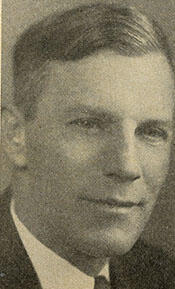
Here you will find contact information for Representative Porter Hardy, including email address, phone number, and mailing address.
| Name | Porter Hardy |
| Position | Representative |
| State | Virginia |
| District | 2 |
| Party | Democratic |
| Status | Former Representative |
| Term Start | January 3, 1947 |
| Term End | January 3, 1969 |
| Terms Served | 11 |
| Born | June 1, 1903 |
| Gender | Male |
| Bioguide ID | H000197 |
About Representative Porter Hardy
Porter Hardy Jr. (June 1, 1903 – April 19, 1995) was an American farmer, businessman, and Democratic politician who represented Virginia’s 2nd congressional district in the United States House of Representatives for eleven consecutive terms from January 3, 1947, to January 3, 1969. A member of the Democratic Party and a supporter of the Byrd Organization during the era of Massive Resistance, he played a notable role in mid-twentieth-century Virginia and national politics, particularly in oversight of federal defense operations.
Hardy was born in Bon Air, Chesterfield County, Virginia, on June 1, 1903. He attended local public schools and then Randolph-Macon Academy in Bedford, Virginia. He graduated from Boykins High School in Boykins, Virginia, in 1918. Pursuing higher education, he enrolled at Randolph-Macon College in Ashland, Virginia, from which he graduated in 1922. Seeking further training in business, Hardy attended the Graduate School of Business Administration at Harvard University during 1923 and 1924, laying the foundation for his subsequent career in accounting, commerce, and agriculture.
Following his studies, Hardy embarked on a business career that took him to several East Coast cities. From 1924 to 1927 he worked as an accountant and warehouse manager in New York City and Norfolk, Virginia, gaining experience in finance and logistics. Between 1927 and 1932 he operated as a wholesaler of electrical equipment in Salisbury, Maryland. In 1932 he moved to Churchland, in what is now part of Portsmouth, Virginia, where he turned to farming. His combined experience as a businessman and farmer would later inform his political outlook and legislative interests, particularly in matters affecting rural communities and economic development.
Hardy entered electoral politics in a congressional district that had been marked by instability in representation. Although the Byrd Organization dominated much of Virginia’s state politics, the 2nd Congressional District—then encompassing the cities of Norfolk, Portsmouth, and Suffolk, as well as Norfolk, Nansemond, Suffolk, Isle of Wight, and Princess Anne Counties—had elected five different congressmen in the preceding decade, a national record for turnover. In the 1946 election, Hardy secured the Democratic nomination and was elected to the United States House of Representatives, defeating Republican Sidney H. Kelsey with 65.66 percent of the vote. He took office in the Eightieth Congress on January 3, 1947, thereby beginning more than two decades of continuous service in Congress.
During his congressional career, Hardy was repeatedly returned to office by substantial margins. In 1948 he was re-elected, defeating Republican Walter E. Hoffman, Independent Jerry O. Gilliam, and Socialist Sidney Moore with 61.15 percent of the vote. He ran unopposed in both 1950 and 1952, reflecting his growing political strength in the district. In 1954 he was re-elected over Republican George V. Credle with 74.45 percent of the vote. He again won comfortably in 1956, defeating Republican William R. Burns with 76.43 percent. Hardy faced no opposition in 1958, and in 1960 he defeated Republican Louis B. Fine with 75.94 percent of the vote. He again defeated Fine in 1962, winning 74.96 percent. In 1964 he prevailed over Republican Wayne Lustig and Independent H. Grady Speers with 68.73 percent of the vote, and in 1966 he was re-elected unopposed. Over the course of these eleven terms, Hardy consistently participated in the legislative process and represented the interests of his constituents in southeastern Virginia.
Hardy’s service in Congress coincided with a significant period in American history, encompassing the early Cold War, the Korean War, the beginnings of U.S. involvement in Vietnam, and the civil rights movement. Within the House of Representatives, he became particularly known for his work on defense and governmental oversight. As chairman of a House Armed Services Subcommittee, he investigated waste in federal operations, focusing on efficiency and accountability in military and defense-related spending. His efforts in this role reflected both his business background and his concern for prudent management of public funds.
In matters of civil rights and social policy, Hardy’s record reflected his alignment with the conservative Byrd Organization that dominated Virginia’s Democratic politics for much of the mid-twentieth century. In 1956 he joined other members of the Byrd Organization in signing the Southern Manifesto, which opposed the Supreme Court’s decision in Brown v. Board of Education and the desegregation of public schools. He later voted against the Civil Rights Act of 1964. However, in a notable departure from most of his Byrd Organization colleagues, Hardy voted in favor of the Twenty-fourth Amendment to the United States Constitution, which prohibited the use of poll taxes in federal elections. He announced his retirement from Congress after twenty-two years of service and did not seek re-election in 1968, leaving office at the conclusion of his eleventh term on January 3, 1969, as the Byrd Organization itself was entering a period of decline.
After leaving Congress, Hardy remained active in Virginia’s business and financial sectors. Drawing on his earlier experience in commerce and his long familiarity with economic issues, he served as a director of Dominion Bankshares Corporation and other Virginia financial institutions. In these roles he continued to influence economic and community development in the state, even as he withdrew from elective politics.
Porter Hardy Jr. died on April 19, 1995. He was interred at Eastern Shore Chapel Cemetery in Virginia Beach, Virginia. His long tenure in the House of Representatives, his role in stabilizing representation in Virginia’s 2nd Congressional District, his participation in key legislative debates of the mid-twentieth century, and his work on oversight of federal defense expenditures marked him as a significant figure in Virginia’s congressional history.