Senator Porter James McCumber
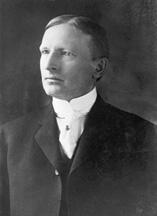
Here you will find contact information for Senator Porter James McCumber, including email address, phone number, and mailing address.
| Name | Porter James McCumber |
| Position | Senator |
| State | North Dakota |
| Party | Republican |
| Status | Former Representative |
| Term Start | December 4, 1899 |
| Term End | March 3, 1923 |
| Terms Served | 4 |
| Born | February 3, 1858 |
| Gender | Male |
| Bioguide ID | M000397 |
About Senator Porter James McCumber
Porter James McCumber (February 3, 1858 – May 18, 1933) was a United States senator from North Dakota and a prominent Republican legislator who served four terms in the Senate from 1899 to 1923. He was a supporter of the 1906 Pure Food and Drug Act and later became one of President Woodrow Wilson’s staunchest Republican allies in advocating for United States participation in the League of Nations. Over the course of his long public career, he played a central role in tariff policy, Indian affairs, and pension legislation, and helped shape federal regulation of food and drugs.
McCumber was born in Crete, Will County, Illinois, on February 3, 1858. Later that year, he moved with his parents to a farm near Rochester, Minnesota, where he was raised. He attended the common schools of the area and, as a young man, taught school for several years. In his youth he reportedly worked as a grain stacker on the farm of George Worner near Great Bend in what would become North Dakota; Worner was one of that town’s founders and a local public official, and this early association helped introduce McCumber to the civic life of the region. Seeking a professional career, McCumber enrolled in the law department of the University of Michigan at Ann Arbor and graduated in 1880.
After completing his legal education, McCumber was admitted to the bar and, in 1881, began the practice of law at Wahpeton in Dakota Territory. Wahpeton, located in Richland County near the Minnesota border, became his home base for both his legal and political careers. He quickly became active in territorial politics as the region’s population grew and its institutions developed in the years before North Dakota statehood. On May 29, 1889, he married Jennie M. Schorning of Wahpeton; by 1899, the couple had two children. His legal practice and growing family life were intertwined with his increasing responsibilities in public office.
A staunch Republican, McCumber was elected to the Dakota territorial House of Representatives in 1884 and to the territorial Senate in 1886, participating in the legislative affairs of the territory during a period of rapid settlement and political change. Following North Dakota’s admission to the Union in 1889, he served as state’s attorney of Richland County from 1889 to 1891, gaining a reputation as a capable prosecutor and public lawyer. By 1892, he had been appointed a federal commissioner and took part in negotiations with Native American tribes over land cessions. In that capacity he was involved in the discussions with Chief Little Shell of the Pembina Band of Chippewa concerning the vast lands of the Turtle Mountain region. Chief Little Shell refused to accept the commission’s terms—reportedly 10 cents an acre for 10 million acres of prime farming land—and walked out of the negotiations in protest, never signing what later became known as the McCumber Agreement. Negotiations continued with a council of 32 representatives selected by local federal agent John Waugh, and despite Little Shell’s subsequent protest in Washington, D.C., Congress accepted the McCumber Agreement in 1904. Under its terms, the Turtle Mountain Band of Chippewas received $1,000,000 for approximately 9,000,000 acres they ceded.
McCumber’s growing prominence in state and territorial affairs led to his election to the United States Senate from North Dakota in 1899. A member of the Republican Party, he was first elected to fill the term beginning March 4, 1899, and was subsequently re-elected in 1905, 1911, and 1916, serving continuously from March 4, 1899, to March 3, 1923. His service in Congress thus spanned a significant period in American history, including the Progressive Era, World War I, and the early postwar years. In the Senate he participated fully in the legislative process and represented the interests of his North Dakota constituents while also engaging in national policy debates. He was an unsuccessful candidate for renomination in 1922, losing the Republican primary to former North Dakota governor Lynn Frazier, which ended his 24-year tenure in the Senate.
During his Senate career, McCumber held several important committee assignments. He served as chairman of the Committee on Manufactures during the Fifty-seventh Congress and was a member of the Committee on Pensions during the Fifty-eighth through Sixty-second Congresses and again in the Sixty-sixth and Sixty-seventh Congresses. He also served on the Committee on Indian Affairs in the Fifty-ninth Congress, the Committee on Transportation Routes to the Seaboard from the Sixty-third through Sixty-fifth Congresses, and, in the Sixty-seventh Congress, on the powerful Committee on Finance. In his role on the Pension Committee, he participated in the interrogation of Colonel W. S. Metcalfe regarding allegations of the shooting of unarmed prisoners during the Philippine–American War at the Battle of Caloocan on February 10, 1899, in an inquiry that also involved accusations that Brigadier General Frederick Funston had interfered with the investigation; Metcalfe denied the charges. McCumber’s committee work reflected his broad engagement with veterans’ issues, transportation policy, and the economic and social questions of his time.
McCumber emerged as a notable Progressive-era legislator. In 1905 he was an ardent advocate of federal pure food legislation, and he strongly supported what became the Pure Food and Drug Act of 1906, which established federal standards for the labeling and safety of food and medicines. He also authored and promoted tariff legislation, most notably the Fordney–McCumber Tariff Act of 1922, which raised American tariffs on many imported goods in an effort to protect domestic industries in the post–World War I economy. In foreign policy, he broke with many in his party by becoming Woodrow Wilson’s staunchest Republican supporter in the Senate for the League of Nations, backing U.S. participation in the international organization envisioned in the Treaty of Versailles. His writings during this period included articles such as “What Lies Ahead of This People,” published in National Magazine in July 1905, and “How the New Tariff Will Aid the Music Industries,” published in Music Trades on December 16, 1922, which explained and defended his legislative initiatives to a broader public.
After leaving the Senate in 1923, McCumber resumed the practice of law in Washington, D.C. His experience in international and boundary issues led to his appointment by President Calvin Coolidge in 1925 as a member of the International Joint Commission, a bilateral body created to adjudicate and manage issues involving the use of boundary waters between the United States and Canada. He served on the commission from 1925 until his death, contributing to the peaceful resolution of disputes over shared waterways and the development of cooperative water-use policies between the two nations. McCumber died in Washington, D.C., on May 18, 1933. He was initially interred in the Abbey Mausoleum adjoining Arlington National Cemetery; his remains were later removed and reinterred at Columbia Gardens Cemetery in Arlington, Virginia.