Senator Presley Spruance
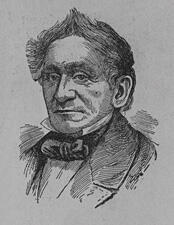
Here you will find contact information for Senator Presley Spruance, including email address, phone number, and mailing address.
| Name | Presley Spruance |
| Position | Senator |
| State | Delaware |
| Party | Whig |
| Status | Former Representative |
| Term Start | December 6, 1847 |
| Term End | March 3, 1853 |
| Terms Served | 1 |
| Born | September 11, 1785 |
| Gender | Male |
| Bioguide ID | S000760 |
About Senator Presley Spruance
Presley Spruance (September 11, 1785 – February 13, 1863) was an American merchant and politician from Smyrna, in Kent County, Delaware. Born in Kent County, Delaware, he spent virtually his entire life in and around Smyrna, where he became closely identified with the town’s commercial growth and political life. Over the course of his long career he was affiliated first with the Federalist Party and later with the Whig Party, reflecting the broader realignment of American political parties in the early nineteenth century.
Spruance was engaged from an early period in manufacturing and mercantile pursuits in Smyrna. As a merchant, he participated in the local economy at a time when Smyrna was developing as a regional commercial center, and his business interests provided both the means and the standing for his entry into public life. His experience in trade and manufacturing informed his later legislative work, particularly on issues affecting commerce and economic development in Delaware.
Spruance’s political career began in the Delaware General Assembly, where he served in both houses over a span of more than two decades. He was elected to the Delaware House of Representatives for the 1823 session and again for the 1839–1840 session. In the interim he served multiple terms in the Delaware State Senate, sitting in that body from 1826 through 1831, again in the 1835–1836 and 1837–1838 sessions, and later in the 1841–1842 and 1843–1844 sessions, returning once more in 1847. During these years he was several times chosen as Speaker of the State Senate, a role that underscored his influence within the legislature and his standing among his colleagues. His service in the General Assembly occurred in an era when elections in Delaware were held on the first Tuesday of October, and when U.S. senators from the state were chosen by the General Assembly rather than by popular vote.
A member initially of the Federalist Party and later of the Whig Party, Spruance rose from state to national office in the mid-nineteenth century. He was elected by the Delaware General Assembly as a Whig to the United States Senate and served one full term from March 4, 1847, to March 3, 1853, representing Delaware during a significant period in American history marked by sectional tensions and debates over slavery and territorial expansion. As a senator from Delaware, he participated in the legislative process, took part in the deliberations of the upper chamber, and represented the interests of his constituents in a period that included the Mexican–American War and the Compromise of 1850. His tenure in the Senate coincided with a time when U.S. representatives were popularly elected for two-year terms beginning March 4, while U.S. senators, such as Spruance, assumed office on March 4 for six-year terms following their selection by state legislatures.
Presley Spruance’s service in Congress from 1847 to 1853 constituted his sole term in national office, but it capped a long record of public service in Delaware. As a member of the Senate, he contributed to the work of the Whig Party in Congress and participated in the democratic process at a time of rapid political and social change. After completing his term in the United States Senate, he did not seek further federal office and instead returned to Smyrna, where he resumed his manufacturing and mercantile pursuits and continued to be a prominent figure in local affairs.
Spruance lived out his later years in Smyrna, remaining closely associated with the community in which he had built both his business and political careers. He died there on February 13, 1863. He was buried in the Presbyterian Cemetery in Smyrna, reflecting his long residence and enduring ties to the town. A house he built in Smyrna is recognized as a contributing property in the Smyrna Historic District, providing a surviving physical link to his life and to the period in which he served Delaware in both state and national office.