Senator Preston B. Plumb
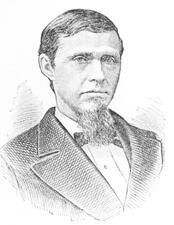
Here you will find contact information for Senator Preston B. Plumb, including email address, phone number, and mailing address.
| Name | Preston B. Plumb |
| Position | Senator |
| State | Kansas |
| Party | Republican |
| Status | Former Representative |
| Term Start | October 15, 1877 |
| Term End | December 31, 1891 |
| Terms Served | 3 |
| Born | October 12, 1837 |
| Gender | Male |
| Bioguide ID | P000389 |
About Senator Preston B. Plumb
Preston Bierce Plumb (October 12, 1837 – December 20, 1891) was a United States senator from Kansas, a member of the Republican Party, and an officer in the Union Army during the American Civil War. His service in Congress, which extended from 1877 until his death in 1891, spanned a significant period in American history marked by Reconstruction’s aftermath, western expansion, and the rapid growth of railroads and industry. Over the course of three terms in the Senate, he participated actively in the legislative process and represented the interests of his Kansas constituents.
Plumb was born on October 12, 1837, in Delaware, Ohio, where he spent his early years in the Midwest frontier environment that would shape his later political outlook. As a youth he learned the printing trade and became involved in newspaper work, an experience that introduced him to public affairs and political debate. His early exposure to journalism and the issues of the day helped cultivate the skills in communication and advocacy that he would later employ in law, politics, and national office.
After receiving a basic education in Ohio, Plumb continued to work in the newspaper business and studied law. Drawn by the opportunities of the developing West and the political ferment over slavery and free soil, he moved to the Kansas Territory in the 1850s. There he became associated with the Free-State movement and used his experience in printing and publishing to support the antislavery cause. His legal training and editorial work together laid the foundation for his subsequent career as a lawyer, public official, and political leader in the new state of Kansas.
With the outbreak of the American Civil War, Plumb entered military service on the Union side, reflecting his longstanding Free-State and Unionist convictions. He served as an officer in the Union Army, gaining experience in leadership and administration during a conflict that was central to the nation’s future and to the political identity of Kansas. His wartime service enhanced his public standing and reinforced his commitment to the preservation of the Union and the principles for which he had advocated in the territorial period.
Following the war, Plumb returned to civilian life in Kansas and resumed his legal and political activities. He became increasingly prominent in state affairs as Kansas transitioned from a turbulent frontier to a more settled agricultural and commercial state. As a Republican, he aligned with the dominant political party in Kansas during the postwar era, supporting policies that encouraged settlement, railroad construction, and economic development. His growing reputation as a capable lawyer and public servant led to higher responsibilities and set the stage for his election to national office.
Plumb was elected as a Republican to the United States Senate from Kansas and took his seat in 1877. He would serve continuously in that body until his death in 1891, completing three terms in office. During these years he contributed to the legislative process at a time when the nation grappled with issues of Reconstruction’s legacy, federal land policy, railroad regulation, and the integration of the Great Plains into the national economy. As a senator, he participated in debates over public lands, western development, and the interests of farmers and settlers, and he worked to ensure that the needs of his Kansas constituents were represented in federal policy. His tenure coincided with the broader transformation of the American West, and he played a role in shaping the laws that governed that transformation.
Plumb’s congressional service thus occurred during a significant period in American history, and he was an active participant in the democratic process at the national level. He remained in the Senate until his death on December 20, 1891, while still in office. His career, spanning early Free-State activism, Civil War service as a Union Army officer, and three consecutive terms as a United States senator from Kansas, reflected the trajectory of Kansas itself from contested territory to an established state with a voice in national affairs.