Representative Ralph Frederick Beermann
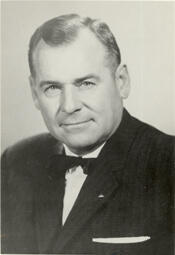
Here you will find contact information for Representative Ralph Frederick Beermann, including email address, phone number, and mailing address.
| Name | Ralph Frederick Beermann |
| Position | Representative |
| State | Nebraska |
| District | 1 |
| Party | Republican |
| Status | Former Representative |
| Term Start | January 3, 1961 |
| Term End | January 3, 1965 |
| Terms Served | 2 |
| Born | August 13, 1912 |
| Gender | Male |
| Bioguide ID | B000310 |
About Representative Ralph Frederick Beermann
Ralph Frederick Beermann (August 13, 1912 – February 17, 1977) was an American Republican politician and United States Representative from Nebraska who served in Congress from 1961 to 1965. He was born near Dakota City, Dakota County, Nebraska, where he was raised in a large farm family. After attending local schools, he pursued higher education at Morningside College in Sioux City, Iowa, from which he graduated before undertaking additional training at various United States Army specialist schools.
With the outbreak of World War II, Beermann entered military service in the United States Army. He served in both the African and European Theaters of Operations, where he was assigned to the 601st Ordnance Battalion and later the 301st Ordnance Regiment. His wartime service in ordnance units placed him in the logistical and technical support structure that underpinned Allied combat operations. Following the conclusion of the war, he returned to Dakota County, Nebraska, and joined with his six brothers in a family enterprise known as the Beermann Brothers, engaged in farming, alfalfa dehydrating, and cattle raising. This agricultural and business experience grounded his later political career in the concerns of rural communities and farm organizations.
Beermann became active in Republican Party politics at the local and county levels in Nebraska. He served for ten years as chairman of the Dakota County Republican Central Committee, where he helped shape party organization and strategy in the region. He also organized the Dakota County Young Republicans, fostering political engagement among younger voters and emerging party leaders. Through these roles, he gained recognition within the state Republican Party as an effective organizer and spokesman for agricultural and small-town interests.
Building on his local and county party leadership, Beermann was elected to the United States House of Representatives as a Republican. He first won election to represent Nebraska’s 3rd congressional district in the Eighty-seventh Congress, serving from January 3, 1961, to January 3, 1963. After redistricting, he was elected to represent Nebraska’s 1st congressional district in the Eighty-eighth Congress, serving from January 3, 1963, to January 3, 1965. During his two terms in office, he participated in the legislative process at a time of significant national change, including the early 1960s civil rights era and the administration of Presidents John F. Kennedy and Lyndon B. Johnson. As a member of the House of Representatives, Ralph Frederick Beermann represented the interests of his Nebraska constituents, contributed to committee work, and took part in debates and votes that shaped federal policy. A member of the Republican Party, he was narrowly defeated for re-election in 1964, bringing his congressional service to a close after two consecutive terms.
After leaving Congress in January 1965, Beermann returned to his business pursuits in Dakota County, resuming his involvement in farming, alfalfa processing, and cattle operations with his family. He remained active in public affairs, and from 1972 to 1977 he served on the board of the Nebraska Public Power District, one of the state’s major public utilities. In that capacity he helped oversee policy and administration for publicly owned power in Nebraska, reflecting his continued engagement with issues of infrastructure, rural development, and public service even after his congressional career had ended.
Beermann was active in civic, religious, and veterans’ organizations throughout his life. He was a member of the Lutheran Church and participated in several community and service groups, including the Farm Bureau, the American Legion, the Veterans of Foreign Wars, and the Kiwanis. These affiliations underscored both his agricultural background and his status as a World War II veteran, and they kept him closely connected to the communities he had long represented and served.
Ralph Frederick Beermann died in a plane crash at the Sioux City Municipal Airport in Sioux City, Iowa, on February 17, 1977, when the single-engine aircraft he was piloting crashed; he was 64 years old. He was survived by his wife, Marjorie Beermann, and four of his brothers. He was interred at the Dakota City Cemetery in Dakota City, Nebraska, near the community where he had been born and where he had spent much of his life in farming, business, and public service.