Representative Ralph Pomeroy Buckland
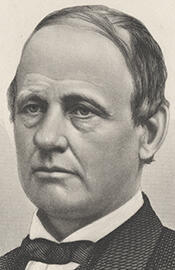
Here you will find contact information for Representative Ralph Pomeroy Buckland, including email address, phone number, and mailing address.
| Name | Ralph Pomeroy Buckland |
| Position | Representative |
| State | Ohio |
| District | 9 |
| Party | Republican |
| Status | Former Representative |
| Term Start | December 4, 1865 |
| Term End | March 3, 1869 |
| Terms Served | 2 |
| Born | January 20, 1812 |
| Gender | Male |
| Bioguide ID | B001022 |
About Representative Ralph Pomeroy Buckland
Ralph Pomeroy Buckland (January 20, 1812 – May 27, 1892) was a U.S. representative from Ohio, a brigadier general in the Union Army during the American Civil War, and later an executive of the Union Pacific Railroad. A member of the Republican Party, he served two terms in the United States House of Representatives from 1865 to 1869, representing an Ohio district during the critical years of Reconstruction and contributing to the legislative process at a pivotal moment in American history.
Buckland was born in Leyden, Franklin County, Massachusetts, on January 20, 1812. In the year of his birth he moved with his parents to Ravenna, Ohio, which was then part of the Western frontier. He was educated in local country schools and later attended the Tallmadge Academy in Tallmadge, Ohio. Seeking further education, he enrolled at Kenyon College in Gambier, Ohio, an institution that produced many of Ohio’s early political leaders. After leaving Kenyon, he pursued legal studies, preparing for a professional career in law and public service.
In 1837 Buckland was admitted to the bar and commenced the practice of law in Fremont, Ohio, which would remain his home for much of his life. He quickly became active in local affairs and built a reputation as a capable attorney and civic leader. From 1843 to 1845 he served as mayor of Fremont, overseeing municipal matters in a growing community. Originally aligned with the Whig Party, he was chosen as a delegate to the Whig National Convention in 1848, reflecting his rising prominence in state and national politics. As the Whig Party declined in the 1850s, Buckland’s political career continued to advance; he was elected to the Ohio State Senate, serving from 1855 to 1859 and participating in debates over the pressing sectional issues of the period.
With the outbreak of the American Civil War, Buckland entered military service on the Union side. He rose to the rank of brigadier general in the Union Army, one of several Ohio officers who attained general’s rank during the conflict. His service placed him among the state’s notable Civil War leaders at a time when Ohio played a major role in supplying troops and commanders to the Union cause. Buckland’s wartime experience and leadership further enhanced his standing in Ohio and laid the groundwork for his subsequent national political career.
After the war, Buckland was elected as a Republican to the United States House of Representatives, serving from 1865 to 1869. His tenure in Congress coincided with the Thirty-ninth and Fortieth Congresses, during which the nation grappled with Reconstruction, the reintegration of the former Confederate states, and the definition of civil and political rights for formerly enslaved people. As a member of the House of Representatives, Ralph Pomeroy Buckland participated in the democratic process, represented the interests of his Ohio constituents, and contributed to the legislative work of the Reconstruction era during his two terms in office.
Following his congressional service, Buckland remained active in public and business affairs. He became associated with the Union Pacific Railroad, serving as an executive during a formative period in the company’s development as it helped complete the first transcontinental rail link. His work with the railroad reflected the broader postwar shift toward national economic expansion and infrastructure building, and it extended his influence beyond Ohio into the emerging transportation network of the American West.
Ralph Pomeroy Buckland spent his later years in Ohio, where he was regarded as a veteran statesman, Civil War general, and former member of Congress. He died on May 27, 1892, leaving a record of service that spanned local government, state legislation, military command, national lawmaking, and corporate leadership in the railroad industry.