Representative Ralph Edwin Church
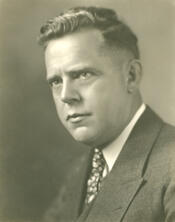
Here you will find contact information for Representative Ralph Edwin Church, including email address, phone number, and mailing address.
| Name | Ralph Edwin Church |
| Position | Representative |
| State | Illinois |
| District | 13 |
| Party | Republican |
| Status | Former Representative |
| Term Start | January 3, 1935 |
| Term End | January 3, 1951 |
| Terms Served | 7 |
| Born | May 5, 1883 |
| Gender | Male |
| Bioguide ID | C000390 |
About Representative Ralph Edwin Church
Ralph Edwin Church (May 5, 1883 – March 21, 1950) was an American lawyer and Republican politician who served as a Representative from Illinois in the United States Congress from 1935 to 1951. Over the course of seven terms in the House of Representatives, he represented the northern suburbs of Chicago and contributed to the legislative process during a significant period in American history. A member of the Republican Party, he participated actively in the democratic process and represented the interests of his constituents until his death in office in 1950 while testifying at a congressional hearing.
Church was born on a farm near Catlin, in Vermilion County, Illinois, on May 5, 1883. He attended the public schools and went to Danville High School in Danville, Illinois. His early life in rural Illinois and subsequent education in nearby Danville provided the foundation for his later professional and political career. These formative years in central Illinois helped shape his understanding of both agricultural and urban concerns that would later be reflected in his public service.
After completing his secondary education, Church pursued higher education at the University of Michigan, where he received his bachelor’s degree. He then continued his studies at Northwestern University, earning both a master’s degree and a law degree. Admitted to the Illinois bar in 1909, he began practicing law in Chicago, Illinois. Establishing himself as an attorney in one of the nation’s largest cities, he developed a legal career that complemented his growing interest in public affairs and Republican Party politics.
Church entered public office as a member of the Illinois House of Representatives, in which he served from 1917 to 1932 as a Republican. His long tenure in the state legislature, spanning World War I, the postwar period, and the onset of the Great Depression, gave him extensive experience in state-level policymaking and fiscal matters. During World War I, in addition to his legislative responsibilities, he served in the United States Navy, reflecting a commitment to national service during a time of global conflict.
Building on his state legislative experience, Church was elected to the United States House of Representatives from Illinois, representing the northern suburbs of Chicago. He first served in Congress from January 3, 1935, to January 3, 1941, and then, after a brief interruption, returned to serve again from January 3, 1943, until his death on March 21, 1950. In total, he served seven terms in the House. His congressional career unfolded during a transformative era that included the New Deal, World War II, and the early years of the Cold War, and he took part in deliberations over federal expenditures and other major national issues. As a member of the House of Representatives, he participated in the democratic process and worked to represent the interests of his Illinois constituents in Washington.
Church made his home in Evanston, Illinois, where he lived with his wife, Marguerite S. Church, and their family. Evanston, a northern suburb of Chicago, lay within the area he represented in Congress and served as both his personal and political base. His residence there reinforced his close ties to the communities whose concerns he carried to the state legislature and later to the national Capitol.
Ralph Edwin Church died suddenly in Washington, D.C., on March 21, 1950, while giving testimony before a congressional House committee on expenditures. His death in office brought an abrupt end to a public career that had spanned more than three decades at both the state and federal levels. Following his death, his wife, Marguerite S. Church, was elected in a special election to succeed him in the United States House of Representatives, continuing the family’s representation of the northern suburbs of Chicago in Congress and extending the public service legacy he had established.