Senator Ralph Edward Flanders
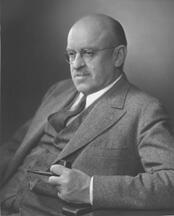
Here you will find contact information for Senator Ralph Edward Flanders, including email address, phone number, and mailing address.
| Name | Ralph Edward Flanders |
| Position | Senator |
| State | Vermont |
| Party | Republican |
| Status | Former Representative |
| Term Start | November 1, 1946 |
| Term End | January 3, 1959 |
| Terms Served | 3 |
| Born | September 28, 1880 |
| Gender | Male |
| Bioguide ID | F000190 |
About Senator Ralph Edward Flanders
Ralph Edward Flanders served as a Senator from Vermont in the United States Congress from 1946 to 1959. A member of the Republican Party, Ralph Edward Flanders contributed to the legislative process during 3 terms in office.
Ralph Edward Flanders’s service in Congress occurred during a significant period in American history. As a member of the Senate, Ralph Edward Flanders participated in the democratic process and represented the interests of constituents.
Ralph Edward Flanders (September 28, 1880 – February 19, 1970) was an American mechanical engineer, industrialist and politician who served as a Republican U.S. Senator from the state of Vermont. He grew up on subsistence farms in Vermont and Rhode Island and was an apprentice machinist and draftsman before training as a mechanical engineer. He spent five years in New York City as an editor for a machine tool magazine. After moving back to Vermont, he managed and then became president of a successful machine tool company. Flanders used his experience as an industrialist to advise state and national commissions in Vermont, New England and Washington, D.C., on industrial and economic policy. He was president of the Boston Federal Reserve Bank for two years before being elected U.S. Senator from Vermont. Flanders was noted for introducing a 1954 motion in the Senate to censure Senator Joseph McCarthy. McCarthy had made sensational claims that there were large numbers of Communists and Soviet spies and sympathizers inside the federal government and elsewhere. He used his Senate committee as a nationally televised forum for attacks on individuals whom he accused. Flanders felt that McCarthy’s attacks distracted the nation from a much greater threat of Communist successes elsewhere in the world and that they created division and confusion within the United States, to the advantage of its enemies. Ultimately, McCarthy’s tactics and his inability to substantiate his claims led to his being discredited and censured by the United States Senate.