Representative Ralph Abernethy Gamble
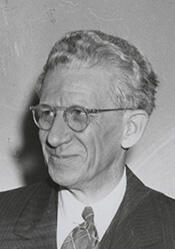
Here you will find contact information for Representative Ralph Abernethy Gamble, including email address, phone number, and mailing address.
| Name | Ralph Abernethy Gamble |
| Position | Representative |
| State | New York |
| District | 26 |
| Party | Republican |
| Status | Former Representative |
| Term Start | January 5, 1937 |
| Term End | January 3, 1957 |
| Terms Served | 10 |
| Born | May 6, 1885 |
| Gender | Male |
| Bioguide ID | G000031 |
About Representative Ralph Abernethy Gamble
Ralph Abernethy Gamble (May 6, 1885 – March 4, 1959) was an American politician and attorney who represented Westchester County, New York, in the United States House of Representatives from 1937 to 1957. A member of the Republican Party and of the prominent Gamble family of South Dakota, he served ten consecutive terms in Congress and contributed to the legislative process during a significant period in American history, spanning the New Deal, World War II, and the early Cold War.
Gamble was born on May 6, 1885, in Yankton, South Dakota, into a family that was active in public life and regional affairs. His upbringing in South Dakota placed him within a milieu of civic engagement that would later be reflected in his own commitment to public service. Although he would eventually build his political career in New York, his family background in South Dakota remained an important part of his identity and public profile.
Gamble pursued an extensive education on the East Coast. He graduated from Princeton University in 1909, receiving a broad liberal arts education that prepared him for the study of law and public affairs. He went on to earn a law degree from George Washington University Law School in 1911, and then undertook further legal studies at Columbia Law School, from which he graduated in 1912. This combination of institutions in Washington, D.C., and New York City exposed him to both national politics and the legal culture of New York, shaping the trajectory of his professional life.
After his admission to the bar, Gamble began practicing law in New York City, where he established himself in private practice. He later moved his practice to Larchmont, in Westchester County, reflecting his growing ties to the suburban communities he would later represent. In addition to his private practice, he served as counsel for the town of Mamaroneck from 1918 to 1933, providing legal guidance to the local government over a fifteen-year period that included World War I and the onset of the Great Depression. He also served as counsel for the village of Larchmont from 1926 to 1928, further deepening his involvement in local affairs and municipal governance.
Gamble’s formal political career began in the New York State Assembly, where he represented Westchester County’s 2nd District. He was a member of the Assembly in 1931, 1932, 1933, 1934, 1935, 1936, and 1937, serving seven consecutive years. In Albany he gained experience in legislative procedure, state policy, and constituent service, building a reputation as a capable Republican legislator. His work in the Assembly provided a foundation for his subsequent election to national office and helped establish his standing within the party in Westchester County.
Gamble was elected to the United States House of Representatives in a special election in 1937 to fill the vacancy caused by the resignation of Representative Charles D. Millard. He took his seat on November 2, 1937, and served continuously until January 3, 1957. Over the course of these ten terms in office, he represented the interests of his Westchester County constituents during a transformative era in American history, participating in the democratic process as Congress addressed issues arising from the Great Depression, World War II, postwar reconstruction, and the early years of the Cold War. As a Republican member of the House, he contributed to debates over domestic policy, housing, and economic development, and worked within his party’s caucus to shape legislative priorities.
During the 80th United States Congress, Gamble held a notable leadership role as chairman of the Joint Committee on Housing. In this capacity he was involved in congressional oversight and legislative consideration of national housing policy in the immediate post–World War II period, when the country faced acute housing shortages and rapid suburban growth. His chairmanship reflected both his seniority and his particular engagement with issues affecting communities like those in Westchester County, where housing, infrastructure, and suburban development were central concerns.
After leaving Congress in January 1957, Gamble retired from elective office. He remained associated with the communities he had long served and with the Republican Party, though he no longer held public office. Ralph Abernethy Gamble died on March 4, 1959, in Saint Michaels, Maryland. His two decades in the House of Representatives, combined with his earlier service in the New York State Assembly and his long legal career in Westchester County, marked him as a significant mid-twentieth-century Republican figure in New York politics.