Representative Ralph Waldo Gwinn
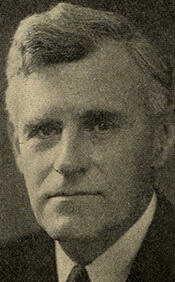
Here you will find contact information for Representative Ralph Waldo Gwinn, including email address, phone number, and mailing address.
| Name | Ralph Waldo Gwinn |
| Position | Representative |
| State | New York |
| District | 27 |
| Party | Republican |
| Status | Former Representative |
| Term Start | January 3, 1945 |
| Term End | January 3, 1959 |
| Terms Served | 7 |
| Born | March 29, 1884 |
| Gender | Male |
| Bioguide ID | G000541 |
About Representative Ralph Waldo Gwinn
Ralph Waldo Gwinn (March 29, 1884 – February 27, 1962) was a Republican member of the United States House of Representatives from New York who served seven consecutive terms in Congress from 1945 to 1959. He was born in Noblesville, Hamilton County, Indiana, where he spent his early years before pursuing higher education and a career in law and public service. His life and career spanned a period of profound change in the United States, from the late nineteenth century through World War I, the interwar years, World War II, and the early Cold War era.
Gwinn attended the public schools of Noblesville and went on to study at DePauw University in Greencastle, Indiana, from which he graduated in 1905. He then moved to New York to study law at Columbia University Law School, receiving his degree in 1908. After his admission to the bar, he commenced the practice of law in New York, establishing himself professionally in the state that he would later represent in Congress. His legal training and early practice provided the foundation for his later work in public administration and legislative service.
During World War I, Gwinn entered federal service and was appointed a special representative of the Secretary of War in the European theatre. In this capacity he was involved in administrative and liaison duties related to the American war effort overseas, gaining experience in international and military affairs at a time when the United States was emerging as a global power. His wartime service contributed to his understanding of national defense and foreign policy issues that would later come before Congress.
Following the war, Gwinn became active in local educational affairs in New York. He settled in Bronxville, Westchester County, where he took a leading role in the community’s school system. From 1920 until 1930 he served as president of the Bronxville, New York, board of education. In that position he oversaw local educational policy and administration during a decade of growth and modernization in public schooling, reinforcing his reputation as a civic leader and administrator. His work in education governance complemented his legal background and helped establish his standing in Republican Party circles in the state.
Gwinn was elected as a Republican to the Seventy-ninth Congress in the 1944 elections and took office on January 3, 1945. He served continuously in the House of Representatives until January 3, 1959, completing seven terms during a significant period in American history that encompassed the end of World War II, the beginning of the Cold War, and the early stages of the civil rights movement. Representing a New York district, he participated in the legislative process on a wide range of domestic and international issues, reflecting both his legal training and his experience in wartime administration and local governance.
During his congressional service, Gwinn was a member of the Republican Party and took part in the party’s efforts to shape postwar policy. He engaged in the democratic process by representing the interests of his constituents in New York and contributing to debates on national policy. Among his notable recorded votes was his support for the Civil Rights Act of 1957, the first federal civil rights legislation enacted since Reconstruction, which aimed to protect voting rights for African Americans. His vote in favor of this measure placed him among those legislators who backed early federal civil rights enforcement during a contentious period in American politics.
After choosing not to seek reelection in 1958, Gwinn retired from Congress at the conclusion of his term in January 1959. In his later years he spent time in Florida, where he died in Delray Beach on February 27, 1962. He was interred at Pawling Cemetery in Pawling, New York, reflecting his long association with the state he had represented in the House of Representatives. His career combined legal practice, educational leadership, wartime service, and fourteen years in Congress during a transformative era in United States history.