Senator Ralph Izard
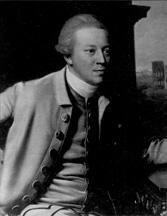
Here you will find contact information for Senator Ralph Izard, including email address, phone number, and mailing address.
| Name | Ralph Izard |
| Position | Senator |
| State | South Carolina |
| Party | Pro-Administration |
| Status | Former Representative |
| Term Start | March 4, 1789 |
| Term End | March 3, 1795 |
| Terms Served | 1 |
| Gender | Male |
| Bioguide ID | I000053 |
About Senator Ralph Izard
Ralph Izard (January 23, 1741/1742 – May 30, 1804) was an American politician, diplomat, and planter from South Carolina who served as a United States Senator from South Carolina from March 4, 1789, to March 4, 1795, and as president pro tempore of the United States Senate in 1794. A member of the Pro-Administration Party in the First Congress, he participated actively in the early legislative processes of the new federal government and represented the interests of South Carolina during a formative period in American political history.
Izard was born at “The Elms,” near Charleston, South Carolina, the son of Henry Izard and Margaret Johnson. He came from a prominent colonial family: his great-grandfather, also named Ralph Izard (1660–1710), was born in Dorchester, England, and settled in South Carolina, and his maternal grandfather was Robert Johnson, a governor of the Province of South Carolina. Izard’s parents died when he was a small child, and only one of his siblings survived to adulthood, circumstances that left him heir to substantial property but with limited immediate family. He was a slaveholder and managed extensive plantation holdings in South Carolina, which formed the economic base of his public and private life.
As a youth, Izard spent most of his childhood and early adulthood in England pursuing his education. He attended a school in Hackney, London, and later matriculated as a fellow-commoner at Trinity Hall, Cambridge, reflecting both his family’s wealth and its transatlantic connections. He returned to America in 1764 but did not remain long in South Carolina, choosing instead to reside largely abroad in the years leading up to the American Revolution. In 1767, he married Alice De Lancey, a member of a prominent New York family, who was a niece of James DeLancey and a descendant of Stephanus Van Cortlandt and Gertrude Schuyler, further linking Izard to influential colonial political and mercantile networks. He was elected to membership in the American Society (later the American Philosophical Society) in 1768, an indication of his standing among the intellectual and political elite of the colonies.
By the early 1770s, Izard had again taken up residence in Europe, living in London in 1771 and moving to Paris in 1776. That same year, the Continental Congress appointed him commissioner to the Court of Tuscany, a diplomatic post intended to cultivate European support for the American cause. Although he never reached Tuscany and his mission was limited in its practical effect, the appointment underscored Congress’s confidence in his abilities and connections. He was recalled in 1779 and returned to America in 1780, at a time when the Revolutionary War was at a critical stage. Demonstrating both patriotism and personal commitment, he pledged his large South Carolina estate as security for the payment of warships to be used in the American Revolutionary War. During this period, his family remained in France until 1783, when they joined him in South Carolina after the major fighting had ended.
Izard’s political career in the emerging United States began in the Confederation era. He served as a member of the Continental Congress in 1782 and 1783, representing South Carolina in the national deliberations that preceded the adoption of the Constitution. He was also one of the founders of the College of Charleston, contributing to the development of higher education in his native state. In 1788, following the ratification of the United States Constitution, the South Carolina legislature elected him to the United States Senate. He took his seat on March 4, 1789, in the First Congress, aligning with the Pro-Administration Party that generally supported President George Washington and the policies of the new federal government.
During his single term in the Senate, from March 4, 1789, to March 4, 1795, Izard participated in shaping the institutions and precedents of the federal government. He served as president pro tempore of the United States Senate during the Third Congress in 1794, placing him in the line of succession to the presidency in the absence of a vice president and underscoring his seniority and influence among his colleagues. His tenure coincided with foundational debates over executive power, finance, and foreign policy. In August 1789, after the Senate rejected Benjamin Fishbourn as collector of customs at Savannah, Georgia, President Washington personally entered the Senate chamber to inquire why his nominee had been rejected, an unusual and pointed display of presidential displeasure. Izard later wrote that “the president showed [a] great want of temper… when one of his nominations was rejected,” providing a contemporary account of early tensions between the executive and legislative branches. Throughout his service, he represented South Carolina’s interests while contributing to the broader democratic process in the new republic.
Izard retired from public life in 1795 at the conclusion of his Senate term and devoted himself to the management and care of his estates in South Carolina. Within two years of his retirement, he was stricken with an untreatable illness that paralyzed one side of his body, severely limiting his activities in his final years. He and his wife, Alice De Lancey Izard, had fourteen children, though only seven survived past early childhood. Among their descendants were several notable figures: Major General George Izard, who later served as governor of Arkansas; Ralph Izard, a naval officer who became a hero of the Tripolitan War and for whom the World War II destroyer USS Izard was named; and Anne Izard, who married William Allan Deas, with whom she had the painter Charles Deas. Through William Allan Deas’s family, the Izards were connected to Col. James Sutherland Deas, father of Confederate General Zachariah Cantey Deas. Another daughter, Charlotte Izard, married William Loughton Smith, son of South Carolina Assemblyman Benjamin Smith; Smith was also a brother-in-law of South Carolina Congressman Isaac Motte.
The Izard family’s connections extended widely through South Carolina and American political society. A great-grandson of Ralph Izard was Charles Manigault Morris, who was also a great-grandson of Lewis Morris, linking the Izards to another prominent Revolutionary-era family. A cousin of Charles Manigault Morris, General Arthur Middleton Manigault, was descended from Mary Izard, a cousin of Ralph Izard, further intertwining the Izard, Morris, and Middleton lineages. A cousin, Sarah Izard, married South Carolina Loyalist Governor Lord William Campbell, illustrating the family’s ties on both sides of the Revolutionary divide. A cousin twice removed, Elizabeth (Eliza) Izard, became a daughter-in-law of South Carolina Congressman Thomas Pinckney. One niece, Elizabeth Izard, married Alexander Wright, son of James Wright, the Loyalist governor of Georgia. In a later generation, another Ralph Izard—his descendant—married Eliza Pinckney in 1808, daughter of Major General Charles Cotesworth Pinckney, a signer of the Constitution, and granddaughter of Colonel Charles Pinckney, chief justice of South Carolina; she was also a niece of Continental Congress delegate Arthur Middleton, further cementing the family’s long-standing political alliances.
Ralph Izard died near Charleston, South Carolina, on May 30, 1804, at the age of sixty-two. He was interred in the churchyard of St. James Goose Creek Episcopal Church, near Charleston. His life spanned the transition from British colonial rule to the establishment of the United States, and his career as a diplomat, member of the Continental Congress, United States Senator, and president pro tempore of the Senate placed him among the influential South Carolinians who helped shape the early national government.