Representative Ralph Plumb
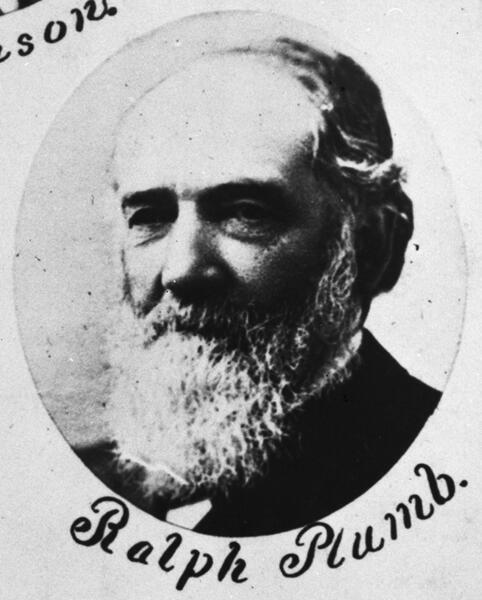
Here you will find contact information for Representative Ralph Plumb, including email address, phone number, and mailing address.
| Name | Ralph Plumb |
| Position | Representative |
| State | Illinois |
| District | 8 |
| Party | Republican |
| Status | Former Representative |
| Term Start | December 7, 1885 |
| Term End | March 3, 1889 |
| Terms Served | 2 |
| Born | March 29, 1816 |
| Gender | Male |
| Bioguide ID | P000390 |
About Representative Ralph Plumb
Ralph Plumb (March 29, 1816 – April 8, 1903) was a U.S. Representative from Illinois and a member of the Republican Party who served two terms in the United States House of Representatives from 1885 to 1889. He was born in Busti, Chautauqua County, New York, on March 29, 1816. Plumb attended the common schools of his native region, receiving a basic formal education typical of the period. As a young man he engaged in mercantile pursuits, gaining early experience in business that would later inform his work in commerce, infrastructure, and finance.
After his initial business activities in New York, Plumb moved west to Ohio, where he continued his mercantile career and became involved in public affairs. His growing interest in politics and civic life led to his election as a member of the Ohio House of Representatives in 1855. While in Ohio he decided to study law, and he was admitted to the bar in 1857. Plumb commenced the practice of law in Oberlin, Ohio, a community known for its strong antislavery sentiment and reformist traditions. His legal practice and political engagement in Oberlin placed him among those active in the contentious national debates of the 1850s. He was later identified as one of the “Oberlin rescuers” connected to the antislavery movement, and in an 1888 account published in the St. Louis Globe-Democrat he recounted the story of John Brown’s raid and the Oberlin rescuers, of whom he was one.
With the outbreak of the American Civil War, Plumb entered military service on the Union side. From 1861 to 1865 he served in the Union Army as a captain and quartermaster of Volunteers, responsible for the procurement and distribution of supplies and equipment essential to military operations. In recognition of his service, he was brevetted lieutenant colonel. His wartime experience further developed his administrative and organizational skills and reinforced his standing as a public figure committed to the preservation of the Union.
Following the Civil War, Plumb moved to Illinois in 1866 and settled in Streator, LaSalle County. There he shifted his focus from law to business and development, engaging in the mining of coal and the building of railroads at a time when industrial expansion and transportation infrastructure were transforming the Midwest. His leadership in these enterprises contributed to the growth of Streator as an important coal and rail center. Plumb’s prominence in local business and civic affairs led to his election as mayor of Streator, a position he held from 1882 to 1885. As mayor, he played a central role in guiding the city through a period of rapid economic and demographic change.
Plumb’s local and state experience culminated in his election to national office. A member of the Republican Party, he was elected as a Republican to the Forty-ninth and Fiftieth Congresses and served as a Representative from Illinois in the United States Congress from March 4, 1885, to March 3, 1889. During these two terms in the House of Representatives, he participated in the legislative process during a significant period in American history marked by industrialization, labor unrest, and debates over economic and regulatory policy. As a member of the House, Plumb represented the interests of his Illinois constituents, particularly those in a region shaped by coal mining, railroads, and emerging industrial enterprises, and he took part in the broader democratic process of federal lawmaking in the post–Civil War and Gilded Age era.
After leaving Congress in 1889, Plumb returned to private life in Streator, where he remained active in business. He engaged in banking, drawing on his long experience in commerce, infrastructure development, and public administration. Plumb continued to reside in Streator until his death there on April 8, 1903. His career spanned mercantile pursuits, law, state and local office, military service in the Civil War, and two terms in the U.S. House of Representatives, reflecting the trajectory of a nineteenth-century American public figure who moved from local to national prominence while contributing to the political and economic development of the Midwest.