Senator Randall Lee Gibson
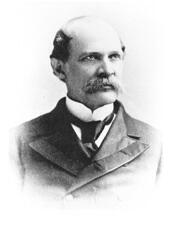
Here you will find contact information for Senator Randall Lee Gibson, including email address, phone number, and mailing address.
| Name | Randall Lee Gibson |
| Position | Senator |
| State | Louisiana |
| Party | Democratic |
| Status | Former Representative |
| Term Start | December 6, 1875 |
| Term End | March 3, 1893 |
| Terms Served | 6 |
| Born | September 10, 1832 |
| Gender | Male |
| Bioguide ID | G000165 |
About Senator Randall Lee Gibson
Randall Lee Gibson (September 10, 1832 – December 15, 1892) was an American attorney, soldier, and Democratic politician who served Louisiana in both houses of the United States Congress. He was elected as a member of the House of Representatives and later as a United States Senator, serving in Congress from 1875 until his death in 1892. A brigadier general in the Confederate States Army during the Civil War, he later became a regent of the Smithsonian Institution and president of the board of administrators of Tulane University, playing a significant role in the postwar educational and civic life of Louisiana.
Gibson was born in 1832 at “Spring Hill,” near Versailles, Woodford County, Kentucky, the son of Tobias Gibson, a planter and slaveholder, and a mother who also came from a slaveholding family in Lexington, Kentucky. His paternal line traced back to Gideon Gibson Jr., likely born in South Carolina in 1731, and to his great-great-grandfather, Gideon Gibson, a free man of color who had owned land and a small number of slaves in Virginia and North Carolina before migrating to South Carolina in the 1730s. Colonial authorities, concerned that he might incite a slave revolt, investigated him; after an interview, the governor declared him a free man with all privileges and granted him land. When Randall Gibson was a child, his father moved the family from Kentucky to Louisiana, where the boy was educated in local academies, growing up within the plantation society of the lower Mississippi Valley.
Gibson pursued higher education in the North, attending Yale University and graduating in 1853. While at Yale he was a member of the Skull and Bones society, an elite collegiate organization that drew many future political leaders. After completing his undergraduate studies, he returned to Louisiana to read law and enrolled in the University of Louisiana Law School in New Orleans, later Tulane University, where he earned his bachelor of laws (LL.B.). He was admitted to the bar and began practicing as an attorney in Louisiana, entering the professional class that would form much of the state’s political leadership on the eve of the Civil War.
With Louisiana’s secession from the Union in 1861, Gibson cast his lot with the Confederacy. He initially served as an aide to Governor Thomas O. Moore and on May 8, 1861, left Frankfort to join the 1st Louisiana Artillery as a captain. On August 13, 1861, he was commissioned colonel of the 13th Louisiana Infantry. Gibson saw heavy combat in the Western Theater, fighting at the Battle of Shiloh and in subsequent engagements. Serving with the Army of the Mississippi, he participated in the 1862 Kentucky Campaign and the Battle of Chickamauga. Promoted to brigadier general (special) on January 11, 1864, he took part in the Atlanta Campaign and the Franklin–Nashville Campaign, and was later assigned to the defense of Mobile, Alabama. During the siege of Spanish Fort in the closing weeks of the war, he was noted for inspiring his troops to hold their position until the last practicable moment, after which they escaped under cover of darkness on April 8, 1865. Gibson was captured at Cuba Station, Alabama, on May 8, 1865, paroled at Meridian, Mississippi, on May 14, 1865, and formally pardoned on September 25, 1866.
After the war, Gibson resumed his legal and civic career in Louisiana and entered politics as a Democrat during the turbulent Reconstruction era. In 1874 he was elected to the United States House of Representatives from Louisiana and took his seat on March 4, 1875. He was re-elected and served continuously in the House until March 3, 1883, completing four consecutive terms. During his House service, he was particularly identified with efforts to secure federal support for flood control and river improvements along the Mississippi. On December 10, 1875, he promoted the creation of the United States House Committee on the Mississippi Levees to investigate the condition of the levee system and to advocate federal assistance for its construction and repair, arguing that the Mississippi River, its commerce, and the agricultural economy of the region were matters of national concern. On November 7, 1877, the committee’s name was changed to the Committee on Levees and Improvements of the Mississippi River, reflecting its broader mandate.
Gibson’s congressional career continued in the upper chamber. In 1882, the Louisiana state legislature, which at that time elected U.S. senators, chose him as United States Senator. He entered the Senate on March 4, 1883, and served there until his death on December 15, 1892, completing nearly a decade in that body. Across his combined House and Senate service, he represented Louisiana in Congress from 1875 to 1892, a period that encompassed the end of Reconstruction and the consolidation of Democratic control in the South. As a senator, he continued to advocate for river and harbor improvements and for the economic interests of his state, and he participated in the legislative process during six terms in office when his House and Senate service are considered together. During these years, a political opponent challenged his status as a white man based on historical records of his ancestry. According to historian Daniel J. Sharfstein, Gibson investigated his lineage and found only that his forebears had been property owners—information that, in the racial logic of his time, was widely accepted as confirming his whiteness. Sharfstein has argued that Gibson’s paternal line traced back to freed African slaves in colonial Virginia, and that white Southern elites effectively “circled the wagons” around him, recognizing that if a man of his standing could not be secure in his racial status, no one in their social order could be.
In addition to his legislative work, Gibson played a prominent role in national cultural and educational institutions. He served as a regent of the Smithsonian Institution, contributing to the governance of the nation’s premier scientific and cultural complex. In Louisiana, he was president of the board of administrators of Tulane University, where he was instrumental in the postwar transformation of the public University of Louisiana into the privately endowed Tulane University of Louisiana. His leadership and advocacy helped secure funding and support for the institution, and Gibson Hall on Tulane’s campus was later named in his honor. He was also active in the social life of New Orleans as a member of The Boston Club, one of the city’s leading gentlemen’s clubs.
Randall Lee Gibson died in office as a United States senator while at Hot Springs, Arkansas, on December 15, 1892. His body was returned to Kentucky, and he was buried in Lexington Cemetery in Lexington, Kentucky, thus closing a life that had spanned from the antebellum border South through the Civil War and into the reconfigured political order of the late nineteenth century. The town of Tigerville in Terrebonne Parish, Louisiana, was renamed Gibson in his honor, reflecting the esteem in which he was held in his adopted state and commemorating his long service as a soldier, legislator, and educational leader.