Representative Randolph Perkins
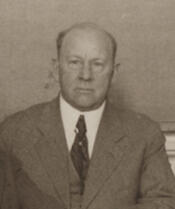
Here you will find contact information for Representative Randolph Perkins, including email address, phone number, and mailing address.
| Name | Randolph Perkins |
| Position | Representative |
| State | New Jersey |
| District | 7 |
| Party | Republican |
| Status | Former Representative |
| Term Start | April 11, 1921 |
| Term End | January 3, 1937 |
| Terms Served | 8 |
| Born | November 30, 1871 |
| Gender | Male |
| Bioguide ID | P000237 |
About Representative Randolph Perkins
Randolph Perkins (November 30, 1871 – May 25, 1936) was an American lawyer and Republican Party politician who represented New Jersey in the United States House of Representatives from 1921 to 1936. His service in Congress, spanning eight consecutive terms, occurred during a significant period in American history and reflected his long-standing involvement in state and national Republican politics.
Perkins was born in Dunellen, New Jersey, on November 30, 1871. In 1879 he moved with his parents to Jersey City, New Jersey, where he attended the public schools and Jersey City High School, later renamed William L. Dickinson High School. Seeking further technical and professional preparation, he attended Cooper Union in New York City, an institution known for its rigorous programs in engineering, architecture, and applied sciences, which provided him with a foundation for his later legal and public service career.
After studying law, Perkins was admitted to the New Jersey bar in 1893 and commenced the practice of law in Jersey City. He quickly became active in local affairs and, in 1902, moved to Westfield, New Jersey. There he continued his legal practice and entered municipal government, serving as mayor of Westfield from 1903 to 1905. In 1909 he relocated to Woodcliff Lake, New Jersey, where he maintained his law practice while expanding his role in state politics.
Perkins’s state legislative career began with his election to the New Jersey General Assembly, in which he served from 1905 to 1911. During this period he rose to a position of leadership, serving as Speaker of the General Assembly in 1907. His influence within the Republican Party grew further when he became chairman of the Bergen County Republican committee, a post he held from 1911 to 1916. These roles established him as a prominent figure in New Jersey politics and set the stage for his election to national office.
In 1920, Perkins was elected as a Republican to the Sixty-seventh Congress and was subsequently reelected to the seven succeeding Congresses. He served in the U.S. House of Representatives from March 4, 1921, until his death on May 25, 1936, thus representing New Jersey continuously for more than fifteen years. As a member of the House of Representatives, Randolph Perkins participated actively in the legislative process and represented the interests of his constituents during a period marked by the post–World War I transition, the prosperity of the 1920s, and the onset of the Great Depression. He served as chairman of the Committee on Coinage, Weights, and Measures during the Sixty-ninth through Seventy-first Congresses, overseeing legislation related to the nation’s monetary standards and measurement systems.
Perkins also played a notable role in the House’s exercise of its constitutional impeachment powers. In 1933 he was appointed one of the managers by the House of Representatives to prosecute the case in the impeachment trial of Harold Louderback, judge of the United States District Court for the Northern District of California. In 1936 he again served as a House manager, this time in the impeachment proceedings against Halsted L. Ritter, judge of the United States District Court for the Southern District of Florida. These assignments underscored his standing among his colleagues and his involvement in significant constitutional proceedings.
Randolph Perkins died in office in Washington, D.C., on May 25, 1936, after suffering a kidney infection. At the time of his death he had been renominated for election to the Seventy-fifth Congress, reflecting the continued confidence of his party and constituents in his representation. He was interred in Fairview Cemetery, West New Brighton, Staten Island, New York. His death placed him among the members of the United States Congress who died in office during the first half of the twentieth century, concluding a career that spanned local, state, and national public service.