Representative Raymond Joseph Cannon
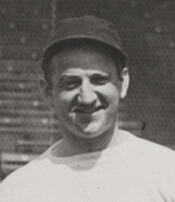
Here you will find contact information for Representative Raymond Joseph Cannon, including email address, phone number, and mailing address.
| Name | Raymond Joseph Cannon |
| Position | Representative |
| State | Wisconsin |
| District | 4 |
| Party | Democratic |
| Status | Former Representative |
| Term Start | March 9, 1933 |
| Term End | January 3, 1939 |
| Terms Served | 3 |
| Born | August 26, 1894 |
| Gender | Male |
| Bioguide ID | C000124 |
About Representative Raymond Joseph Cannon
Raymond Joseph Cannon (August 26, 1894 – November 25, 1951) was an attorney, semi-professional baseball player, and Democratic politician who represented Wisconsin’s 4th congressional district in the United States Congress from 1933 to 1939. A member of the Democratic Party, he served three consecutive terms in the House of Representatives during a significant period in American history, contributing to the legislative process and representing the interests of his Milwaukee-area constituents.
Cannon was born in Ironwood, Michigan, on August 26, 1894. He was orphaned in infancy, losing both of his parents when he was six months old. After a brief period in an orphanage, he was taken in and raised by family members. Moving to Wisconsin as a young man, he supported himself early on through a combination of teaching and athletics. In 1910 and 1911, he taught school in Minocqua, Wisconsin, reflecting an early engagement with public service and education.
Alongside his teaching, Cannon developed a notable career in semi-professional baseball. From 1908 to 1922 he played primarily as a pitcher for various semi-professional teams. His baseball career included a memorable, if difficult, outing against the Philadelphia Phillies in a spring training exhibition game in March 1918, in which he pitched a complete nine innings, surrendering 13 runs on 17 hits. His experience as a player would later inform his legal work on behalf of athletes and his efforts to organize professional ballplayers.
Cannon pursued legal studies at Marquette University Law School in Milwaukee and was admitted to the bar in 1914. Establishing his practice in Milwaukee, he became an early and prominent sports attorney. Among his clients was heavyweight boxing champion Jack Dempsey. Cannon gained particular prominence in the aftermath of the Black Sox Scandal, when he was retained by Milwaukee native Oscar “Happy” Felsch, one of the players banned from Major League Baseball. Felsch sued Chicago White Sox owner Charles Comiskey and the club for back pay, World Series money, and damages. Cannon subsequently represented several of Felsch’s former teammates—Buck Weaver, Shoeless Joe Jackson, and Swede Risberg—in related matters. In 1922, he helped organize the National Baseball Players Association of the United States, an early and ultimately short-lived attempt to create a union for professional baseball players. His association with the Black Sox players is believed to have damaged the fledgling union’s prospects and contributed to its collapse. His legal career faced a setback in 1929 when his law license was suspended; he was barred from practice until the license was reinstated in 1931.
Cannon entered electoral politics as a Democrat from Milwaukee. In 1932, he was nominated by the Democratic Party for Wisconsin’s 4th congressional district in the 73rd United States Congress. In a three-way race, he unseated Republican incumbent John C. Schafer, receiving 61,038 votes to Schafer’s 33,609 and 24,377 for Socialist State Representative Walter Polakowski. Taking office on March 4, 1933, he served during the New Deal era, when Congress and President Franklin D. Roosevelt undertook sweeping legislative responses to the Great Depression. Cannon was re-elected in 1934 with a 38.56 percent plurality in a five-way contest against Schafer, a Socialist candidate, a Progressive candidate, and an independent Communist. He secured a third term in 1936 with a 47.25 percent plurality over Progressive Paul Gauer and Schafer. During his tenure, Cannon participated in the democratic process at a time of intense national economic and political transformation, aligning with the Democratic majority that supported New Deal legislation.
Cannon’s congressional service also reflected his interest in issues of public morality and media regulation. In 1934, after Cardinal Dennis Joseph Dougherty of Philadelphia called for a Roman Catholic boycott of all motion pictures, Cannon, himself a Roman Catholic, announced plans to introduce a congressional bill—supported by both Democrats and Republicans—that would establish federal oversight of film censorship. His proposal was part of broader national debates over the role of government in regulating the emerging mass media and the moral content of films. Despite his active role in Congress, his political fortunes shifted by the end of the decade. In 1938, he was defeated in the Democratic primary by Thad F. Wasielewski. Cannon chose to run in the general election as an independent, but the divided field enabled John C. Schafer to regain the seat. Cannon polled 7,498 votes (7.02 percent), compared with 34,196 (32.00 percent) for Schafer, 33,559 (31.40 percent) for Wasielewski, 30,817 (28.84 percent) for Progressive Paul Gauer, and 794 (0.74 percent) for a Union Party candidate. His service in Congress concluded on January 3, 1939.
After leaving the House of Representatives, Cannon remained active in Wisconsin politics. He sought the Democratic nomination for governor of Wisconsin in both 1940 and 1942, though he was unsuccessful in each attempt. He continued his legal and public affairs work in Milwaukee, drawing on his long experience as an attorney, sports advocate, and legislator. His family life also reflected a continuing engagement with the law and public service. In 1915, he married Alice Carey, and the couple had three children: Robert, Mary Alice, and Jeanne. His eldest son, Robert, followed him into the legal profession, becoming a Wisconsin circuit and Wisconsin Court of Appeals judge and later serving as a legal advisor to the Major League Baseball Players Association, extending the family’s connection to both law and professional sports.
Raymond Joseph Cannon died in Milwaukee, Wisconsin, on November 25, 1951, after suffering a heart attack. He was interred at Holy Cross Cemetery and Mausoleum in Milwaukee. His career spanned early twentieth-century semi-professional athletics, pioneering sports law, and three terms in the United States Congress during the New Deal era, marking him as a distinctive figure in Wisconsin’s political and legal history.