Representative Raymond Bartlett Stevens
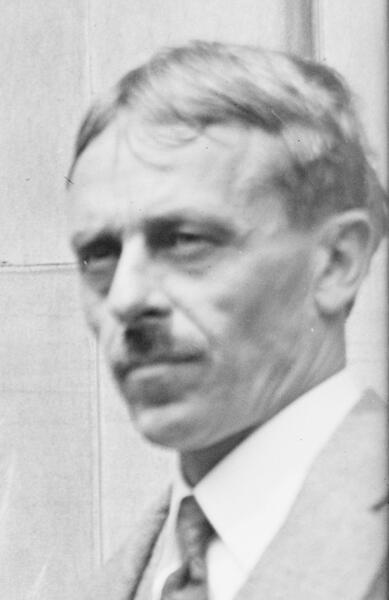
Here you will find contact information for Representative Raymond Bartlett Stevens, including email address, phone number, and mailing address.
| Name | Raymond Bartlett Stevens |
| Position | Representative |
| State | New Hampshire |
| District | 2 |
| Party | Democratic |
| Status | Former Representative |
| Term Start | April 7, 1913 |
| Term End | March 3, 1915 |
| Terms Served | 1 |
| Born | June 18, 1874 |
| Gender | Male |
| Bioguide ID | S000885 |
About Representative Raymond Bartlett Stevens
Raymond Bartlett Stevens (June 18, 1874 – May 18, 1942) was a Democratic U.S. Representative from New Hampshire who served one term in the United States Congress from 1913 to 1915 and later held a series of significant federal and international appointments. He was born in Binghamton, New York, and in 1876 moved with his parents to Lisbon, New Hampshire, where he was raised and began the long association with the state that would define his public career.
Stevens received his early education in the public schools of Lisbon before attending the Boston Latin School in Massachusetts, one of the nation’s oldest and most prestigious preparatory schools. He went on to Harvard University for his undergraduate studies and then to Harvard Law School, reflecting a rigorous academic preparation for the legal and political work that followed. After completing his legal education, he was admitted to the bar in 1899 and commenced the practice of law in Lisbon, New Hampshire, establishing himself professionally in the community where he had grown up.
Stevens entered public life through state politics. He served as a member of the New Hampshire House of Representatives in 1909, 1911, and 1913, and later returned for another term in 1923. During this period he also took part in shaping the state’s fundamental law as a member of the New Hampshire constitutional convention in 1912. These early legislative and constitutional roles gave him experience in lawmaking and governance at the state level and helped build the political base that would support his election to national office.
In 1912 Stevens was elected as a Democrat to the Sixty-third Congress, representing New Hampshire in the U.S. House of Representatives from March 4, 1913, to March 3, 1915. His service in Congress occurred during a significant period in American history, coinciding with the early years of the Woodrow Wilson administration and the enactment of major Progressive Era legislation. As a member of the House of Representatives, he participated in the legislative process and represented the interests of his New Hampshire constituents. After serving this single term, he chose not to be a candidate for renomination in 1914, instead seeking higher office as a candidate for the United States Senate, a race in which he was unsuccessful.
Following his congressional service, Stevens moved into important federal regulatory and wartime roles. From 1915 to 1917 he served as special counsel of the newly created Federal Trade Commission, contributing to the development and enforcement of federal trade and antitrust policy. With the onset of World War I, he was appointed United States representative to the Allied Maritime Transport Council in 1917 and 1918, participating in international coordination of shipping and transport among the Allied powers. During this same wartime period he also served as vice chairman of the United States Shipping Board from 1917 to 1920, helping oversee the nation’s merchant marine and maritime policy at a time of critical global conflict.
Stevens remained active in national Democratic politics in the postwar years. He served as a delegate to the Democratic National Conventions in 1920 and 1924, taking part in the selection of the party’s presidential nominees and the formulation of its platforms during a period of shifting political alignments in the 1920s. His expertise in law, trade, and international affairs made him a figure of continuing influence within the party and in federal policy circles.
In January 1926 Stevens accepted an international advisory role when he was appointed adviser in foreign affairs to the King of Siam (now Thailand). He served in that capacity until 1935, providing counsel on foreign relations and international legal matters during a period when Siam was seeking to modernize its institutions and navigate a changing global order. His service in Siam was interrupted only by a six-month period in 1933, when he returned to the United States to serve as a member of the Federal Trade Commission, resuming his earlier association with federal regulatory work before going back to his advisory duties abroad.
In the mid-1930s Stevens again took on a prominent federal economic role. He became a member of the Federal Tariff Commission in 1935, an agency central to the formulation and administration of U.S. tariff policy during the New Deal era. He served on the commission until his death and was its chairman from 1937 to 1942, overseeing tariff investigations and recommendations at a time when trade policy was closely linked to both domestic recovery and international economic relations. Stevens died in Indianapolis, Indiana, on May 18, 1942. He was interred on the grounds of the family residence at Landaff, New Hampshire, underscoring his enduring connection to the state he had long served in both state and national capacities.