Senator Redfield Proctor
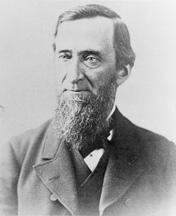
Here you will find contact information for Senator Redfield Proctor, including email address, phone number, and mailing address.
| Name | Redfield Proctor |
| Position | Senator |
| State | Vermont |
| Party | Republican |
| Status | Former Representative |
| Term Start | December 7, 1891 |
| Term End | March 3, 1909 |
| Terms Served | 4 |
| Born | June 1, 1831 |
| Gender | Male |
| Bioguide ID | P000547 |
About Senator Redfield Proctor
Redfield Proctor (June 1, 1831 – March 4, 1908) was a U.S. politician of the Republican Party who served as the 37th governor of Vermont from 1878 to 1880, as secretary of war from 1889 to 1891, and as a United States senator from Vermont from 1891 until his death in 1908. He was born in Proctorsville, a village named for his family in the town of Cavendish, Windsor County, Vermont. His father, Jabez Proctor, was a farmer, merchant, and prominent local Whig politician, and his mother was Betsy Parker Proctor (1792–1871). Proctor’s father died suddenly when Redfield was eight years old, and he was thereafter raised by his mother. Through her, he was related to Isaac F. Redfield and Timothy P. Redfield, both of whom served as justices of the Vermont Supreme Court, reflecting the family’s early engagement in law and public affairs.
Proctor was educated in Vermont and then at Dartmouth College in Hanover, New Hampshire, from which he graduated in 1851. After his graduation he returned to Proctorsville, where he first engaged in business and later prepared for a legal career. He received a master’s degree from Dartmouth College and completed his legal education at Albany Law School, graduating in 1859. In 1858 he married Emily Jane Dutton; the couple later moved to Boston, Massachusetts, in 1860. They had five children: Arabella G. Proctor Holden (1859–1905), Fletcher Dutton Proctor (1860–1911), Fanny Proctor (1863–1883), Redfield Proctor Jr. (1879–1957), and Emily Dutton Proctor (1869–1948). Proctor was also recognized in academic and social circles in Vermont, being initiated as an honorary member of the Delta Upsilon fraternity by the Middlebury College chapter.
With the outbreak of the American Civil War in 1861, Proctor returned from Massachusetts to Vermont and enlisted in the 3rd Vermont Infantry. He was commissioned as a lieutenant and quartermaster and quickly saw service at the front. In July 1861 he was appointed to the staff of Union General William F. (“Baldy”) Smith, and in October of that year he was promoted and transferred to the 5th Vermont Infantry, with the rank of major. Serving with this regiment for nearly a year in the defenses of Washington and on the Virginia Peninsula, he gained experience in logistics and command. In October 1862 he was promoted to colonel of the 15th Vermont Infantry. With that regiment he took part in the Gettysburg campaign, though the unit was stationed in the rear and did not engage directly in the battle. He was mustered out of military service in 1863.
After leaving the Army, Proctor settled in Rutland, Vermont, where he resumed the practice of law. He formed a partnership with Wheelock G. Veazey, who would later become a justice of the Vermont Supreme Court and a member of the Interstate Commerce Commission. Proctor soon expanded his interests into business. In 1869 he became a manager of the Sutherland Falls Marble Company, which operated extensive marble quarries in the Rutland area. Under his leadership the company grew, and in 1880 it merged with another firm to form the Vermont Marble Company, of which Proctor became president. The company became one of the largest marble producers in the United States, and in 1886 the area encompassing its quarries was set off from Rutland as a separate municipality named Proctor in his honor, underscoring his prominence in Vermont’s industrial development.
Proctor’s political career advanced in parallel with his legal and business pursuits. He entered public service in 1866 as a selectman of the town of Rutland. In 1867 he represented Rutland in the Vermont House of Representatives, serving as chairman of the committee on elections, and he returned to the House in 1868 as a member of the committee on ways and means. In 1874 he was elected to the Vermont Senate and chosen president pro tempore, consolidating his position as a leading Republican in the state. He was elected lieutenant governor in 1876, and in 1878 he was nominated by the Republican Party and elected governor of Vermont, serving as the state’s 37th governor from 1878 to 1880. After leaving the governorship he remained influential in state and national Republican politics, serving as a delegate-at-large to the Republican National Conventions of 1884 and 1888. At the 1888 convention he chaired the Vermont delegation and seconded the presidential nomination of Benjamin Harrison.
Following Harrison’s election, the Vermont legislature unanimously recommended Proctor for a cabinet position, and in March 1889 President Harrison appointed him secretary of war. Proctor served in that office from 1889 to 1891. At the War Department he applied his business experience to the administration of the Army, emphasizing efficiency, modernization, and improved conditions for enlisted men. His reforms included efforts to reduce desertion by addressing underlying causes such as poor living conditions and inadequate treatment of soldiers. In his December 1892 State of the Union Address, President Harrison praised Proctor’s “intelligent, progressive, and businesslike administration” of the department and noted that the percentage of desertions had fallen to the lowest level in the Army’s history, with attendant savings and improvements in morale. Proctor’s tenure as secretary of war enhanced his national reputation as an able administrator and reformer.
Redfield Proctor’s service in Congress occurred during a significant period in American history. He left the War Department in November 1891 to enter the United States Senate, having been chosen to fill the vacancy caused by the resignation of Senator George F. Edmunds. A member of the Republican Party, he served as a senator from Vermont in the United States Congress from 1891 to 1909, contributing to the legislative process during four terms in office, and he remained in the Senate for the rest of his life. As a member of the Senate, Proctor participated in the democratic process and represented the interests of his Vermont constituents while also playing a prominent role in national policy debates. He served as chairman of the Senate Committee to Establish a University of the United States from 1891 to 1893, chairman of the Committee on Agriculture and Forestry from 1895 to 1909, and chairman of the Committee on Military Affairs from 1905 to 1907. In these roles he was an effective advocate for high protective tariffs and the gold standard, and he exerted influence on military policy during the administrations of Presidents William McKinley and Theodore Roosevelt, including the era of the Spanish–American War and subsequent military reforms.
Proctor died in office in Washington, D.C., on March 4, 1908, while still serving as United States senator from Vermont. He is interred at South Street Cemetery in Proctor, Vermont, the town that bears his name. His family continued his legacy of public service: two of his sons, Fletcher D. Proctor and Redfield Proctor Jr., served as governors of Vermont, and his grandson Mortimer R. Proctor also became governor, extending the Proctor family’s influence in state politics into the mid-twentieth century. His 1867 residence in Rutland is listed on the National Register of Historic Places, reflecting both his personal significance and the historical importance of the era in which he lived and served.