Representative Rees Tate Bowen
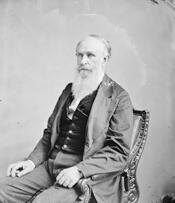
Here you will find contact information for Representative Rees Tate Bowen, including email address, phone number, and mailing address.
| Name | Rees Tate Bowen |
| Position | Representative |
| State | Virginia |
| District | 9 |
| Party | Democratic |
| Status | Former Representative |
| Term Start | December 1, 1873 |
| Term End | March 3, 1875 |
| Terms Served | 1 |
| Born | January 10, 1809 |
| Gender | Male |
| Bioguide ID | B000685 |
About Representative Rees Tate Bowen
Rees Tate Bowen (January 10, 1809 – August 29, 1879) was a nineteenth-century American congressman, magistrate, judge, militia officer, and agriculturalist from Virginia. A member of the Democratic Party, he served one term as a Representative from Virginia in the United States Congress from 1873 to 1875. He was born at his family estate, “Maiden Spring,” near Tazewell, Tazewell County, Virginia, and was the father of Henry Bowen, who would also become a member of Congress.
Bowen received his early education in southwest Virginia and attended Abingdon Academy, an important regional institution of learning in Washington County, Virginia. After his schooling, he returned to Tazewell County and engaged in agricultural pursuits on the Maiden Spring estate. His life and career were rooted in the agrarian society of antebellum Virginia, and he became a prominent local landowner and community figure.
Before the Civil War, Bowen held several local judicial and administrative positions. He served for a number of years as a magistrate of Tazewell County, Virginia, where he was responsible for various judicial and civil functions. During a portion of this time, he also acted as the presiding judge of the county court, reflecting his standing in the community and his role in local governance and the administration of justice. Like many members of the antebellum Virginia elite, Bowen was among the more than 1,800 members of Congress who enslaved human beings at some point in their lives.
In addition to his judicial responsibilities, Bowen held a military commission in the state militia. In 1856, Governor Henry A. Wise appointed him a brigadier general in the Virginia Militia, a post that underscored his prominence in regional affairs on the eve of the Civil War. During the conflict itself, Bowen continued his public service in the civil sphere, representing his locality in the Virginia House of Delegates from 1863 to 1865. His legislative service in Richmond occurred during the final and most tumultuous years of the Confederacy, when Virginia’s state government faced mounting military, economic, and political pressures.
Following the Civil War and during the Reconstruction era, Bowen remained active in public life and the Democratic Party. He was elected as a Democrat to the United States House of Representatives in 1872, representing Virginia in the Forty-third Congress. His term in Congress extended from March 4, 1873, to March 3, 1875. Serving during a significant period in American history marked by Reconstruction policies and debates over the reintegration of the former Confederate states, Bowen participated in the legislative process and represented the interests of his constituents in Virginia. His single term in the House placed him among those southern Democrats who sought to influence the direction of national policy in the postwar era.
After leaving Congress in 1875, Bowen did not seek or hold further national office and returned to his estate in Tazewell County. He resumed his agricultural pursuits at Maiden Spring, continuing the plantation-based farming that had long defined his livelihood and social position. Bowen spent his remaining years overseeing his lands and family affairs in the community where he had been born and had built his career.
Rees Tate Bowen died at his Maiden Spring estate in Tazewell County, Virginia, on August 29, 1879. He was interred in the family cemetery on the property, closing a life that spanned the early republic, the antebellum period, the Civil War, and Reconstruction. His career in local and state offices, his brief service in the United States Congress, and his role as the father of future congressman Henry Bowen secured his place in the political history of nineteenth-century Virginia.