Representative Renee L. Ellmers
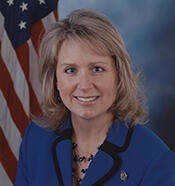
Here you will find contact information for Representative Renee L. Ellmers, including email address, phone number, and mailing address.
| Name | Renee L. Ellmers |
| Position | Representative |
| State | North Carolina |
| District | 2 |
| Party | Republican |
| Status | Former Representative |
| Term Start | January 5, 2011 |
| Term End | January 3, 2017 |
| Terms Served | 3 |
| Born | February 9, 1964 |
| Gender | Female |
| Bioguide ID | E000291 |
About Representative Renee L. Ellmers
Renee Louise Ellmers (née Jacisin; born February 9, 1964) is an American registered nurse and politician who represented North Carolina’s 2nd Congressional District in the U.S. House of Representatives from 2011 to 2017. A member of the Republican Party, she served three terms in Congress during a period of significant national debate over health care, federal spending, and social policy, and was an active participant in the legislative process on behalf of her constituents.
Ellmers was born in Ironwood, Michigan, the daughter of Caroline Pauline (née Marshalek) and LeRoy Francis Jacisin. Her father was of Czech and French-Canadian descent, and her mother was of Croatian and Polish ancestry. During her childhood, the family moved to Madison Heights, Michigan, after her father obtained employment in the automobile industry. Ellmers attended local public schools and graduated from Madison High School. To finance her higher education, she worked a variety of jobs while training as a medical assistant, ultimately enrolling at Oakland University in Rochester, Michigan. In 1990, she earned a Bachelor of Science degree in Nursing.
Following her graduation, Ellmers began her professional career in health care. She worked as a registered nurse in the surgical intensive care unit at Beaumont Hospital in Michigan, gaining experience in acute and critical care. After relocating to North Carolina, she continued her nursing career and became clinical director of the Trinity Wound Care Center in Dunn, North Carolina. Her work in clinical management and direct patient care informed her views on health policy and later shaped her political positions, particularly regarding federal health care legislation.
Ellmers’s entry into politics was catalyzed by the passage of the Patient Protection and Affordable Care Act, which she opposed. Motivated by concerns over the law’s impact on patients, providers, and the broader health care system, she became involved in local Republican politics and joined Americans for Prosperity, a free-market political advocacy organization. In 2010, she sought the Republican nomination for North Carolina’s 2nd Congressional District, then represented by seven-term Democratic incumbent Bob Etheridge. In the May 4, 2010 Republican primary, she faced car dealer Todd Gailas and retired businessman Frank Deatrich. Ellmers raised and spent more campaign funds than her opponents and won the primary with 55 percent of the vote, carrying every county in the district except Franklin.
Ellmers’s general election campaign gained national attention in June 2010, when a video of a physical altercation between Congressman Etheridge and two young men claiming to be students was posted online. The incident drew significant media coverage and conservative commentary, and Ellmers’s previously little-known candidacy was highlighted by outlets such as RedState and National Review’s “The Corner.” Her fundraising increased substantially, and a SurveyUSA poll showed her narrowly leading Etheridge. On August 18, 2010, she received a high-profile endorsement from former Alaska Governor Sarah Palin, who cited Ellmers’s health care experience and included her among a group of women candidates endorsed on the 90th anniversary of women’s suffrage in the United States. On November 2, 2010, media outlets declared Ellmers the winner of the general election, and a recount conducted on November 17–18 confirmed that she had defeated Etheridge by a margin of approximately 0.8 percent, or 1,483–1,489 votes.
Taking office on January 3, 2011, Ellmers served in the U.S. House of Representatives through January 3, 2017. Her tenure coincided with the Republican takeover of the North Carolina General Assembly in 2010 and subsequent redistricting that significantly altered the 2nd District. The legislature shifted the district westward to include heavily Republican areas between Raleigh and Greensboro, connecting these regions to Fayetteville and Dunn through a narrow corridor. While Barack Obama had carried the old 2nd District with 52 percent of the vote in 2008—one of the few majority-white Southern districts to support him—John McCain would have won the redrawn 2nd District with 57 percent, making it more favorable to Ellmers and her party.
Ellmers was reelected twice. In 2012, three first-time Republican candidates challenged her in the primary, but she prevailed with 56 percent of the vote. In the November 2012 general election, she defeated Democratic nominee Steve Wilkins, a retired U.S. Army officer and businessman from Moore County, by a margin of 56 percent to 41 percent. She considered a bid for the U.S. Senate in 2014 but ultimately chose to seek another House term. In the May 2014 Republican primary, she faced conservative internet talk show host Frank Roche, who criticized her support for immigration reform. Ellmers won renomination with 58 percent of the vote to Roche’s 41 percent. In the general election, she ran against Democratic nominee Clay Aiken, a singer and television personality who had narrowly secured his party’s nomination. Ellmers retained the seat with a margin of 36,649 votes from Second District voters.
During her congressional service, Ellmers served on the House Committee on Energy and Commerce, one of the chamber’s key panels for health, regulatory, and telecommunications policy. Within that committee, she sat on the Subcommittee on Health, the Subcommittee on Oversight and Investigations, and the Subcommittee on Communications and Technology. She was also a member of the Congressional Constitution Caucus and served as chairwoman of the Republican Women’s Policy Committee, a group focused on highlighting and coordinating the policy priorities of Republican women in the House. On fiscal issues, she supported the Budget Control Act of 2011, describing it as a pragmatic compromise that achieved “about 70–75 percent” of what many conservative colleagues sought and emphasizing her view that policymaking required “common sense” rather than ideological purity.
Ellmers’s positions on social policy and health-related legislation sometimes placed her at odds with elements of her party’s conservative base. In September 2011, she told students at Campbell University that she opposed a proposed North Carolina state constitutional amendment that would have banned both same-sex marriage and civil unions, arguing that the measure was too broad. A spokesman later clarified that she regarded marriage as “a sacred institution” defined as the union of one man and one woman, but that she believed a ban on civil unions should be considered separately. In 2015, although she identified as pro-life, she co-led a group of Republican women who opposed holding a floor vote on the Pain-Capable Unborn Child Protection Act, a bill that would have banned most abortions after 20 weeks’ gestation. Ellmers reportedly objected to a provision requiring women seeking a rape or incest exception to have reported the crime to law enforcement authorities, a stance that contributed to conservative criticism of her record.
A court-ordered redistricting prior to the 2016 election again reshaped North Carolina’s congressional map and made the 2nd District more compact. The district lost much of its territory near Greensboro and absorbed a large portion of the area that had been represented by the former 13th District. The changes placed Ellmers in direct competition with fellow Republican Representative George Holding, whose previous district number was reassigned to the Triad region. Ellmers argued that Holding was not truly a candidate of the district because he lived just outside its new boundaries, although the Constitution requires only that House members reside in the state they represent. The newly drawn 2nd District, however, was geographically more similar to Holding’s former constituency than to Ellmers’s. In the 2016 Republican primary, she faced substantial outside spending from Tea Party–aligned groups, including Americans for Prosperity, which had previously supported her but now opposed her over her positions on abortion legislation, spending and budget bills, and her vote to continue the Export-Import Bank. On June 7, 2016, Ellmers lost the primary to Holding by nearly 30 percentage points, finishing slightly ahead of third-place candidate Greg Brannon by about 0.6 percent. Her service in Congress concluded on January 3, 2017.
After leaving Congress, Ellmers remained involved in public service and health care. In May 2017, she joined the U.S. Department of Health and Human Services as a regional director based in Atlanta, a role that involved liaison work between the federal government and state and local health entities in the region. She later returned to clinical practice and worked as a registered nurse during the COVID-19 pandemic in the United States, drawing on her decades of medical experience in a period of national public health crisis. Continuing her engagement in electoral politics, Ellmers sought the Republican nomination for Lieutenant Governor of North Carolina in 2020. She placed fifth in the primary, in which businessman Mark Robinson secured the nomination and subsequently won the general election. In 2022, she ran unsuccessfully in the Republican primary for North Carolina’s 13th Congressional District, finishing fifth in the field, thereby extending a political career that has combined frontline medical service with legislative and executive-branch experience.