Representative Reuben Knecht Bachman
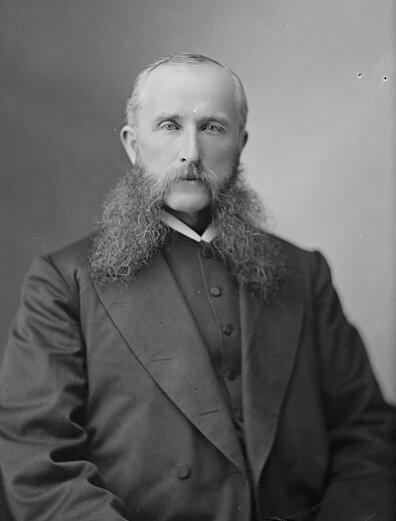
Here you will find contact information for Representative Reuben Knecht Bachman, including email address, phone number, and mailing address.
| Name | Reuben Knecht Bachman |
| Position | Representative |
| State | Pennsylvania |
| District | 10 |
| Party | Democratic |
| Status | Former Representative |
| Term Start | March 18, 1879 |
| Term End | March 3, 1881 |
| Terms Served | 1 |
| Born | August 6, 1834 |
| Gender | Male |
| Bioguide ID | B000011 |
About Representative Reuben Knecht Bachman
Reuben Knecht Bachman (August 6, 1834 – September 19, 1911) was a Democratic member of the U.S. House of Representatives from Pennsylvania who served one term in Congress from 1879 to 1881. A member of the Democratic Party, he represented his constituents during a significant period in American history, contributing to the legislative process in the post–Civil War and Reconstruction era.
Bachman was born in Williams Township, Northampton County, Pennsylvania. He was educated in the common schools of the area, reflecting the typical educational opportunities available in rural Pennsylvania in the mid-nineteenth century. After completing his schooling, he taught in local schools for several years, beginning his working life in the field of education and gaining early experience in public service and community affairs.
Leaving teaching, Bachman entered the mercantile and milling business in Durham, Pennsylvania, a small community in Northampton County. He became the owner and operator of the Durham Mill, a significant local enterprise that tied him closely to the economic life of the region. Through his business activities in milling and commerce, he established himself as a prominent local businessman, which in turn helped lay the groundwork for his later political career.
Bachman was elected as a Democrat to the Forty-sixth Congress and served in the U.S. House of Representatives from March 4, 1879, to March 3, 1881. During this single term in office, he participated in the work of the House of Representatives and took part in the democratic process at the national level, representing the interests of his Pennsylvania constituents during a time of industrial expansion and political realignment. He chose not to be a candidate for renomination in 1880, thereby concluding his congressional service after one term.
After leaving Congress, Bachman remained active in Democratic Party affairs. He served as a delegate to the 1884 Democratic National Convention held in Chicago, Illinois, participating in the selection of the party’s national ticket and contributing to the broader direction of Democratic politics in the 1880s. His role as a convention delegate reflected his continued standing within the party and his ongoing engagement with public life beyond elective office.
In his later years, Bachman returned to private enterprise and expanded his business interests beyond milling. He engaged in the lumber business and in the manufacture of builders’ millwork, operating in both Riegelsville, Pennsylvania, and Phillipsburg, New Jersey. These ventures connected him to the growing construction and industrial sectors of the late nineteenth century and underscored his long-standing involvement in regional commerce.
Reuben Knecht Bachman died in Easton, Pennsylvania, on September 19, 1911. He was interred in Durham Cemetery near Durham, Pennsylvania, close to the community and business interests that had shaped much of his life.