Representative Reuben Locke Haskell
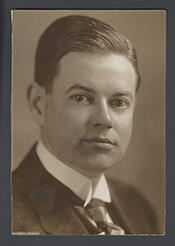
Here you will find contact information for Representative Reuben Locke Haskell, including email address, phone number, and mailing address.
| Name | Reuben Locke Haskell |
| Position | Representative |
| State | New York |
| District | 10 |
| Party | Republican |
| Status | Former Representative |
| Term Start | December 6, 1915 |
| Term End | March 3, 1921 |
| Terms Served | 3 |
| Born | October 5, 1878 |
| Gender | Male |
| Bioguide ID | H000319 |
About Representative Reuben Locke Haskell
Reuben Locke Haskell (October 5, 1878 – October 2, 1971) was a Republican member of the United States House of Representatives from New York who served three terms in Congress between 1915 and 1921. Born in Brooklyn, Kings County, New York, he spent his early years in the New York City area and pursued his schooling on Long Island and upstate. He graduated from Hempstead High School in Hempstead, New York, in 1894, then took additional courses at Ithaca High School in Ithaca, New York, in 1894 and 1895. He married Aleda Cunningham Baylis in 1902; the couple had two children, a daughter, Louise, born in 1904, and a son, Roger, born in 1909.
Haskell undertook legal studies in New York City and upstate New York as he prepared for a professional career in the law. He attended New York Law School in 1896 and 1897, and then enrolled at Cornell Law School in Ithaca, New York, where he received the degree of LL.B. in 1898. Admitted to the bar in 1899, he commenced the practice of law in New York City. His legal training and early practice laid the foundation for a career that would combine law, military service, and public office at both the local and national levels.
During the Spanish–American War, Haskell served with the 2nd Regiment of New York Volunteers, reflecting the strong sense of civic duty that would characterize his later public life. After the war he continued his military involvement in the New York National Guard, serving in Companies I and G of the 13th Regiment. He advanced through the enlisted ranks from private to corporal and then to sergeant before receiving his discharge in 1902. In later years he remained active in veterans’ affairs as a member of the United Spanish War Veterans, maintaining close ties to those with whom he had served.
A lifelong resident of Brooklyn during his early and middle years, Haskell became active in Republican politics at a relatively young age. While still in his twenties he served as leader of the 23rd Assembly District Club, an important local party organization. He was a member of the New York State Republican Committee from 1907 to 1913 and again from 1914 to 1919, and he was chosen as a delegate to the Republican National Convention in 1908 and again in 1920. At the same time, he built a record in local government: he served as counsel to the Kings County Clerk from 1908 to 1909, as Brooklyn’s Borough Secretary from 1910 to 1913, and as Brooklyn’s deputy commissioner of public works from 1913 to 1915. In 1912 he was an unsuccessful Republican candidate for election to the Sixty-third Congress, an early bid that foreshadowed his later success.
Haskell was elected as a Republican to the Sixty-fourth Congress in 1914 and was reelected to the Sixty-fifth and Sixty-sixth Congresses, serving from March 4, 1915, to December 31, 1919. During these three terms in the House of Representatives, he represented a Brooklyn district of New York and participated actively in the legislative process at a time of major national and international developments, including World War I and its aftermath. As a member of the House, he contributed to the democratic process and represented the interests of his constituents in New York. In the Sixty-sixth Congress he served as chairman of the Committee on Expenditures in the Department of the Navy, a position that placed him at the center of oversight of naval spending during the immediate postwar period. He resigned his seat in Congress on December 31, 1919, to accept a judicial appointment.
Following his departure from Congress, Haskell embarked on a judicial career in New York. He served as a judge of the Kings County Court from 1920 to 1925, presiding over a wide range of criminal and civil matters in Brooklyn. He sought reelection in 1924 but was defeated, and his term concluded the following year. After leaving the bench, he resumed the private practice of law, drawing on his extensive experience as an attorney, legislator, and judge. His legal and public service career continued into the era of the Great Depression and the New Deal, and he remained a figure in public affairs.
In addition to his legal work, Haskell held an important regulatory post in state government. From 1932 to 1942 he served on the New York State Transit Commission, which oversaw aspects of public transportation and transit policy in the state during a period of significant growth and modernization of urban transit systems. His service on the commission extended his long-standing engagement with public infrastructure and municipal affairs, dating back to his earlier role as Brooklyn’s deputy commissioner of public works.
In his later years, Haskell moved from Brooklyn to New Jersey. A resident of Hillsdale, Bergen County, during his retirement, he lived there until shortly before his death. Reuben Locke Haskell died in Westwood, New Jersey, on October 2, 1971, just three days short of his ninety-third birthday. He was interred in Mt. Repose Cemetery in Haverstraw, Rockland County, New York, closing a life that had spanned service as a soldier, lawyer, local official, congressman, judge, and state commissioner.