Representative Reuben Osborne Moon
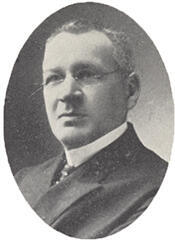
Here you will find contact information for Representative Reuben Osborne Moon, including email address, phone number, and mailing address.
| Name | Reuben Osborne Moon |
| Position | Representative |
| State | Pennsylvania |
| District | 4 |
| Party | Republican |
| Status | Former Representative |
| Term Start | November 9, 1903 |
| Term End | March 3, 1913 |
| Terms Served | 5 |
| Born | July 22, 1847 |
| Gender | Male |
| Bioguide ID | M000886 |
About Representative Reuben Osborne Moon
Reuben Osborne Moon (July 22, 1847 – October 26, 1919) was an American educator, lawyer, and Republican politician who represented Pennsylvania in the United States House of Representatives from 1903 to 1913. His decade of service in Congress spanned a significant period in American history, during which he participated in the legislative process over five consecutive terms and represented the interests of his constituents in Pennsylvania.
Moon was born on July 22, 1847, in Jobstown, Burlington County, New Jersey. Details of his early youth are sparse in the record, but his later pursuits indicate an early interest in public speaking and the law. Seeking educational and professional opportunities in a major urban center, he moved to Philadelphia, Pennsylvania, where he would spend the bulk of his adult life and career.
In Philadelphia, Moon pursued formal training in elocution and public speaking, graduating from the National School of Oratory in 1874. Following his graduation, he joined the faculty of the institution as a professor, reflecting both his mastery of oratory and his commitment to education. During this period he engaged in lecturing, further honing his skills as a public speaker, and simultaneously undertook the study of law, preparing for a transition from education into the legal profession.
Moon was admitted to the bar in 1884 and commenced the practice of law in Philadelphia. His legal career developed alongside his continued prominence in civic and social circles. He was one of the founders and served as president of the Columbia Club, a notable Philadelphia organization that provided a forum for political, professional, and social engagement among the city’s leaders. His combined experience as an educator, lecturer, and attorney helped establish his reputation and laid the groundwork for his entry into elective office.
Moon entered national politics in 1903, when he was elected as a Republican to the Fifty-eighth Congress by special election to fill the vacancy caused by the death of Representative Robert H. Foerderer. Taking his seat as a member of the U.S. House of Representatives from Pennsylvania, he would go on to serve five terms in Congress, remaining in office from 1903 until 1913. As a member of the Republican Party, he contributed to the legislative process during a transformative era in American political and economic life, participating in debates and votes on issues characteristic of the Progressive Era.
During his congressional service, Moon held a significant leadership role as chairman of the Committee on Revision of the Laws in the Fifty-ninth, Sixtieth, and Sixty-first Congresses. In this capacity he oversaw work related to the organization, clarification, and modernization of federal statutes, a responsibility central to maintaining a coherent and accessible body of national law. His work on this committee underscored his legal expertise and his interest in the technical underpinnings of federal legislation. Despite his established position, Moon was an unsuccessful candidate for renomination in 1912, bringing his decade-long tenure in the House to a close at the end of the Sixty-second Congress in 1913.
After leaving Congress, Moon returned to private life in Philadelphia. While specific details of his post-congressional activities are limited in the historical record, his long-standing engagement in law, education, and civic affairs suggests that he remained a respected figure in the city’s professional and political community until his death. Reuben Osborne Moon died in Philadelphia on October 26, 1919. He was interred at West Laurel Hill Cemetery in Bala Cynwyd, Pennsylvania, a resting place for many of the region’s prominent citizens, marking the close of a career that combined education, law, and public service at the national level.